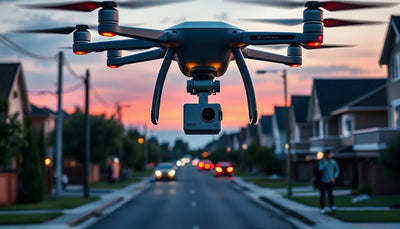
DJI Pit Stop Automation Points to Faster Drone Fleet Turnaround
A reported DJI automated pit stop system could cut drone turnaround to roughly 25 seconds, with no human handling required. The development matters for commercial operators managing high-cycle fleets, repair planning, and pre-owned DJI equipment value.

Quick answer
DJI has reportedly launched an automated drone pit stop that can service a drone in roughly 25 seconds without human involvement, according to a River 949 report cited by Google News DJI.
- Reported cycle time is approximately 25 seconds per automated pit stop
- No human handling is required during the reported process
- The report covers a DJI system relevant to commercial drone operations
- Source is a River 949 report aggregated by Google News DJI
DJI has reportedly introduced an automated drone pit stop capable of completing a service cycle in roughly 25 seconds, according to a River 949 report aggregated by Google News DJI. The headline detail is striking on its own: no humans required. For commercial drone operators, fleet managers, and repair customers, the development points toward a future where routine turnaround happens at machine speed rather than technician speed.
DJI buying context
Match product news to hardware you can actually deploy.
Check inspected DJI aircraft, repair support, and trade-in timing before deciding whether to upgrade, repair, or wait.

The report, titled "No Humans Required: DJI Just Launched a 25-Second Automated Drone Pit Stop," frames the system as a hands-free servicing solution. While the source does not specify the exact drone models, docking hardware, or operational environments involved, the core claim is clear enough to matter commercially. A 25-second automated stop changes how operators think about aircraft availability, especially in high-cycle use cases such as inspection, mapping, security, and logistics.
Reboot Hub analysis: the significance here is less about any single product detail and more about the direction of DJI's commercial ecosystem. Automated servicing has long been a bottleneck in drone fleet scaling. If routine stops can be handled without a technician on site, the labor cost and scheduling friction of multi-drone operations decline sharply.
What the reported pit stop actually changes
The central reported fact is the cycle time: approximately 25 seconds per automated stop. The River 949 report, as carried by Google News DJI, does not detail what the pit stop includes. Battery swaps, sensor cleaning, calibration checks, or data offload could all be part of such a system, but the source does not confirm those functions. Operators should treat the 25-second figure as a headline-level claim rather than a verified specification.
What the claim implies, however, is significant. A human technician typically needs several minutes to land, power down, swap a battery, inspect the airframe, and return the aircraft to service. If automation compresses that window to under half a minute, a single docking station could theoretically cycle dozens of aircraft per hour. That is the kind of throughput that makes continuous drone operations economically viable in settings where downtime currently eats into contract margins.
For repair and maintenance planning, the implication is equally important. Automated servicing does not eliminate wear, but it may standardize how aircraft are handled between flights. Standardized handling tends to reduce the kind of incidental damage that comes from rushed manual battery changes, loose connectors, or missed pre-flight checks. Over time, that could shift repair demand toward scheduled component replacement rather than emergency fixes.
What this means for drone owners and the market
For individual drone buyers and small commercial operators, the reported pit stop is not an immediate purchase decision. It is a signal about where DJI is investing. Automated ground infrastructure suggests the company sees fleet-scale operations, not just single-aircraft sales, as a growth area. Buyers evaluating a DJI platform today should consider whether their use case could eventually benefit from automated servicing, because that infrastructure may influence which models retain long-term support and resale value.
The pre-owned DJI market could feel the effect in two ways. First, if automated pit stops become tied to specific newer airframes, older models may lose relative appeal for fleet buyers even if they remain perfectly capable aircraft. Second, if the system reduces per-flight wear through consistent handling, well-maintained pre-owned units may hold value longer because their service histories become more predictable. Operators tracking pre-owned DJI drones and genuine OEM spare parts should watch whether automated servicing becomes a standard feature of enterprise deployments, as that will shape both demand and pricing in the second-hand market.
Fleet managers should start asking a practical question: does my current ground support setup create a bottleneck that automation could remove? Even before this reported system reaches broad availability, the 25-second benchmark is a useful reference point. If manual turnaround is consuming meaningful labor hours across a multi-drone operation, the economics of automated docking and servicing become easier to justify. For deeper context on how servicing choices affect aircraft longevity and parts planning, readers can consult the Drone Wiki.
The source-limited nature of this report also matters. River 949 is a regional broadcaster, and the Google News DJI aggregation does not include DJI's own confirmation, technical documentation, or launch details. Operators should avoid making procurement decisions based on a 25-second claim until official specifications, compatibility lists, and regional availability are published. The prudent response is to treat the report as an early indicator, not a verified product announcement.
Repair, parts, and the service model shift
Automated pit stops could reshape the repair and spare parts market in subtle but important ways. If routine servicing becomes machine-driven, the types of failures that reach repair shops may shift. Manual battery insertion errors, connector damage from repeated handling, and skipped pre-flight checks are common sources of field issues. Automation may reduce those failure modes while introducing new ones tied to docking hardware, alignment sensors, and automated latching mechanisms. For owners evaluating service and lifecycle risk, Drone Wiki explains the relevant repair, parts, resale, or operational path.
For repair customers, that means the parts mix could evolve. Genuine OEM spare parts for docking stations, charging contacts, and automated service modules may become as commercially relevant as airframe components. Repair providers that understand both aircraft and ground infrastructure will be better positioned to support fleets that adopt automated servicing. The report does not confirm any specific docking hardware, so this remains Reboot Hub analysis rather than a sourced product roadmap.
Commercial operators should also consider how automated servicing affects their maintenance documentation. A system that logs every automated stop creates a service record with far more granularity than manual logs. That could become valuable when selling a pre-owned drone, because a documented cycle history supports stronger resale positioning. Buyers of inspected pre-owned DJI aircraft increasingly want evidence of consistent handling, and automated logs could provide exactly that.
What operators should watch next
The most useful next step for a buyer, pilot, or fleet manager is to monitor DJI's official enterprise channels for confirmation of the pit stop system, its compatibility, and its regional rollout. The River 949 report is a single-source signal. It is enough to justify internal planning conversations, but not enough to anchor a purchase or a fleet retrofit.
Operators running high-cycle missions should map their current turnaround time per aircraft and compare it against the reported 25-second benchmark. If the gap is large, automated ground support may become a competitive differentiator once verified systems reach the market. If the gap is small, the immediate value is lower, and the focus should stay on airframe reliability and spare parts availability.
The broader market signal is that DJI continues to invest in the operational layer around its aircraft, not just the aircraft themselves. That has consequences for how fleet buyers evaluate total cost of ownership, how repair providers plan their parts inventory, and how pre-owned DJI equipment is priced over the next several product cycles.
FAQ
Frequently asked questions
What did DJI reportedly launch?
According to a River 949 report aggregated by Google News DJI, DJI launched an automated drone pit stop that can complete a servicing cycle in roughly 25 seconds without human handling.
Does the report confirm which DJI drones are compatible?
No. The source report does not specify compatible drone models, docking hardware, or operational environments. Operators should wait for official DJI documentation before making procurement decisions.
How could this affect the pre-owned DJI market?
If automated servicing becomes tied to newer airframes, older models may lose relative appeal for fleet buyers. At the same time, consistent automated handling could strengthen service histories and support resale value for well-maintained pre-owned units.
Which sources support this update?
The article distinguishes reported information from analysis and does not present an unverified source as official confirmation.
What remains subject to change?
Retail pricing, availability, product bundles and regulatory timelines can change. Readers should verify the latest terms with the named retailer, manufacturer or regulator before acting.
How should buyers or operators use this analysis?
Use the verified facts as a starting point, then compare mission fit, lifecycle support, maintenance needs and current procurement terms before making a purchase or fleet decision.
Fonti consultate
- River 949 via Google News - primary source
Al momento della pubblicazione non era disponibile ulteriore documentazione ufficiale.
Reboot Hub Editorial fornisce analisi sugli acquisti, le riparazioni, la rivendita e l'operatività per i proprietari di droni. In caso di errori, contattateci per una revisione della correzione in conformità con la nostra politica editoriale.