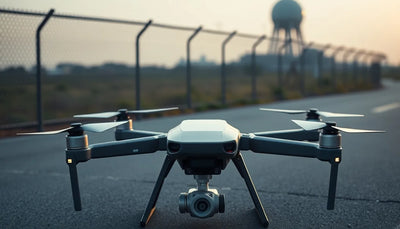
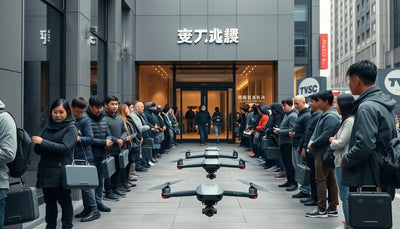
Beijing Drone Storage Ban Triggers Sharp DJI Resale Price Collapse
A reported Beijing restriction on drone storage set to take effect November 15 has triggered a public sell-off, with used DJI units changing hands at steep discounts. The shift is reshaping pre-owned pricing, repair demand, and fleet planning across China's consumer drone market.

Quick answer
A reported Beijing restriction on drone storage effective November 15 has triggered a public sell-off, with a DJI unit originally purchased for 3,000 yuan being recycled for only 360 yuan.
- The restriction reportedly takes effect November 15 in Beijing.
- A DJI drone bought for 3,000 yuan was reportedly recycled for 360 yuan.
- The sell-off is compressing pre-owned DJI resale values in the region.
- Commercial operators and repair customers may see shifting used-market pricing.
Verified facts
Operator checklist
Turn policy news into a safer fleet decision.
Before changing aircraft, compare repair paths, available DJI inventory, and trade-in timing against the rule change.

What the available evidence confirms
| Metric | Reported Value |
|---|---|
| Original DJI purchase price | 3,000 yuan |
| Recycled resale price | 360 yuan |
| Reported restriction start date | November 15 |
| Reported restriction location | Beijing |
Worldjournal.com reports that a Beijing restriction on drone storage set to take effect November 15 has triggered a rapid public sell-off, with used DJI units changing hands at sharply reduced prices. One reported transaction involved a DJI drone originally purchased for 3,000 yuan being recycled for only 360 yuan, a roughly 88 percent loss in resale value.
The development matters well beyond Beijing. China is the world's largest consumer drone market and the home base for DJI's manufacturing and parts ecosystem. A sudden regional sell-off can compress pre-owned pricing, shift repair demand, and alter how fleet operators think about holding costs and asset depreciation.
What the reported restriction actually says
According to the Worldjournal.com report, the Beijing restriction centers on drone storage rather than flight operations alone. The reported effective date is November 15. The source does not provide the full text of the rule, the enforcing agency, or detailed exemptions, so operators outside the region should treat the scope as uncertain.
Even without full regulatory text, the market reaction is the story. A 3,000 yuan DJI unit being recycled for 360 yuan suggests that sellers are prioritizing quick disposal over price discovery. That kind of urgency typically appears when owners believe holding the asset carries regulatory or legal risk, not merely inconvenience.
Reboot Hub analysis: For commercial operators, the key question is whether similar storage restrictions could appear in other Chinese cities or in jurisdictions with concentrated drone use. Reboot Hub analysis suggests that even the perception of new storage rules can shift used inventory flows faster than the rules themselves.
Pre-owned DJI pricing under pressure
The pre-owned DJI market in China has historically held value well, especially for popular consumer models with strong parts availability. A reported 3,000 yuan to 360 yuan spread is extreme and likely reflects distressed selling rather than a new equilibrium price. Still, a wave of public sell-offs can temporarily flood regional marketplaces and depress offers from recyclers and resellers.
Buyers in adjacent markets may see short-term bargains, but they should weigh condition, battery health, and firmware status carefully. Units sold quickly during a regulatory scare may not include original accessories, flight logs, or proof of ownership, which can complicate later service and resale.
Repair customers face a related shift. When used drone prices fall sharply, the economics of repair change. A pilot holding a damaged DJI unit may find that a professional repair bill approaches or exceeds the depressed resale value of a working pre-owned replacement. That does not make repair the wrong choice, but it changes the calculation.
What this means for drone owners and the market
For individual owners in Beijing, the reported restriction creates a time-sensitive decision: sell now at a steep discount, hold and hope the rule is narrower than feared, or relocate storage outside the restricted area if that is legally permitted. None of these options is cost-free, and the Worldjournal.com report suggests many owners are choosing the first path.
For fleet managers and commercial operators, the episode is a reminder that regulatory risk can hit asset values faster than hardware depreciation. Drones that are compliant today can lose resale value overnight if a jurisdiction changes storage, registration, or operational rules. Operators who track regional regulatory signals may be able to time fleet disposals more effectively than those who react after a sell-off begins. For teams evaluating pre-owned DJI units, repair economics, or OEM-pulled parts, the Drone Wiki provides a practical reference for understanding how regulatory shifts affect ownership and service decisions. For owners evaluating service and lifecycle risk, Drone Wiki explains the relevant repair, parts, resale, or operational path.
The broader market implication is that pre-owned DJI pricing is not purely a function of hardware condition and model age. Local regulatory events can create sudden supply spikes and price dislocations. Buyers with patience and inspection discipline may benefit, while sellers who wait too long may face thinner bids.
Repair, parts, and the second-hand supply chain
A public sell-off of this kind has downstream effects on the repair and parts ecosystem. When used DJI units are recycled at steep discounts, some are resold intact, while others are dismantled for components. That can increase the supply of OEM-pulled parts in regional repair channels, potentially lowering parts costs for independent repair shops and fleet maintenance teams.
However, distressed units also carry risk. Batteries stored improperly, drones with undisclosed damage, or units with mismatched serial numbers can enter the second-hand market quickly during a sell-off. Repair customers should verify part provenance and battery condition before committing to service on a recently purchased pre-owned unit.
For buyers outside China, the immediate pricing impact may be limited, but the signal is worth watching. If Beijing's storage restriction is replicated elsewhere, or if sellers begin shipping discounted units across borders, pre-owned DJI pricing in other regions could soften. Procurement teams should monitor used-market inventory levels and recycler pricing over the next several weeks.
FAQ
Frequently asked questions
What exactly did the source report?
Worldjournal.com reported that Beijing will restrict drone storage starting November 15, prompting a public sell-off. One DJI drone purchased for 3,000 yuan was reportedly recycled for 360 yuan.
Should buyers avoid pre-owned DJI drones right now?
Not necessarily. Distressed selling can create bargains, but buyers should inspect condition, battery health, accessories, and ownership documentation more carefully than usual during a regulatory sell-off.
How should fleet managers respond to this news?
Fleet managers should track whether similar storage restrictions appear in other regions and reassess holding costs, disposal timing, and repair versus replacement economics for DJI assets in their inventory.
Which sources support this update?
The article distinguishes reported information from analysis and does not present an unverified source as official confirmation.
What remains subject to change?
Retail pricing, availability, product bundles and regulatory timelines can change. Readers should verify the latest terms with the named retailer, manufacturer or regulator before acting.
How should buyers or operators use this analysis?
Use the verified facts as a starting point, then compare mission fit, lifecycle support, maintenance needs and current procurement terms before making a purchase or fleet decision.
Fonti consultate
- worldjournal.com - primary source
Al momento della pubblicazione non era disponibile ulteriore documentazione ufficiale.
Reboot Hub Editorial fornisce analisi sugli acquisti, le riparazioni, la rivendita e l'operatività per i proprietari di droni. In caso di errori, contattateci per una revisione della correzione in conformità con la nostra politica editoriale.