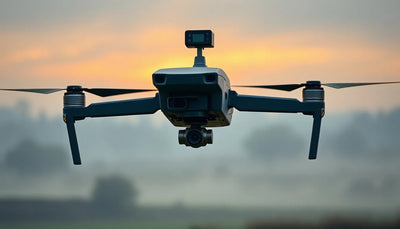
Superwake SW-117 Gains Transport Canada BVLOS Validation
Superwake has received Transport Canada validation for autonomous beyond visual line of sight operations on the SW-117, according to SUAS News. The approval signals growing regulatory openness to long-range commercial drone missions, with implications for fleet planning, maintenance schedules, and the broader pre-owned enterprise market.

Quick answer
Superwake has received Transport Canada validation for autonomous Beyond Visual Line of Sight (BVLOS) operations on the SW-117, as reported by SUAS News.
- The validation covers autonomous BVLOS operations for the Superwake SW-117 platform
- Transport Canada is the issuing regulatory authority
- The development was reported by SUAS News in September 2026
- Source details on operational scope and conditions remain limited
Evidence: SUAS News
Market context
Turn market news into a buy, repair, or trade-in decision.
Compare pre-owned availability, resale timing, and repair economics before the market moves again.

Superwake has received Transport Canada validation for autonomous Beyond Visual Line of Sight operations on the SW-117 platform, according to a report published by SUAS News on September 9, 2026. The development marks a meaningful regulatory milestone for a commercial unmanned aerial vehicle manufacturer seeking to expand long-range mission capability in Canadian airspace.
For commercial drone operators, fleet managers, and procurement teams watching the North American regulatory environment, the approval is a signal worth tracking. BVLOS validation is not a routine certification step. It typically requires a manufacturer to demonstrate that its platform can operate safely without a pilot maintaining direct visual contact, which involves navigation reliability, detect-and-avoid considerations, and operational risk management. The fact that Transport Canada has extended this validation to the SW-117 suggests the platform cleared a meaningful compliance threshold.
What the source actually confirms
The primary reporting from SUAS News is concise. It confirms that Superwake has earned Transport Canada validation for autonomous BVLOS operations on the SW-117. The report does not include detailed technical specifications, operational range figures, payload capacity, or the specific conditions attached to the validation. Reboot Hub has not independently verified the filing, and no official Superwake or Transport Canada statement was available in the source material beyond what SUAS News published.
What this means in practical terms is that the approval should be treated as a confirmed regulatory development with limited public detail. Operators should avoid assuming the validation covers all airspace classes, all mission types, or unrestricted autonomous flight. Transport Canada BVLOS approvals often come with operational conditions that can include geographic limitations, altitude restrictions, weather minimums, or requirements for specific crew qualifications. Without the full approval text, those conditions remain unknown.
The source quality for this report is limited. SUAS News is a recognized industry publication covering unmanned systems, but the original article provides a short summary rather than an in-depth regulatory analysis. Readers should treat the core fact as reported, while recognizing that operational specifics will need to come from Superwake or Transport Canada directly.
Why BVLOS validation matters commercially
Beyond visual line of sight operations are widely viewed as the unlock for commercial drone economics. When a pilot must maintain visual contact, mission range is constrained by terrain, weather, and human eyesight. BVLOS approval removes that constraint in principle, allowing a single aircraft to cover longer inspection corridors, pipeline routes, rail lines, or agricultural parcels without the operator physically following the platform.
For fleet operators, this changes the math on aircraft utilization. A BVLOS-capable platform can log more flight hours per day and cover more linear infrastructure per mission. That increased utilization has downstream effects on maintenance intervals, component wear, and spare parts demand. Airframes that fly longer and farther accumulate stress on propulsion systems, batteries, and airframe joints faster than short visual-line-of-sight missions. Repair planning becomes a more central part of fleet economics when aircraft are flying extended autonomous missions.
Reboot Hub analysis: The Canadian market is particularly relevant because Transport Canada has been methodical in its approach to BVLOS approvals. The regulator has run trials and pilot programs, but full commercial validation for a specific platform is still a notable event. For manufacturers competing in the Canadian enterprise drone market, the SW-117 approval may create a reference point that other platforms will be measured against in future regulatory reviews.
What this means for drone owners and the market
The most immediate implication for commercial operators is that the Canadian regulatory environment is continuing to move toward broader BVLOS acceptance. Buyers evaluating new enterprise platforms should now weigh BVLOS validation status as a procurement criterion. A platform with Transport Canada validation has cleared a hurdle that may matter for infrastructure inspection, utility monitoring, and agricultural surveying contracts that require long-range flight. For operators who already hold mixed fleets, the question becomes whether existing platforms can realistically compete for BVLOS work or whether the SW-117 and similar validated platforms will capture those contracts.
There is also a secondary effect on the pre-owned market. When a new platform receives a significant regulatory validation, it can shift demand patterns in the broader commercial drone ecosystem. Operators who need BVLOS capability may accelerate new purchases, which can increase the supply of pre-owned DJI drones and other enterprise aircraft entering the secondary market. For buyers considering inspected pre-owned equipment, the availability and pricing of used platforms can shift as fleet managers rebalance their aircraft mix. Reboot Hub tracks these market movements through its Drone Wiki, where operators can review platform context and market positioning before making procurement or repair decisions. For owners evaluating service and lifecycle risk, Drone Wiki explains the relevant repair, parts, resale, or operational path.
For repair customers, the implication is more subtle but still relevant. BVLOS missions tend to be longer and more demanding than visual-line-of-sight flights. Aircraft that operate beyond visual range are exposed to more variable weather, longer motor run times, and greater cumulative stress on airframe components. Repair shops and parts suppliers should anticipate that BVLOS-capable fleets will require more frequent inspection cycles and faster turnaround on propulsion and power system components. Genuine OEM spare parts become more important when aircraft are operating at the edge of their designed mission envelope.
What operators should watch next
The most useful next step for operators is to monitor whether Superwake or Transport Canada publishes the full validation details. The conditions attached to the approval will determine how commercially useful the SW-117 BVLOS capability actually is. An approval that covers remote northern corridors with no population density is different from one that permits operations near infrastructure or in controlled airspace. Operators should also watch whether other manufacturers respond with their own BVLOS filings in Canada, which would indicate that the regulator is opening a broader pathway.
Fleet managers should begin evaluating their current aircraft against the types of missions that BVLOS validation enables. If long-range linear inspection or remote monitoring is part of the business pipeline, the SW-117 approval is a signal that those missions are becoming more commercially accessible in Canada. That may justify revisiting fleet composition, maintenance budgets, and spare parts stocking levels ahead of any contract opportunities.
The broader market signal is that commercial drone regulation in North America continues to mature. Each platform-specific BVLOS approval builds a body of precedent that shapes how future applications are evaluated. For operators, that means regulatory capability is becoming a differentiator, not just a compliance checkbox.
FAQ
Frequently asked questions
What exactly did Transport Canada approve for the Superwake SW-117?
According to SUAS News, Transport Canada validated the Superwake SW-117 for autonomous Beyond Visual Line of Sight operations. The source report does not include the specific conditions, geographic scope, or operational limitations attached to the validation.
Does this approval affect DJI drone owners?
Indirectly, yes. Regulatory approvals for BVLOS platforms can shift demand in the commercial drone market, which affects fleet composition and the supply of pre-owned DJI aircraft entering the secondary market. Operators should watch how validated platforms influence contract requirements.
Should fleet managers change their maintenance planning based on this news?
Not immediately, but BVLOS missions generally involve longer flight times and greater component stress. Fleet managers evaluating BVLOS-capable platforms should plan for more frequent inspection cycles and reliable access to genuine OEM spare parts as mission profiles expand.
Which sources support this update?
The visible evidence links identify SUAS News; each source is used only for the claim it directly supports.
What remains subject to change?
Retail pricing, availability, product bundles and regulatory timelines can change. Readers should verify the latest terms with the named retailer, manufacturer or regulator before acting.
How should buyers or operators use this analysis?
Use the verified facts as a starting point, then compare mission fit, lifecycle support, maintenance needs and current procurement terms before making a purchase or fleet decision.
Konzultált források
- SUAS News - primary source
A közzététel időpontjában további hivatalos dokumentáció nem állt rendelkezésre.
A Reboot Hub szerkesztősége vásárlási, javítási, viszonteladási és üzemeltetési elemzéseket nyújt dróntulajdonosok számára. Ha hibát észlel, kérjük, jelezze nekünk a szerkesztői irányelvünknek megfelelően a javítás érdekében.