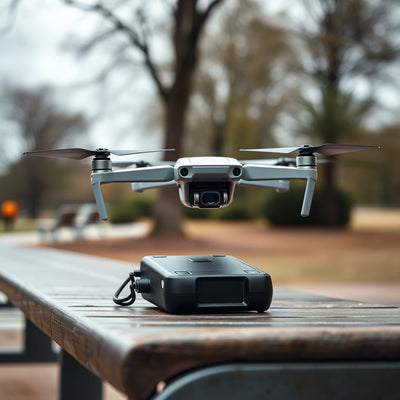
SightFlight Turns One DJI Drone Flight Into a Full Solar Roof Survey
SightFlight has introduced a workflow that turns a single DJI drone flight into a complete solar roof survey, according to SUAS News. The development matters for commercial operators who want to reduce flight time and deliver inspection data faster without adding hardware.

Quick answer
SUAS News reports that SightFlight, a drone software company serving the solar and roofing sectors, has developed a workflow that turns a single DJI drone flight into a complete solar roof survey.
- The report comes from SUAS News, published in October 2026.
- SightFlight serves the solar and roofing industries.
- The workflow is built around a single DJI drone flight.
- The development points to lower inspection time per roof for commercial operators.
Evidence: SUAS News
DJI buying context
Match product news to hardware you can actually deploy.
Check inspected DJI aircraft, repair support, and trade-in timing before deciding whether to upgrade, repair, or wait.

SUAS News reported in October 2026 that SightFlight, a drone software company serving the solar and roofing sectors, has introduced a workflow that turns a single DJI drone flight into a complete solar roof survey. The report, published by the commercial drone news outlet, frames the development as a step toward faster roof inspection data capture for operators already flying DJI hardware.
The announcement matters because solar roof surveying has historically required careful flight planning, multiple passes, and manual stitching of imagery to produce usable deliverables. If a software layer can compress that process into one flight, the economics of residential and commercial solar inspection shift for small drone service providers and larger fleet operators alike.
What SightFlight is reportedly changing
According to the SUAS News report, SightFlight's approach centers on converting a single DJI drone flight into a complete solar roof survey. The company is described as a drone software provider serving the solar and roofing industries, and the announcement originates from Darien, Connecticut. The report does not specify which DJI airframes are compatible, nor does it detail pricing, processing time, or output formats.
That absence of technical detail is worth noting for buyers. A software claim built around a single flight is operationally meaningful only if the resulting data meets the accuracy and resolution standards that solar installers, roofing contractors, and insurance assessors expect. Reboot Hub analysis suggests that operators should treat the announcement as an early signal of a broader trend: inspection software vendors are competing to reduce flight time and manual post-processing, because labor hours remain the largest variable cost in drone-based roof surveying.
Why single-flight workflows change operator economics
For a commercial operator, the cost of a roof survey is rarely the drone itself. It is the time spent traveling to the site, planning the flight, flying safely around roof edges and obstructions, and then processing imagery into a deliverable. If a software vendor can reliably produce a complete solar roof survey from one DJI flight, the operator can complete more jobs per day without adding aircraft or hiring additional pilots.
The SUAS News report does not confirm accuracy benchmarks, thermal inspection capability, or compatibility with specific DJI flight controllers. That means fleet managers should not yet reprice their solar inspection services based on this announcement alone. However, the direction is commercially important. Software that reduces passes per roof also reduces battery cycles, wear on gimbal motors, and the cumulative flight hours that eventually push a DJI airframe toward maintenance or replacement.
What this means for drone owners and the market
The pre-owned DJI market tends to respond to shifts in how many flight hours a typical commercial job requires. If single-flight solar survey workflows become standard, operators may find that their existing DJI airframes remain productive longer, because each job consumes fewer battery cycles and less mechanical stress. That could slow the turnover of lightly used commercial drones into the second-hand market, supporting resale values for well-maintained units. For owners evaluating service and lifecycle risk, Drone Wiki explains the relevant repair, parts, resale, or operational path.
For repair customers and fleet planners, the implication is more subtle. A software-driven reduction in flight time does not eliminate the need for routine maintenance, but it may change which components wear first. Operators who previously replaced batteries frequently due to multi-pass solar jobs may shift their spending toward camera gimbal calibration, sensor cleaning, and firmware stability. Buyers evaluating pre-owned DJI drones for solar work should still prioritize units with documented flight logs and genuine OEM spare parts histories, because software cannot compensate for a poorly maintained airframe. For operators researching inspection workflows and repair considerations, the Drone Wiki offers a practical reference point for understanding how DJI hardware ages under commercial use.
The broader market question is whether SightFlight's reported single-flight workflow pressures other inspection software vendors to match the capability. If it does, solar and roofing drone services could become more standardized, with pricing increasingly tied to roof square footage rather than flight time. That would favor operators who already own reliable DJI hardware and can absorb the software learning curve quickly.
What operators should watch next
The SUAS News report leaves several commercial questions unanswered: which DJI models are supported, whether the workflow includes thermal imaging for solar cell fault detection, and what the software costs. Operators should watch for SightFlight to publish compatibility details and sample deliverables before committing flight operations to the new workflow.
In the meantime, the practical takeaway is to treat this as an efficiency signal rather than a finished procurement decision. A drone service provider evaluating the announcement should ask whether their current DJI airframe can support the required flight stability and camera resolution, and whether their repair and spare parts pipeline can handle increased daily job volume. Software may reduce flight time, but it does not remove the need for a dependable aircraft and a maintenance plan that keeps it airworthy.
FAQ
Frequently asked questions
What did SUAS News report about SightFlight?
SUAS News reported in October 2026 that SightFlight, a drone software company serving the solar and roofing sectors, has developed a workflow that turns a single DJI drone flight into a complete solar roof survey.
Does the report confirm which DJI drones are compatible?
No. The SUAS News report does not specify compatible DJI models, processing requirements, pricing, or output accuracy benchmarks. Operators should wait for SightFlight to publish those details before changing their inspection workflows.
How could this affect pre-owned DJI drone demand?
If single-flight solar surveys reduce flight hours and battery cycles per job, existing DJI airframes may remain productive longer, potentially slowing turnover into the pre-owned market and supporting resale values for well-maintained commercial units.
Which sources support this update?
The visible evidence links identify SUAS News; each source is used only for the claim it directly supports.
What remains subject to change?
Retail pricing, availability, product bundles and regulatory timelines can change. Readers should verify the latest terms with the named retailer, manufacturer or regulator before acting.
How should buyers or operators use this analysis?
Use the verified facts as a starting point, then compare mission fit, lifecycle support, maintenance needs and current procurement terms before making a purchase or fleet decision.
Konzultált források
- SUAS News - primary source
A közzététel időpontjában további hivatalos dokumentáció nem állt rendelkezésre.
A Reboot Hub szerkesztősége vásárlási, javítási, viszonteladási és üzemeltetési elemzéseket nyújt dróntulajdonosok számára. Ha hibát észlel, kérjük, jelezze nekünk a szerkesztői irányelvünknek megfelelően a javítás érdekében.