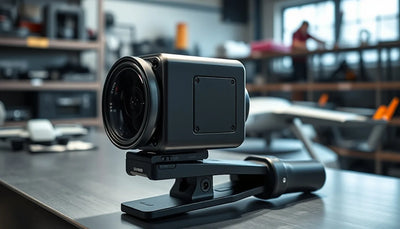
Ondas Launches Dronebuster REACH Long-Range Counter-UAS System
Ondas announced the Dronebuster REACH, a long-range non-kinetic counter-UAS variant, with the first system under contract for the Office of Naval Research after acceptance testing. The launch signals continued defense investment in portable drone defeat tools.

Quick answer
Ondas announced the launch of Dronebuster REACH, the long-range variant of its non-kinetic counter-UAS family, with the first system under contract for delivery to the Office of Naval Research following acceptance testing.
- First REACH system under contract for the Office of Naval Research
- Long-range variant of the Dronebuster non-kinetic counter-UAS family
- Announced September 30, 2026 by Ondas, a Nasdaq-listed defense technology company
- Non-kinetic defeat approach targets drone threats without physical projectiles
Evidence: Source material · AeroVironment unmanned systems solutions · DIU Blue UAS
Fleet readiness
Keep DJI hardware available without overbuying new units.
Use defense and fleet news as a planning signal for repair support, inspected pre-owned aircraft, and replacement timing.

Verified facts
What the available evidence confirms
| Attribute | Source Detail |
|---|---|
| Product | Dronebuster REACH, long-range non-kinetic counter-UAS variant |
| Company | Ondas (Nasdaq: ONDS) |
| First contract | Office of Naval Research, following acceptance testing |
| Announcement date | September 30, 2026 |
Ondas, the Nasdaq-listed defense and autonomous systems company, announced on September 30, 2026 that it has launched the Dronebuster REACH, a long-range variant within its Dronebuster family of non-kinetic Counter-Unmanned Aircraft Systems. The announcement, reported by Yahoo Finance, states that the first REACH system is under contract for delivery to the Office of Naval Research following acceptance testing. The development extends the company's existing Dronebuster portfolio into a longer-range defeat role, a segment that has drawn steady attention from military and security buyers as small drone threats proliferate across operational environments.
For commercial drone operators, fleet managers, and buyers tracking the defense-adjacent hardware market, the launch is a signal about where counter-UAS investment is moving. Non-kinetic systems, which disrupt or defeat drones without physical projectiles, are increasingly positioned as practical tools for protecting facilities, convoys, and sensitive airspace. While the Dronebuster REACH is a defense product rather than a consumer or commercial drone platform, its development trajectory matters to anyone watching how regulators, security agencies, and enterprise buyers respond to unauthorized drone activity.
What the Dronebuster REACH announcement actually says
According to the Yahoo Finance report, Ondas describes the Dronebuster REACH as the long-range variant of its Dronebuster family of non-kinetic Counter-Unmanned Aircraft Systems. The company states that the first REACH system is under contract to deliver to the Office of Naval Research after acceptance testing. The announcement does not provide detailed technical specifications, range figures, unit pricing, or broader production timelines in the source material available for this analysis. Reboot Hub analysis: the absence of published range or performance data means buyers and industry observers should treat the launch as a portfolio expansion announcement rather than a fully characterized product release.
The Office of Naval Research connection is notable because it places the first REACH unit inside a formal U.S. defense research and acquisition pathway. Acceptance testing implies that the system has reached a stage where a government customer is evaluating or validating its performance before taking delivery. That is a meaningful milestone for a defense hardware product, but the source does not specify the contract value, delivery schedule, or whether additional units are expected.
Non-kinetic counter-UAS and why the approach is gaining ground
Non-kinetic counter-UAS tools work by disrupting a drone's control link, navigation signals, or onboard electronics rather than destroying the aircraft with projectiles or explosives. This approach has practical appeal in environments where kinetic interception is unsafe, expensive, or legally complicated, such as urban areas, airports, critical infrastructure sites, and crowded public spaces. The Dronebuster family has historically been associated with handheld or portable form factors, and the REACH variant appears to extend that concept to longer-range applications, though the source does not provide specific range or power details.
For commercial drone operators, the growth of non-kinetic counter-UAS systems raises a practical question: how will these tools interact with legitimate drone operations? A drone flying near a protected facility could be affected by disruption technology even if the operator is compliant. Fleet managers planning missions near ports, stadiums, government buildings, or military installations should monitor where counter-UAS deployments are being tested or fielded. The Dronebuster REACH launch is one more indicator that detection and defeat infrastructure is becoming a permanent layer of the airspace environment in sensitive regions.
What this means for drone owners and the market
The Dronebuster REACH announcement does not directly change the regulatory or commercial landscape for consumer drone owners, but it reinforces a broader trend: security buyers are investing in tools to counter unauthorized drone activity, and those tools are becoming more capable and more widely distributed. For pre-owned DJI drone buyers and fleet operators, the practical takeaway is to stay aware of local counter-UAS activity and to verify that flight plans do not intersect with protected or contested airspace. A drone that is legally owned and properly registered can still be affected by non-kinetic disruption if it enters an area where security systems are active.
Reboot Hub analysis suggests that the second-hand drone market is unlikely to see direct price movement from a single defense product launch. However, the cumulative effect of counter-UAS deployments can shape operator confidence in certain regions or use cases. Buyers considering a pre-owned DJI platform for infrastructure inspection, event coverage, or mapping near sensitive sites should factor in the growing presence of counter-drone systems when planning missions. For repair customers, the relevant consideration is that disruption events can produce unusual flight behavior or hard landings, which may require diagnostic work even when the drone itself was not physically targeted. Anyone evaluating a used drone after a suspected interference event should have the aircraft inspected before returning it to service. For owners evaluating service and lifecycle risk, Drone Wiki explains the relevant repair, parts, resale, or operational path.
For readers tracking the defense and security side of the drone economy, the Dronebuster REACH launch also matters as a market signal. Ondas is a publicly traded company, and its counter-UAS portfolio is part of a defense technology segment that has attracted sustained investor and procurement interest. The first REACH unit going to the Office of Naval Research suggests that U.S. military buyers remain active in evaluating portable, non-kinetic defeat options. Fleet operators and enterprise buyers can consult resources like the Drone Wiki to track how counter-UAS developments and airspace security trends may affect drone ownership, maintenance, and mission planning over time.
What buyers, pilots, and fleet managers should watch next
The most useful next step for a commercial operator is not to react to this single announcement, but to build a habit of checking for counter-UAS activity in mission areas. Pilots should review NOTAMs, local security notices, and facility-specific drone policies before flying near ports, government buildings, stadiums, or military installations. Fleet managers should document any unexplained loss of control, GPS instability, or signal interruption during missions, because those events may be relevant for warranty claims, insurance reporting, or repair diagnostics.
Buyers in the pre-owned DJI market should also recognize that counter-UAS technology is not a reason to avoid drone ownership, but it is a reason to be more deliberate about where and how drones are flown. A well-maintained pre-owned DJI aircraft remains a capable tool for commercial work, provided the operator respects airspace restrictions and understands the security environment. The Dronebuster REACH launch is a defense story on its surface, but its commercial implication is straightforward: the airspace is becoming more managed, more monitored, and more contested, and operators who plan accordingly will face fewer surprises.
FAQ
Frequently asked questions
What is the Dronebuster REACH?
The Dronebuster REACH is the long-range variant of Ondas' Dronebuster family of non-kinetic Counter-Unmanned Aircraft Systems, announced on September 30, 2026. The first system is under contract for delivery to the Office of Naval Research following acceptance testing.
Does the Dronebuster REACH launch affect commercial drone operators?
Not directly, but it reflects growing deployment of counter-UAS tools in sensitive areas. Commercial pilots and fleet managers should monitor local counter-drone activity and plan missions to avoid protected or contested airspace where disruption systems may be active.
Should drone buyers change their plans because of this announcement?
No single defense product launch should change a purchase decision. However, buyers and operators should stay informed about counter-UAS deployments and factor airspace security conditions into mission planning, especially near ports, government facilities, and military installations.
Which sources support this update?
The visible evidence links identify Source material and AeroVironment unmanned systems solutions and DIU Blue UAS; each source is used only for the claim it directly supports.
What remains subject to change?
Retail pricing, availability, product bundles and regulatory timelines can change. Readers should verify the latest terms with the named retailer, manufacturer or regulator before acting.
How should buyers or operators use this analysis?
Use the verified facts as a starting point, then compare mission fit, lifecycle support, maintenance needs and current procurement terms before making a purchase or fleet decision.
Konzultált források
- Source material - primary source
- AeroVironment unmanned systems solutions - official company source
- DIU Blue UAS - official government source
A Reboot Hub szerkesztősége vásárlási, javítási, viszonteladási és üzemeltetési elemzéseket nyújt dróntulajdonosok számára. Ha hibát észlel, kérjük, jelezze nekünk a szerkesztői irányelvünknek megfelelően a javítás érdekében.