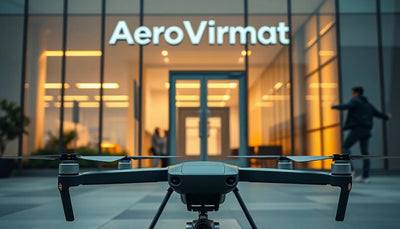
Merlin Shows Autonomous Flight Work at Texas eVTOL Integration Event
Merlin participated in the Texas Department of Transportation's Project NEXUS eVTOL integration kickoff, demonstrating autonomous flight capabilities on a Cessna Caravan. The appearance signals growing state-level interest in autonomy across aviation operations.

Quick answer
Merlin, Inc. participated as an invited guest at the Texas Department of Transportation's Project NEXUS eVTOL integration kickoff event, where it demonstrated autonomous flight capabilities using a Cessna Caravan at Alliance Airport.
- Merlin is an aerospace and defense technology company focused on autonomous flight operating systems
- The event was the kickoff for TxDOT's Project NEXUS eVTOL integration initiative
- The demonstration took place at Alliance Airport in Texas
- Merlin trades on NASDAQ under the ticker MRLN
Evidence: Source material
Fleet readiness
Keep DJI hardware available without overbuying new units.
Use defense and fleet news as a planning signal for repair support, inspected pre-owned aircraft, and replacement timing.

Verified facts
What the available evidence confirms
| Entity | Role | Detail |
|---|---|---|
| Merlin, Inc. | Invited guest | Demonstrated autonomous flight capabilities with a Cessna Caravan |
| Texas Department of Transportation | Event host | Kicked off Project NEXUS eVTOL integration initiative |
| Alliance Airport | Location | Site of the demonstration event |
Merlin, Inc., the aerospace and defense technology company building what it describes as an operating system of record for autonomous flight, appeared as an invited guest at the Texas Department of Transportation's Project NEXUS eVTOL integration kickoff event. The appearance, reported by Yahoo Finance on September 10, 2026, placed a Cessna Caravan equipped with Merlin's autonomous flight technology at Alliance Airport in Texas.
The event itself is notable less for a single flight and more for what it represents: state transportation agencies are now actively convening industry participants around electric vertical takeoff and landing aircraft, autonomy, and the infrastructure questions that come with both. For commercial operators and fleet planners, the signal is that autonomy is moving from laboratory demonstration toward the practical planning conversations that precede real operational integration.
What the Project NEXUS appearance actually shows
According to the source report, Merlin participated as an invited guest rather than as a formal program partner or contractor. The company used the event to showcase how autonomy can support safer and more efficient aviation operations, with the Cessna Caravan serving as the demonstration platform. That distinction matters. An invitation to a state DOT kickoff event is an early-stage engagement, not a procurement award or a regulatory milestone.
Still, the choice of a Cessna Caravan is commercially relevant. The Caravan is a workhorse utility aircraft used across cargo, regional transport, and specialized missions. Demonstrating autonomous capability on that airframe suggests Merlin is positioning its technology for retrofit and operational use cases that extend beyond experimental aircraft. For fleet operators who already run utility aviation assets, autonomy retrofits could eventually change how they think about pilot staffing, mission tempo, and operating cost.
Why state transportation agencies are paying attention
The Texas Department of Transportation's Project NEXUS is framed around eVTOL integration planning. That means the agency is looking at how electric vertical takeoff and landing aircraft will fit into existing transportation systems, airspace, ground infrastructure, and public expectations. Merlin's presence at the kickoff indicates that autonomy is being considered alongside eVTOL as part of the same forward-looking aviation conversation.
For the broader commercial drone and advanced air mobility market, this is a meaningful development. State DOTs control significant transportation infrastructure and have growing influence over where vertiports, charging facilities, and maintenance hubs might be located. When a state agency convenes industry around eVTOL and autonomy, it creates early signals about where future investment, regulatory attention, and operational activity may concentrate. Texas, with its large geography, strong aviation culture, and active logistics economy, is a logical early venue for that planning.
What this means for drone owners and the market
The direct impact on consumer and enterprise drone owners today is limited. Merlin's demonstration involved a crewed utility aircraft, not a small unmanned aerial system, and the event was a kickoff rather than a regulatory action or product launch. No new rules, certifications, or commercial offerings were announced in the source material. Buyers of pre-owned DJI drones, repair customers, and small fleet operators should not expect immediate changes to their purchasing or maintenance decisions.
However, the longer-term implications are worth tracking. Autonomy development in crewed aviation tends to pull adjacent technology forward: sense-and-avoid systems, detect-and-avoid software, remote supervision tools, and certification frameworks. Those same technology threads run through advanced drone operations, beyond-visual-line-of-sight flight, and enterprise fleet automation. Operators who follow autonomy milestones in the crewed aviation world are often seeing early versions of capabilities that will later appear in commercial unmanned systems. For those evaluating fleet planning or considering how to time equipment investments, the Reboot Hub Drone Wiki offers a useful reference for understanding how changing aviation technology affects ownership, maintenance, and resale decisions.
For repair and service providers, the signal is more abstract but still relevant. As autonomy hardware and software become more common across aviation, maintenance requirements shift from purely mechanical work toward sensor calibration, software validation, and data integrity checks. Repair businesses that build competency in avionics, sensor systems, and software-driven diagnostics may be better positioned for the next phase of the market, even if that phase is still years away for most commercial drone operators. For owners evaluating service and lifecycle risk, Drone Wiki explains the relevant repair, parts, resale, or operational path.
What operators should watch next
The source report does not specify next steps, timelines, or formal agreements between Merlin and TxDOT. That absence is itself a useful data point. Operators should treat this as an early indicator of interest rather than a committed program. The practical takeaway is to watch whether Merlin's Texas engagement leads to follow-on demonstrations, pilot programs, or formal partnerships, and whether other state DOTs begin hosting similar autonomy and eVTOL integration events.
For fleet managers and procurement teams, the disciplined approach is to monitor autonomy milestones without overreacting to a single kickoff appearance. The commercial aviation autonomy market remains in a development phase, and the gap between demonstration flights and certified, insurable, commercially available autonomous operations is substantial. Buyers should continue making equipment decisions based on current mission requirements, reliability data, and maintenance economics rather than speculative autonomy timelines. That said, the Texas event adds one more data point suggesting that public agencies are beginning to treat autonomy as a planning reality rather than a distant concept.
FAQ
Frequently asked questions
What did Merlin demonstrate at the Texas event?
Merlin participated as an invited guest at the TxDOT Project NEXUS eVTOL integration kickoff and demonstrated autonomous flight capabilities using a Cessna Caravan at Alliance Airport, according to the source report.
Does this event change anything for drone buyers or operators today?
No immediate regulatory, product, or pricing changes were announced. The event is an early-stage planning signal that autonomy and eVTOL integration are gaining attention from state transportation agencies, but it does not directly alter current drone purchasing, repair, or resale decisions.
Why is a state Department of Transportation involved in aviation autonomy?
State DOTs are increasingly involved in planning for advanced air mobility because eVTOL and autonomous aircraft will require ground infrastructure, airspace coordination, and public policy work that overlaps with transportation planning responsibilities.
Which sources support this update?
The visible evidence links identify Source material; each source is used only for the claim it directly supports.
What remains subject to change?
Retail pricing, availability, product bundles and regulatory timelines can change. Readers should verify the latest terms with the named retailer, manufacturer or regulator before acting.
How should buyers or operators use this analysis?
Use the verified facts as a starting point, then compare mission fit, lifecycle support, maintenance needs and current procurement terms before making a purchase or fleet decision.
Konzultált források
- Source material - primary source
A közzététel időpontjában további hivatalos dokumentáció nem állt rendelkezésre.
A Reboot Hub szerkesztősége vásárlási, javítási, viszonteladási és üzemeltetési elemzéseket nyújt dróntulajdonosok számára. Ha hibát észlel, kérjük, jelezze nekünk a szerkesztői irányelvünknek megfelelően a javítás érdekében.