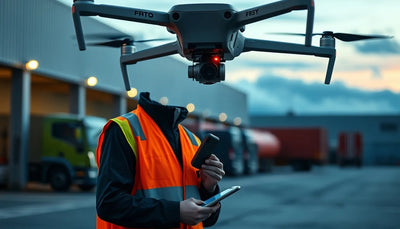
HoverAir Versa Blends Flying Camera With Handheld Gimbal
HoverAir has unveiled the Versa, a hybrid device that combines a handheld stabilized camera with the autonomous flight technology from its X1 series. DroneDJ reports the product targets creators who want walking shots and aerial video from one compact tool.

Quick answer
HoverAir officially debuted the Versa, a hybrid device combining a professional handheld gimbal camera with autonomous flying technology from its X1 series, according to DroneDJ.
- The Versa merges stabilized handheld capture with AI-powered aerial video in one device.
- The product builds on HoverAir's existing X1 autonomous flight platform.
- DroneDJ is the primary reporting source for the launch details.
- The hybrid design targets creators who currently carry separate gimbals and drones.
Evidence: DroneDJ
DJI buying context
Match product news to hardware you can actually deploy.
Check inspected DJI aircraft, repair support, and trade-in timing before deciding whether to upgrade, repair, or wait.

Verified facts
What the available evidence confirms
| Aspect | HoverAir Versa (as reported) |
|---|---|
| Form factor | Hybrid handheld gimbal camera and autonomous flying camera |
| Flight heritage | Built on HoverAir X1 series autonomous technology |
| Primary use case | Stabilized walking shots and AI-powered aerial video |
| Reporting source | DroneDJ, August 19, 2026 |
HoverAir is making a direct play for the space between handheld stabilization and autonomous flight. According to DroneDJ, the company has officially debuted the HoverAir Versa, a hybrid device that combines a professional handheld camera with the autonomous flying technology behind its popular X1 series. The result is a single tool that can capture stabilized walking shots on the ground and then lift off for AI-powered aerial video.
The announcement matters because it targets a real operational friction point for content creators and commercial imaging teams. Many operators currently carry a pocket gimbal for ground work and a separate compact drone for aerial shots. The Versa concept collapses those two workflows into one device, which could simplify kit planning, reduce carry weight, and lower the number of batteries, chargers, and accessories a small crew needs to manage.
What the Versa actually is, based on the report
DroneDJ describes the Versa as a hybrid of two product categories that HoverAir knows well. The company gained traction with its X1 series of autonomous flying cameras, which are designed to launch from the hand, track a subject, and capture aerial footage without a traditional remote controller. The Versa extends that flight DNA into a device that also functions as a stabilized handheld camera when it is not airborne.
That dual-mode design is the core commercial proposition. A solo operator can film a subject walking through a scene with the Versa in hand, then launch the same device to capture a tracking shot from above. For small production teams, wedding videographers, real estate marketers, and social media content operations, that could eliminate one entire piece of hardware from the standard kit.
Reboot Hub analysis: the hybrid category is still young, and the practical durability questions are significant. A device that must survive both handheld use and repeated autonomous landings faces more mechanical stress than a single-purpose gimbal or drone. That has direct implications for repair frequency, spare part demand, and long-term ownership costs, especially for operators who use the Versa daily across mixed environments.
How this compares to the DJI ecosystem
DJI made pocket gimbals popular with its Osmo line, and the company also dominates the compact autonomous camera drone category with models across its consumer portfolio. HoverAir's Versa is not a direct DJI competitor in the traditional sense, but it does occupy a conceptual gap that DJI has not fully closed with a single hybrid device.
For drone buyers who already operate DJI hardware, the Versa is unlikely to replace a primary aerial platform. Instead, it may function as a secondary or specialized tool for ground-to-air transition shots. The commercial question is whether operators will pay for a hybrid device when they may already own a capable DJI drone and a separate gimbal or smartphone stabilizer.
This is where the pre-owned DJI market becomes relevant. Operators who are considering the Versa may choose to sell or trade existing compact drones and gimbals to offset the cost. That could increase the supply of inspected pre-owned DJI units entering the secondary market, which historically supports price competition and gives newer operators a lower-cost entry point into stabilized aerial work.
What this means for drone owners and the market
The Versa launch signals that autonomous flight technology is moving beyond dedicated drones and into hybrid consumer imaging tools. For fleet managers and solo operators, that means the line between ground-based stabilization and aerial capture is blurring. A device that performs both functions could reduce the number of units a team needs to purchase, insure, and maintain, but it also concentrates risk in a single piece of hardware.
If the Versa fails during a shoot, the operator loses both the handheld gimbal and the aerial camera at once. That is a meaningful operational consideration. A traditional two-device setup offers redundancy: if the drone goes down, the gimbal still works, and vice versa. Operators evaluating the Versa should weigh that concentration of risk against the convenience of a single hybrid tool. For repair planning, a hybrid device also introduces more complex failure modes, and owners should consider service access and spare part availability before committing. For those managing mixed fleets, the Drone Wiki offers a practical reference point for understanding how different platforms and repair paths compare. For owners evaluating service and lifecycle risk, Drone Wiki explains the relevant repair, parts, resale, or operational path.
The broader market implication is that HoverAir is pushing compact autonomous flight into a more versatile role. If the Versa gains traction, other manufacturers may respond with their own hybrid concepts, which could accelerate innovation in the lightweight camera drone segment. For buyers, that means more choice, but also more complexity when evaluating what a device can actually do reliably in the field.
What operators should watch next
The most important unknown is real-world durability. The Versa's hybrid design sounds compelling on paper, but the source report does not provide independent testing data, battery life figures, or long-term reliability information. Operators should wait for hands-on reviews that examine how the device performs across repeated handheld-to-flight transitions, how the gimbal holds up after autonomous landings, and whether the flight autonomy is as reliable as the X1 series in varied conditions.
Pricing and availability details are also not yet clear from the DroneDJ report. Those factors will determine whether the Versa is a practical addition to a working kit or a premium novelty. Commercial buyers should evaluate the total cost of ownership, including potential repair costs and spare part access, before treating the Versa as a replacement for proven single-purpose tools.
For now, the Versa represents a meaningful product direction rather than a proven category shift. Operators who need reliable ground and aerial capture today should continue to evaluate dedicated tools on their own merits. The hybrid promise is real, but the operational evidence is still thin.
FAQ
Frequently asked questions
What is the HoverAir Versa?
The HoverAir Versa is a hybrid camera device that combines a handheld stabilized gimbal with autonomous flying technology from HoverAir's X1 series, according to DroneDJ. It is designed to capture both walking shots and AI-powered aerial video from one device.
Is the HoverAir Versa a DJI product?
No, the Versa is made by HoverAir, not DJI. However, it competes conceptually with DJI's pocket gimbal and compact autonomous drone categories, which DJI has historically led with products like the Osmo line and its consumer drone portfolio.
Should drone operators buy the HoverAir Versa right now?
Operators should wait for independent durability and performance testing before committing. The hybrid design concentrates risk in one device, and pricing, battery life, and long-term reliability details are not yet confirmed in the source report.
Which sources support this update?
The visible evidence links identify DroneDJ; each source is used only for the claim it directly supports.
What remains subject to change?
Retail pricing, availability, product bundles and regulatory timelines can change. Readers should verify the latest terms with the named retailer, manufacturer or regulator before acting.
How should buyers or operators use this analysis?
Use the verified facts as a starting point, then compare mission fit, lifecycle support, maintenance needs and current procurement terms before making a purchase or fleet decision.
Konzultált források
- DroneDJ - primary source
- DIU Blue UAS - official government source
A Reboot Hub szerkesztősége vásárlási, javítási, viszonteladási és üzemeltetési elemzéseket nyújt dróntulajdonosok számára. Ha hibát észlel, kérjük, jelezze nekünk a szerkesztői irányelvünknek megfelelően a javítás érdekében.