FirstEnergy Grant Funds Drone Training for New Jersey Teachers and Police
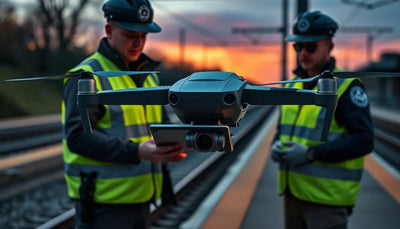
A $15,000 FirstEnergy Foundation grant will help WarrenUAS train 20 New Jersey teachers and police officers for FAA Part 107 certification and hands-on flight work. The program signals growing public-sector demand for structured drone education and professional pilot development.

Quick answer
The FirstEnergy Foundation awarded $15,000 to WarrenUAS at Warren County Community College to fund FAA Part 107 preparation and hands-on drone flight training for 20 New Jersey teachers and police officers.
- Grant amount: $15,000 from FirstEnergy Foundation
- Recipient: WarrenUAS at Warren County Community College
- Beneficiaries: 20 teachers and police officers
- Focus: FAA Part 107 preparation and hands-on flight training
- Location: New Jersey
Evidence: DRONELIFE · FAA UAS official guidance
Operator checklist
Turn policy news into a safer fleet decision.
Before changing aircraft, compare repair paths, available DJI inventory, and trade-in timing against the rule change.

Verified facts
What the available evidence confirms
| Aspect | Detail |
|---|---|
| Grant amount | $15,000 |
| Funding source | FirstEnergy Foundation |
| Recipient program | WarrenUAS, Warren County Community College |
| Training focus | FAA Part 107 preparation and hands-on flight training |
| Beneficiaries | 20 teachers and police officers |
| Region | New Jersey |
A FirstEnergy Foundation grant is funding professional drone training for teachers and police officers in New Jersey, according to reporting from DRONELIFE. The foundation awarded $15,000 to WarrenUAS, the unmanned systems program at Warren County Community College, to support FAA Part 107 preparation and hands-on flight training for 20 participants.
The grant reflects a quiet but meaningful shift in how public-sector institutions are approaching drone capability. Rather than treating unmanned aircraft as a niche technical interest, school districts and law enforcement agencies are investing in structured, certification-focused training. For commercial operators, repair providers, and the broader drone market, that institutional demand has downstream effects worth watching.
What the grant actually covers
DRONELIFE reports that the FirstEnergy Foundation funding will support FAA Part 107 preparation and hands-on flight training delivered through WarrenUAS. The program targets 20 individuals, specifically teachers and police officers, in the New Jersey region served by the college.
Part 107 certification is the baseline commercial drone credential in the United States, required for most non-recreational operations. For teachers, that certification opens the door to integrating drones into STEM curricula, agriculture programs, journalism classes, and technical education tracks. For police officers, it supports department-level drone units used in search and rescue, accident reconstruction, and situational awareness.
Reboot Hub analysis: The hands-on component matters as much as the written exam preparation. A pilot can pass the Part 107 knowledge test and still lack the practical flight hours needed to operate safely in real-world conditions. Programs that pair classroom instruction with supervised flight time produce operators who are more likely to fly within regulatory boundaries and less likely to damage equipment through basic pilot error.
Why public-sector training signals matter
Public agencies rarely move quickly on new technology. When they do, it usually follows a period of internal justification, budget review, and policy development. A foundation grant that funds structured drone training for police and educators suggests that at least some New Jersey institutions have already crossed that threshold and are now building operational capacity.
That has practical implications for the commercial drone ecosystem. Public-sector fleets tend to be more standardized than consumer or hobbyist operations. Agencies often purchase specific airframes, follow documented maintenance schedules, and replace equipment on predictable cycles. When police departments and school districts formalize drone programs, they create demand not only for aircraft but also for spare parts, repair services, insurance, and ongoing training.
For independent repair shops and parts suppliers, public-sector clients behave differently from individual consumers. They typically require documentation, prefer OEM or OEM-equivalent components, and value turnaround time because equipment downtime affects active operations. A growing base of trained public-sector pilots could expand that service market in New Jersey and beyond.
What this means for drone owners and the market
The immediate market impact of a $15,000 training grant is modest. Twenty pilots do not reshape national demand. But the grant is better read as an indicator of direction rather than a single demand event. When community colleges, foundations, and public agencies align around drone training, they normalize certification and professional standards across the sector.
For individual drone owners and small commercial operators, that normalization cuts both ways. On one hand, more trained pilots mean more legitimate flight activity, more awareness of airspace rules, and potentially fewer incidents that trigger restrictive local ordinances. On the other hand, public agencies with certified operators may begin competing for contracts that independent pilots previously handled alone, particularly in inspection, mapping, and event documentation.
For buyers in the pre-owned DJI market, the relevant question is whether public-sector training programs shift demand toward enterprise-class airframes or keep it concentrated in consumer and prosumer models. Police departments and school districts often start with accessible platforms before scaling into specialized equipment. That pattern tends to preserve resale value for well-maintained consumer and prosumer drones, since training fleets and early-stage programs absorb used units that still meet certification and practice requirements. Operators and buyers tracking this space can monitor public-sector procurement patterns through resources like the Drone Wiki to understand how training demand translates into equipment choices. For owners evaluating service and lifecycle risk, Drone Wiki explains the relevant repair, parts, resale, or operational path.
Fleet managers should also note the emphasis on hands-on flight time. Training programs that include supervised flight hours tend to produce operators who understand battery management, pre-flight inspection, and basic troubleshooting. That reduces the frequency of avoidable damage and extends the useful life of airframes, which matters for anyone calculating total cost of ownership across a multi-unit fleet.
The broader regulatory and workforce picture
The WarrenUAS grant sits inside a larger pattern of workforce development tied to FAA Part 107 certification. Community colleges across the United States have been adding drone courses to attract students and meet local employer demand. Foundation grants like the one from FirstEnergy often fill gaps that tuition and state funding do not cover, especially for public employees who need training but lack departmental budgets for it.
DRONELIFE identifies the funding source and recipient clearly, but the report does not detail the specific curriculum, instructor qualifications, or equipment used in the training. Reboot Hub analysis would note that those details matter for evaluating program quality. Part 107 preparation can range from a brief online review to a multi-week course with structured flight labs. The presence of hands-on training suggests a more substantial program, but operators evaluating similar opportunities should ask about flight hours, instructor credentials, and whether the training includes night operations or controlled airspace procedures.
For repair customers, the regulatory angle is indirect but real. As more public-sector pilots enter the airspace with proper certification, the overall professionalism of the drone market improves. That can lead to better maintenance habits, more documented flight logs, and clearer expectations when equipment needs service. Shops that understand Part 107 requirements and public-agency procurement rules will be better positioned to serve these clients.
The New Jersey program is small in absolute terms, but it represents the kind of incremental institutional adoption that builds durable demand over time. Teachers who complete the training may launch high school drone programs. Police officers who earn Part 107 certificates may advocate for department-level drone units. Each step creates a new node in the training, equipment, and service network that supports the broader commercial drone economy.
FAQ
Frequently asked questions
Who is funding the New Jersey drone training program?
The FirstEnergy Foundation awarded a $15,000 grant to WarrenUAS, the unmanned systems program at Warren County Community College, according to DRONELIFE reporting.
Who will receive the training?
The funding will support FAA Part 107 preparation and hands-on flight training for 20 teachers and police officers in New Jersey.
Why does this matter for commercial drone operators?
Public-sector training programs signal institutional adoption of drones, which can increase demand for equipment, repair services, and certified pilots while also raising professional standards across the market.
Which sources support this update?
The visible evidence links identify DRONELIFE and FAA UAS official guidance; each source is used only for the claim it directly supports.
What remains subject to change?
Retail pricing, availability, product bundles and regulatory timelines can change. Readers should verify the latest terms with the named retailer, manufacturer or regulator before acting.
How should buyers or operators use this analysis?
Use the verified facts as a starting point, then compare mission fit, lifecycle support, maintenance needs and current procurement terms before making a purchase or fleet decision.
Konzultált források
- DRONELIFE - primary source
- FAA UAS official guidance - official regulator source
A Reboot Hub szerkesztősége vásárlási, javítási, viszonteladási és üzemeltetési elemzéseket nyújt dróntulajdonosok számára. Ha hibát észlel, kérjük, jelezze nekünk a szerkesztői irányelvünknek megfelelően a javítás érdekében.