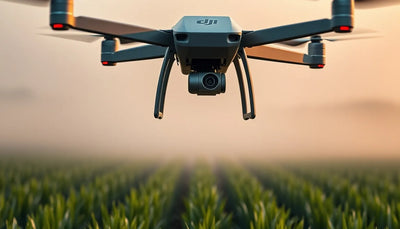
FCC Signals Wider DJI Drone Ban as New Models Face Targeting
The FCC is reportedly preparing to target additional DJI drone models under the federal ban. Commercial operators and pre-owned buyers should prepare for tighter supply constraints and shifting repair decisions.

The Federal Communications Commission is reportedly preparing to ramp up its enforcement of the DJI drone ban, with new signals indicating that additional models could be targeted beyond those already restricted. The report, published by No Film School and aggregated through Google News DJI, points to a widening regulatory posture that could have immediate consequences for commercial operators, fleet managers, and the pre-owned DJI market. While the source does not name specific models or provide a timeline, the direction of travel is clear: the FCC is not done with DJI.
For buyers and operators who have been watching the regulatory landscape since the initial ban took shape, this is a familiar but unwelcome development. The original restrictions were framed around national security concerns, and the FCC's designation of DJI equipment as a covered communications supply chain threat has already forced many public safety and government-affiliated operators to seek alternatives. Now, with the potential for more models to be added to the restricted list, the commercial and consumer markets are bracing for a broader impact.
What the FCC's expanded targeting means for the ban
The core of the report is that the FCC is set to potentially ramp up the ban again, specifically by targeting more DJI models. This is not a repeal or a softening of the existing stance; it is an expansion. The original ban, which took effect in late 2024, prohibited the import and sale of DJI products in the United States after the FCC determined they posed an unacceptable risk to national security. That determination covered a range of DJI models, but the new reporting suggests the agency is preparing to widen the net.
Operator checklist
Turn policy news into a safer fleet decision.
Before changing aircraft, compare repair paths, available DJI inventory, and trade-in timing against the rule change.

For commercial operators, this means the pool of legally available DJI hardware in the U.S. could shrink further. If additional models are added to the restricted list, operators who rely on those specific aircraft for inspection, mapping, or cinematography work will need to reassess their equipment strategy. The report does not specify which models are under consideration, but the uncertainty alone is enough to complicate procurement planning.
It is also worth noting that the source is a trade publication report, not an official FCC announcement. As of this writing, the FCC has not publicly confirmed the specific models or the exact scope of the expansion. Operators should treat this as a credible signal of intent rather than a finalized rule change.
How the pre-owned DJI market could shift
One of the most immediate effects of an expanded ban is on the pre-owned DJI market. When the original ban took effect, the resale value of used DJI drones in the U.S. did not collapse; in fact, demand for existing units increased in some segments as operators sought to secure hardware that was already in the country and legally owned. The same dynamic could repeat if more models are added to the restricted list.
Buyers looking for pre-owned DJI drones may find that prices hold firm or even rise for models that are already in the U.S. and not subject to the expanded restrictions. Conversely, models that are newly targeted could see a drop in buyer interest, particularly among commercial operators who need to maintain compliance with federal regulations. This creates a bifurcated market: restricted models become harder to move, while unrestricted models become more valuable.
For repair customers, the implications are more practical. If a specific model is added to the ban, the availability of OEM spare parts for that model could tighten. Import restrictions apply to complete drones and components, which means repair shops may face longer lead times or higher costs for genuine OEM parts. Fleet operators who maintain a mixed fleet of DJI and non-DJI aircraft should factor this into their maintenance schedules and parts inventory planning.
What this means for drone owners and the market
For the average drone owner, the immediate takeaway is not to panic-sell or make rushed purchasing decisions, but to understand that the regulatory environment is becoming less predictable. If you own a DJI drone that is not currently on the restricted list, the expanded ban does not make your aircraft illegal to own or fly. The ban targets import and sale, not possession or operation. That distinction matters for operators who are worried about being grounded overnight.
For those in the market for a new or additional drone, the calculus is more complex. Buying a DJI model that is already restricted is not possible through normal U.S. retail channels, and the secondary market is the only legal way to acquire one. If more models are added, the secondary market for those specific aircraft will become the only option, which could drive up prices for pristine pre-owned units. For operators who need to stay compliant and want to avoid the uncertainty, exploring non-DJI alternatives may be the more prudent path, though that comes with its own learning curve and ecosystem costs.
Fleet managers should also consider the repair and support implications. As the ban expands, the availability of genuine OEM spare parts for restricted models may become inconsistent. This is where a reliable repair and parts strategy becomes essential; operators who rely on professional DJI repair services and OEM-pulled parts will need to verify that their supply chain remains viable. For those navigating these decisions, the Reboot Hub Drone Wiki offers a practical reference point for understanding the broader drone repair and support market. For owners evaluating service and lifecycle risk, Drone Wiki explains the relevant repair, parts, resale, or operational path.
Reboot Hub analysis: The market-wide effect is likely to be a continued divergence between DJI's global dominance and its shrinking U.S. footprint. DJI remains the leading drone manufacturer worldwide, but the U.S. regulatory environment is pushing a segment of the market toward domestic and other non-Chinese alternatives. For commercial operators, this is not an ideological choice; it is a compliance and supply chain decision that has to be made with the current rules in mind.
Preparing for the next phase of the ban
Operators and buyers should not wait for the FCC to publish a final rule before taking action. The report indicates that the ramp-up is coming, and the lead time for regulatory changes in this area has historically been short. Here are a few practical steps to consider.
First, audit your current fleet and identify which DJI models you own or operate. If any of those models are likely candidates for the expanded ban, consider whether you need to secure spare parts now, before import restrictions tighten further. Second, if you are planning to buy a pre-owned DJI drone, confirm that the specific model is not already on the restricted list and monitor the news for any updates that could affect its status. Third, for fleet operators, develop a contingency plan that includes alternative aircraft options and a clear understanding of your repair and parts supply chain.
The regulatory landscape for drones in the U.S. is not static, and this report is a reminder that the FCC's enforcement posture can change quickly. Staying informed and planning ahead is the most effective way to protect your investment and keep your operations running smoothly, whether you are a solo pilot or a large fleet operator.
Will my existing DJI drone become illegal to fly if the ban expands?
No. The ban targets import and sale of DJI equipment in the U.S., not possession or operation. If you already own a DJI drone, the expanded ban does not make it illegal to fly, provided you comply with all other FAA regulations.
Should I buy a pre-owned DJI drone now before more models are banned?
Reboot Hub analysis: It depends on your risk tolerance and compliance needs. If the model you want is not currently restricted and you can verify its provenance, a pre-owned purchase may be a reasonable way to secure hardware. However, if the model is likely to be added to the ban, consider whether you can maintain it with available spare parts over the long term.
How can I prepare my fleet for a wider DJI ban?
Audit your current DJI models, stock up on genuine OEM spare parts for critical components, and develop a contingency plan that includes alternative aircraft. Also, monitor FCC announcements and reputable trade publications for updates on which models may be targeted next.
Konzultált források
A közzététel időpontjában további hivatalos dokumentáció nem állt rendelkezésre.
A Reboot Hub szerkesztősége vásárlási, javítási, viszonteladási és üzemeltetési elemzéseket nyújt dróntulajdonosok számára. Ha hibát észlel, kérjük, jelezze nekünk a szerkesztői irányelvünknek megfelelően a javítás érdekében.