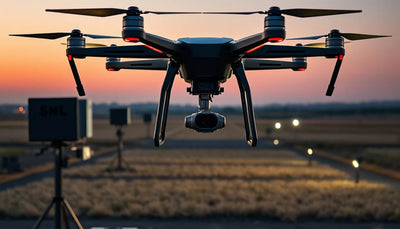
F-22 Pilot Controls FQ-44 Drone From Cockpit in First Flight Demo
An F-22 pilot controlled an FQ-44 fighter drone from the cockpit for the first time, marking a key milestone for the Air Force's collaborative combat aircraft program. The War Zone reports the test positions F-22s as aerial quarterbacks for future unmanned wingmen.

Quick answer
An F-22 pilot controlled an FQ-44 fighter drone from the cockpit for the first time, a milestone reported by The War Zone for the Air Force's Collaborative Combat Aircraft program.
- The F-22 is positioned as the Air Force's first aerial quarterback for CCA drones
- The test involved cockpit-based control of an FQ-44 unmanned fighter
- The milestone reflects broader defense investment in crewed-uncrewed teaming
- Commercial drone buyers should watch how autonomy and control standards evolve from defense programs
Evidence: The War Zone · Defense.gov official source
Fleet readiness
Keep DJI hardware available without overbuying new units.
Use defense and fleet news as a planning signal for repair support, inspected pre-owned aircraft, and replacement timing.

The U.S. Air Force has reached a notable milestone in crewed-uncrewed teaming. According to reporting from The War Zone, an F-22 Raptor pilot controlled an FQ-44 fighter drone from the cockpit for the first time. The development positions the F-22 as the Air Force's first aerial "quarterback" for Collaborative Combat Aircraft, or CCA, drones.
For commercial drone operators, fleet buyers, and repair customers, the test may seem distant from everyday flight operations. But defense autonomy programs have a long history of shaping the control interfaces, safety standards, and supply chain expectations that eventually reach civilian markets. Understanding where military drone control is heading offers a useful signal for procurement planning and long-term fleet decisions.
The milestone and what The War Zone reported
The War Zone's reporting describes the cockpit control event as a key step in the Air Force's broader Collaborative Combat Aircraft effort. The F-22 is expected to serve as an early platform for directing uncrewed fighter drones, acting as a command node rather than simply flying alongside them. The FQ-44 designation refers to the unmanned aircraft involved in the test.
This is not a one-off demonstration in isolation. The Air Force has been building toward crewed-uncrewed teaming for years, with the goal of pairing manned fighters with autonomous or semi-autonomous drones that can extend sensor reach, carry additional payloads, or absorb risk in contested airspace. The cockpit control milestone suggests the control link between pilot and drone is maturing beyond ground-station operation.
For commercial readers, the practical takeaway is that defense programs are validating the idea of a single operator managing multiple aircraft from a primary control position. That concept has direct parallels in enterprise drone operations, where fleet managers increasingly expect to supervise several airframes from one console or mobile device.
Why cockpit control matters for autonomy standards
The ability to control an unmanned fighter from a manned cockpit requires a reliable, low-latency control architecture. The War Zone's report does not specify the technical details of the link, but the milestone itself implies that the Air Force is comfortable enough with the control pathway to demonstrate it in flight. That confidence typically follows extensive ground testing and simulation.
Defense autonomy programs often drive investment in secure command links, sense-and-avoid systems, and fail-safe behaviors. Those technologies do not remain locked inside military programs forever. Civilian drone manufacturers and enterprise software providers watch these developments closely, and features that prove reliable in defense testing can influence commercial autopilot and fleet management tools over time.
For a fleet operator managing pre-owned DJI drones or mixed commercial airframes, the relevant question is whether future control standards will require more sophisticated operator training or new hardware. While no commercial requirement exists today, the direction of travel in defense autonomy suggests that multi-aircraft supervision is becoming a normal operational expectation rather than an experimental edge case.
What this means for drone owners and the market
The F-22 and FQ-44 milestone is a defense story first, but it carries a market signal for commercial drone buyers. When military programs validate crewed-uncrewed teaming at this level, they reinforce the broader industry trend toward autonomy, remote supervision, and fleet-based operations. Buyers who plan multi-year drone budgets should expect that control interfaces, safety systems, and operator expectations will continue to evolve toward more integrated, network-centric models.
For repair customers and pre-owned drone buyers, the practical implication is less about immediate hardware changes and more about lifecycle planning. As autonomy features mature, older airframes may become less attractive if they cannot support updated control software or fleet management integrations. That dynamic already affects the pre-owned DJI market, where firmware support and compatibility with current control apps influence resale value. Operators evaluating inspected pre-owned aircraft should consider not just current condition but also the likelihood of continued software relevance. For owners evaluating service and lifecycle risk, Drone Wiki explains the relevant repair, parts, resale, or operational path.
Reboot Hub analysis suggests that defense autonomy milestones like this one tend to accelerate commercial interest in fleet supervision tools, even when the underlying aircraft are very different. A drone repair customer or fleet manager reading this story should ask whether their current hardware and workflow can accommodate multi-aircraft oversight, or whether their next procurement cycle should prioritize platforms with stronger fleet management support. For those researching platform options and lifecycle considerations, the Drone Wiki offers a reference point for understanding how different airframes and support ecosystems compare.
Procurement and fleet planning implications
The Air Force's Collaborative Combat Aircraft program is a long-term procurement effort, and the F-22 cockpit control test is one early data point in that trajectory. The War Zone's reporting does not provide a timeline for operational deployment, and commercial readers should treat the milestone as a directional indicator rather than an immediate market event.
Still, defense procurement patterns often influence commercial supply chains. Components developed for military autonomy programs, including sensors, processors, and secure communication modules, can eventually appear in civilian products or shape the expectations of enterprise buyers. For fleet operators, the lesson is to monitor defense autonomy announcements not as distant news but as leading indicators of where commercial control systems may head.
For buyers in the pre-owned DJI market, the near-term impact is minimal. No DJI product line is directly affected by an F-22 cockpit control test. But the broader narrative of crewed-uncrewed teaming reinforces the value of platforms that support reliable remote operation, robust telemetry, and integration with fleet management software. Those are the same qualities that hold resale value well in the second-hand market.
FAQ
Frequently asked questions
What did the F-22 pilot do in the test?
According to The War Zone, an F-22 pilot controlled an FQ-44 fighter drone from the cockpit for the first time, marking a milestone in the Air Force's Collaborative Combat Aircraft program.
Why does this matter for commercial drone operators?
The test signals that multi-aircraft supervision and crewed-uncrewed teaming are becoming operational priorities. Commercial fleet managers should expect control interfaces and autonomy features to evolve in a similar direction over time.
Should pre-owned DJI drone buyers change their plans because of this news?
No immediate change is required. The milestone is a defense program development with no direct impact on DJI hardware. However, buyers should continue to prioritize platforms with strong fleet management support and software longevity, since those factors influence long-term value.
Which sources support this update?
The visible evidence links identify The War Zone and Defense.gov official source; each source is used only for the claim it directly supports.
What remains subject to change?
Retail pricing, availability, product bundles and regulatory timelines can change. Readers should verify the latest terms with the named retailer, manufacturer or regulator before acting.
How should buyers or operators use this analysis?
Use the verified facts as a starting point, then compare mission fit, lifecycle support, maintenance needs and current procurement terms before making a purchase or fleet decision.
Konzultált források
- The War Zone - primary source
- Defense.gov official source - official government source
A Reboot Hub szerkesztősége vásárlási, javítási, viszonteladási és üzemeltetési elemzéseket nyújt dróntulajdonosok számára. Ha hibát észlel, kérjük, jelezze nekünk a szerkesztői irányelvünknek megfelelően a javítás érdekében.