Drone Show Failure on Shanghai Bund Raises Fleet Safety Questions
A drone light show over Shanghai's Bund lost control and crashed, with witnesses reporting mid-air collisions. The incident highlights operational risk questions for commercial drone operators, fleet managers, and buyers evaluating reliability and repair planning.

Quick answer
A Lehu International drone show over Shanghai's Bund lost control and crashed, with witnesses reporting multiple devices collided in mid-air.
- Incident occurred during a Lehu International drone show on Shanghai's Bund
- Witnesses reported multiple drones collided in mid-air before crashing
- The event raises operational safety and fleet reliability questions for commercial UAV operators
- Source: PChome Computer Home via Google News RSS
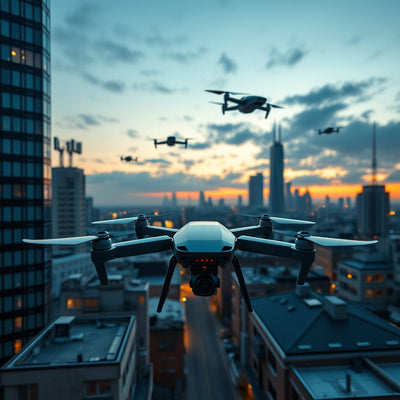
A drone light show operated by Lehu International over Shanghai's Bund lost control and crashed, according to a report from PChome Computer Home. Witnesses cited in the report said multiple devices collided in mid-air before falling, turning a choreographed aerial display into an uncontrolled incident along one of Shanghai's most visible waterfront promenades.
Market context
Turn market news into a buy, repair, or trade-in decision.
Compare pre-owned availability, resale timing, and repair economics before the market moves again.

The report, distributed through Google News RSS, does not yet specify the number of drones involved, whether any injuries occurred, or what caused the loss of control. What it does establish is that a commercial drone formation experienced a systemic failure during a public event, with multiple aircraft involved in collisions rather than an isolated single-unit malfunction. For commercial operators, fleet managers, and buyers evaluating drone reliability, that distinction matters.
What the Shanghai Bund incident suggests about formation risk
Drone light shows depend on synchronized flight paths, tight spacing, and real-time coordination across dozens or hundreds of aircraft. When that coordination breaks down, the failure mode is rarely contained to one unit. The PChome Computer Home report indicates witnesses observed multiple devices colliding in mid-air, which points to a cascade effect rather than a single drone drifting off course.
For commercial operators, this is a reminder that fleet risk is not simply the sum of individual aircraft risk. A single software glitch, communication dropout, or GPS interference event can propagate across an entire formation. Reboot Hub analysis suggests that buyers evaluating pre-owned DJI drones for multi-aircraft operations should consider how a platform handles degraded conditions, not just how it performs in ideal flight scenarios. Formation flying, automated missions, and synchronized operations all introduce failure modes that single-drone flights do not.
What this means for drone owners and the market
The Shanghai Bund incident is a public, high-visibility example of what happens when commercial drone operations fail in an urban environment. For fleet operators, the immediate takeaway is that redundancy and fail-safe behavior deserve as much scrutiny as camera quality or flight time. A drone that loses communication or encounters interference should have predictable, tested behavior for returning to a safe landing point or holding position. When multiple units collide, it suggests that whatever safety protocol was in place did not prevent a cascading failure.
For buyers in the pre-owned DJI market, this kind of incident reinforces the importance of inspection and repair history. Operators who source pristine pre-owned or inspected pre-owned DJI drones should verify that flight controllers, sensors, and communication modules have been checked, not just that the airframe looks clean. Genuine OEM spare parts and professional DJI repair become more relevant when a fleet is expected to operate in coordinated or high-density scenarios. The Drone Wiki is a useful reference point for operators who want to understand how different failure modes affect repair decisions and fleet planning. For owners evaluating service and lifecycle risk, Drone Wiki explains the relevant repair, parts, resale, or operational path.
There is also a market-level signal here. Drone light shows have become a popular commercial service in China and elsewhere, with operators competing on scale and visual complexity. When a prominent show fails publicly, event organizers and municipal clients may tighten their vendor requirements, demand more robust safety documentation, or reconsider the risk profile of large formations. That could shift demand toward operators who can demonstrate stronger maintenance records, newer or better-maintained aircraft, and clearer contingency planning.
Repair, inspection, and the cost of public failure
Reboot Hub analysis: A mid-air collision event has direct implications for repair economics. Drones that collide in flight typically suffer impact damage to propellers, arms, gimbals, and battery housings. In a formation failure, the damage is multiplied across multiple units simultaneously. For repair customers and fleet managers, this means understanding which components are most likely to need replacement after a collision event and whether OEM-pulled parts are available for the affected models.
The PChome Computer Home report does not identify the specific drone models used in the Shanghai show, so Reboot Hub cannot offer model-specific repair guidance. However, the general pattern is consistent across commercial platforms: collision damage tends to concentrate in structural components and sensor housings, while the underlying flight controller and power systems may survive intact. Operators who can assess damage quickly and source genuine OEM spare parts will recover faster than those who rely on ad hoc fixes. For buyers considering pre-owned aircraft that may have been used in demanding commercial roles, a documented repair history becomes a meaningful valuation factor.
What operators should watch next
The Shanghai Bund incident is still developing, and the PChome Computer Home report leaves several questions open. Was the failure caused by interference, software error, or a hardware defect? Did the operator have a manual override or emergency landing protocol? Were any spectators or property affected? Each of these answers will shape how regulators, insurers, and commercial clients respond.
For now, the prudent operator response is to review formation flight protocols, verify that fail-safe behaviors are tested and documented, and assess whether current maintenance practices are adequate for high-density operations. Buyers evaluating pre-owned DJI drones should ask about prior use cases, collision history, and component replacement records. The commercial drone market has grown quickly, but public incidents like this one tend to accelerate scrutiny of operational standards. Operators who can demonstrate disciplined maintenance and repair practices will be better positioned as that scrutiny increases.
FAQ
Frequently asked questions
What happened during the drone show in Shanghai?
According to a report from PChome Computer Home, a Lehu International drone show over Shanghai's Bund lost control and crashed. Witnesses reported that multiple drones collided in mid-air before falling.
Does this incident affect commercial drone operators outside China?
Directly, no. But the failure pattern is relevant to any operator running multi-drone formations or synchronized missions. It highlights the risk of cascading failures when coordination breaks down and reinforces the value of tested fail-safe protocols and documented maintenance.
What should a drone buyer or fleet manager do after reading this?
Review your fleet's collision history, verify that fail-safe behaviors are tested, and ensure that repair work uses genuine OEM spare parts. For pre-owned purchases, ask about prior use cases and component replacement records before committing to a multi-aircraft operation.
Which sources support this update?
The article distinguishes reported information from analysis and does not present an unverified source as official confirmation.
What remains subject to change?
Retail pricing, availability, product bundles and regulatory timelines can change. Readers should verify the latest terms with the named retailer, manufacturer or regulator before acting.
How should buyers or operators use this analysis?
Use the verified facts as a starting point, then compare mission fit, lifecycle support, maintenance needs and current procurement terms before making a purchase or fleet decision.
Konzultált források
- Source material - primary source
A közzététel időpontjában további hivatalos dokumentáció nem állt rendelkezésre.
A Reboot Hub szerkesztősége vásárlási, javítási, viszonteladási és üzemeltetési elemzéseket nyújt dróntulajdonosok számára. Ha hibát észlel, kérjük, jelezze nekünk a szerkesztői irányelvünknek megfelelően a javítás érdekében.