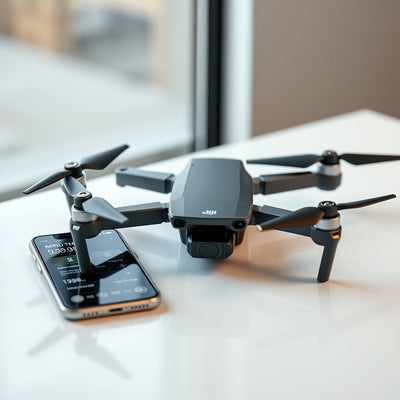
DJI Neo 3 Reportedly Arrives in Two Variants but May Skip the US Market
A new industry report points to two DJI Neo 3 variants, while suggesting the model may not reach the United States. For commercial operators and pre-owned buyers, that changes near-term planning around fleet expansion, parts availability, and resale value.

Quick answer
A Google News industry report indicates the DJI Neo 3 will arrive in two confirmed variants but may not be sold in the United States.
- The report names two DJI Neo 3 variants without confirming US retail availability.
- US drone buyers may need to rely on existing DJI Neo inventory or the pre-owned market.
- Fleet operators should evaluate current Neo platform support before planning upgrades.
- The news could strengthen demand for inspected pre-owned DJI Neo units already in circulation.
A fresh industry report circulating through Google News suggests the DJI Neo 3 will arrive in two confirmed variants, but the same report points to a significant limitation for North American buyers: the model may not reach the United States. The reporting, attributed to NEW CAMERA and distributed through the Google News Mavic channel, frames the development as a product roadmap signal rather than an official DJI announcement. For commercial operators, repair customers, and second-hand market participants, the practical question is not simply what the Neo 3 will offer, but whether it will be obtainable through normal retail channels in the US at all.
DJI buying context
Match product news to hardware you can actually deploy.
Check inspected DJI aircraft, repair support, and trade-in timing before deciding whether to upgrade, repair, or wait.

Reboot Hub analysis of the source material indicates that the report should be treated as industry reporting rather than verified corporate confirmation. No official DJI statement, regulatory filing, or retailer listing is present in the source data. That distinction matters because drone procurement decisions often move quickly on early product signals. Fleet managers and independent pilots who react to unconfirmed launch reporting can misjudge inventory cycles, parts planning, and resale timing.
What the report says about the DJI Neo 3
According to the NEW CAMERA report carried by Google News Mavic, the DJI Neo 3 is expected to ship in two distinct variants. The source does not provide verified technical specifications, pricing, or a confirmed launch date. It also does not detail how the two variants differ in camera hardware, battery configuration, or transmission capability. What the report does assert is that the product line is moving forward with a dual-variant structure, a pattern DJI has used in other consumer and enterprise drone families to segment buyers by use case and budget.
The second major claim in the report is that the Neo 3 will not reach the United States. The source does not explain whether this is due to import restrictions, certification delays, supply chain decisions, or commercial strategy. Without that detail, operators should avoid assuming a single cause. The absence of US availability could reflect regulatory friction, but it could also reflect a deliberate regional launch sequence. Either way, the practical consequence is the same for US-based buyers: the Neo 3 may not be a straightforward retail purchase in the near term.
What this means for drone buyers
For US drone buyers, the reported lack of Neo 3 availability shifts attention back to the existing DJI Neo platform and the pre-owned market. If the newest model is not sold domestically, operators who want to stay within the Neo ecosystem may need to source current-generation units through secondary channels. That is where inspected pre-owned inventory becomes operationally relevant. A pristine pre-owned DJI Neo represents a practical path for pilots who want a proven platform without waiting for an unconfirmed US launch.
Fleet managers should also consider parts and repair continuity. If the Neo 3 does not enter the US market, the existing Neo fleet remains the serviceable installed base. That can extend the useful life of current units and increase demand for genuine OEM spare parts and professional repair services. Operators who maintain multiple Neo airframes may find that holding a spare unit or securing repair capacity becomes more valuable than waiting for a next-generation model that may never arrive through official US channels.
There is also a resale angle. When a newer model is rumored but not available in a given region, the resale value of the current model can hold steadier than it would if a direct successor were sitting on US shelves. Sellers of well-maintained Neo units may face less downward price pressure, while buyers gain a clearer justification for acquiring a current-generation airframe now rather than deferring a purchase. For buyers comparing ownership options, Pristine Pre-Owned DJI Neo provides a practical next step for model, condition, and replacement timing.
Procurement and fleet planning considerations
Commercial operators who standardize on a single drone platform often plan upgrades around product cycles. The reported two-variant Neo 3 structure suggests DJI is continuing to segment its consumer and prosumer lineup, but the US availability question complicates that planning. A fleet manager cannot responsibly budget for a model that may not be importable or officially supported in the United States. The source-limited nature of this report means procurement teams should treat the Neo 3 as an unconfirmed option until DJI or an authorized US retailer provides clear availability information.
In the meantime, the operational calculus favors continuity. A known airframe with available parts, established repair workflows, and predictable flight behavior is often more valuable than an unconfirmed successor. That is especially true for small commercial operators, inspection pilots, and content teams who cannot afford downtime while waiting for a product that may never reach their market. The report does not provide any evidence that existing Neo units will lose support, firmware updates, or parts availability, so current owners have no source-supported reason to abandon the platform.
Pre-owned market and repair implications
If the Neo 3 is genuinely absent from the US market, the pre-owned DJI Neo segment could absorb demand that would otherwise flow to a new retail product. Buyers who want a compact, current-generation DJI airframe may turn to inspected pre-owned units as the most reliable available option. This dynamic has appeared before in the DJI ecosystem when regional availability, import friction, or supply constraints limited access to newer models. The pre-owned market becomes a release valve for demand that official retail channels cannot satisfy.
Reboot Hub analysis: Repair economics also shift. A drone that is harder to replace through retail channels is more likely to be repaired rather than discarded after a crash or component failure. That increases the value of professional DJI repair services and genuine OEM spare parts. Operators who previously treated a damaged Neo as a write-off may now find that a repair quote compares favorably against the cost and uncertainty of sourcing a replacement. The report does not confirm any parts shortage, but the logic follows from the reported US availability gap.
For buyers, the immediate action item is to assess current fleet condition and repair readiness. Pilots who rely on a single Neo unit should consider whether a backup airframe or a spare parts inventory makes sense before any confirmed Neo 3 launch news changes market behavior. The report does not provide a timeline, so planning around an unknown date is less useful than planning around current operational needs.
FAQ
Frequently asked questions
Is the DJI Neo 3 confirmed for release?
The NEW CAMERA report carried by Google News Mavic indicates two Neo 3 variants are expected, but no official DJI confirmation, launch date, or verified specification is present in the source data.
Will the DJI Neo 3 be sold in the United States?
The report states the Neo 3 will not reach the USA, but it does not explain the reason. US buyers should treat US availability as unconfirmed until DJI or an authorized retailer provides official information.
What should a drone buyer do while waiting for Neo 3 news?
Buyers and fleet managers should evaluate current Neo platform support, repair access, and pre-owned inventory options rather than delaying purchases for an unconfirmed model that may not enter the US market.
Which sources support this update?
The article distinguishes reported information from analysis and does not present an unverified source as official confirmation.
What remains subject to change?
Retail pricing, availability, product bundles and regulatory timelines can change. Readers should verify the latest terms with the named retailer, manufacturer or regulator before acting.
How should buyers or operators use this analysis?
Use the verified facts as a starting point, then compare mission fit, lifecycle support, maintenance needs and current procurement terms before making a purchase or fleet decision.
Konzultált források
- NEW CAMERA via Google News - primary source
A közzététel időpontjában további hivatalos dokumentáció nem állt rendelkezésre.
A Reboot Hub szerkesztősége vásárlási, javítási, viszonteladási és üzemeltetési elemzéseket nyújt dróntulajdonosok számára. Ha hibát észlel, kérjük, jelezze nekünk a szerkesztői irányelvünknek megfelelően a javítás érdekében.