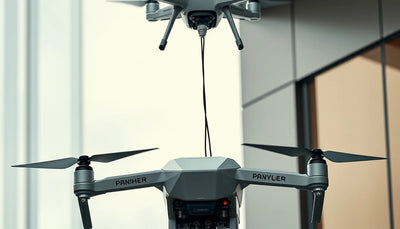
DJI Mini 4K UHD Combo Hits Earbuds-Level Pricing in Full Clearance Event
DJI has activated a Full Clearance Mode that drops the Mini 4K UHD Camera Combo to earbuds-level pricing and includes batteries. The move signals aggressive inventory clearing and could reshape budget drone purchasing and pre-owned market valuations.

A dramatic price realignment has hit the consumer drone segment. DJI has activated a Full Clearance Mode on its Mini 4K UHD Camera Combo, pushing the bundle’s cost down to what the company describes as “earbuds-level pricing.” The kit also includes batteries, adding further value to a proposition that already targets first-time drone buyers and budget-conscious operators. While the exact model variant covered by this clearance has not been officially detailed, the combination of 4K UHD video capture and a compact airframe suggests an entry-level or mid-cycle refresh unit that DJI is likely clearing from inventory ahead of a product transition.
The news, first reported by Kotaku, signals a pricing inflection point in the sub-250g drone category. For commercial fleet operators, repair customers, and especially participants in the pre-owned DJI market, this clearance event carries implications that go beyond a single promotional price cut. Understanding the mechanics of Full Clearance Mode, what it means for near-term buying decisions, and how it affects the value of existing hardware is essential for anyone planning a drone acquisition or a fleet refresh in the second half of 2026.
Understanding Full Clearance Mode

Full Clearance Mode is not a standard seasonal sale. According to the source article, it represents a deliberate pricing action that takes a specific drone bundle—the Mini 4K UHD Camera Combo—and drops its selling price to a level comparable to a pair of premium earbuds. Including batteries in the bundle further distinguishes this offer from typical discounts, where spare cells are often sold separately. Although the article does not disclose the exact price point, the “earbuds-level” framing strongly implies a figure well below the usual entry-level threshold for a 4K-capable drone.
Market context
Turn market news into a buy, repair, or trade-in decision.
Compare pre-owned availability, resale timing, and repair economics before the market moves again.
This pricing strategy is likely a response to accumulated inventory from earlier production runs. DJI has historically used clearance modes to phase out older variants when a hardware revision or a new software feature set is imminent. For the Mini 4K UHD Combo, this could mean that a successor with improved transmission technology, a higher bitrate, or a different sensor is being readied. Operators who purchase this clearance model should expect to receive a current-generation unit with full warranty coverage, but without the very latest firmware or hardware enhancements that may debut later this year.
From a commercial operator’s perspective, the inclusion of batteries is meaningful. Genuine DJI intelligent flight batteries represent a significant portion of ongoing operational cost. Receiving them as part of an already discounted bundle effectively lowers the total cost of ownership for the first several hundred flight cycles. For small businesses exploring aerial photography or site inspection work, this could provide a low-risk entry point.
What this means for drone buyers

For anyone considering a first drone purchase or an upgrade from an older 1080p model, the Full Clearance Mode significantly lowers the financial barrier to entry. A 4K UHD camera, combined with the portability of the Mini airframe, makes this bundle suitable for real estate marketing, light mapping tasks, and social media content creation. Buyers who have been waiting for a sub-$300 option that includes batteries now have a credible opportunity.
However, the clearance nature of the pricing means that inventory is likely finite. Once existing stock is exhausted, the bundle may return to standard pricing or disappear entirely. This creates a short decision window. Buyers should act quickly if the specs meet their needs, but they should also verify that the model supports the firmware features required for their mission—such as QuickTransfer, Hyperlapse, or waypoint flight—if those are critical. The source does not specify whether the clearance unit is the standard Mini 4K or a variant; contacting DJI support or checking the product listing for firmware notes is advisable before purchase.
For those who miss the clearance window, the pre-owned DJI market will shortly reflect the new price floor. Sellers of used Mini-series drones may need to adjust their expectations downward, as this clearance price becomes the de facto ceiling for what a comparable used unit can command. Conversely, buyers who prioritize value over new-condition packaging might find that pre-owned DJI drones in pristine condition become even more attractive relative to the clearance new stock once the promotion ends.
Impact on the pre-owned DJI market

Any aggressive new-price reduction in the consumer drone segment ripples into the secondary market. When a new Mini 4K UHD Combo sells at earbuds-level pricing, the resale value of existing used units of the same or similar models does not remain static. Owners who purchased the same bundle at full retail earlier in 2025 or 2026 will see diminished trade-in or private-party sale values. This depreciation is temporary but significant during the clearance period.
For fleet managers operating multiple Mini-class drones, the clearance event presents a strategic choice: acquire new units at the discounted price to refresh an aging fleet, or hold on to existing hardware and rely on professional DJI repair services to extend the life of current aircraft. Because the clearance bundle includes batteries, replacing a drone that has accumulated flight hours could be more cost-effective than purchasing a single new airframe at standard pricing. A trade-in approach may also make sense—selling older units while the resale market still accepts reasonable offers, then applying the proceeds toward the clearance new stock. Operators can consult a drone trade-in guide to evaluate whether their units qualify for value-matching programs.
Another consideration is parts availability. The clearance model is likely built on a well-established platform, meaning replacement motors, arms, gimbals, and main boards remain widely available from OEM-pulled spare parts inventories. For repair customers, this is good news: the cost of keeping a Mini 4K UHD airframe operational will stay low even after the clearance sells out. Genuine OEM spare parts for this generation are abundant in the aftermarket, supporting extended service life for both new and pre-owned units.
Practical considerations for fleet operators

Even small fleets—two to five drones—can benefit from the clearance pricing if the bundle aligns with their operational requirements. The 4K UHD camera provides adequate resolution for property inspections, roof surveys, and agricultural monitoring when combined with proper flight planning. Including batteries reduces the per-unit cost of a multi-battery kit, which is essential for missions requiring continuous coverage. Operators who standardize on this airframe can also simplify spare parts management and pilot training.
However, the clearance event may indicate that the platform is approaching end-of-life in DJI’s product cycle. That does not mean the drone is obsolete; it means that future firmware updates may be limited to critical bug fixes rather than new feature additions. Commercial operators should plan for a three-year service horizon with this model, after which a planned replacement cycle should be considered. During those three years, ongoing maintenance through professional DJI repair services will keep the fleet airborne without requiring a full capital outlay.
As a concrete takeaway, a buyer or fleet manager should verify the exact model name and firmware version before purchasing clearance stock, check whether the included batteries are the standard 2S or the higher-capacity variant, and confirm that the combo supports the remote controller model they already own. These verification steps prevent compatibility surprises that could erode the apparent savings.
Is the DJI Mini 4K UHD Combo still a good buy if I already own a DJI Mini 3?
If you already operate a Mini 3 series drone, the upgrade to 4K UHD resolution is marginal for most social media or web-based outputs. The clearance pricing may still be tempting as a backup airframe, but consider that your current mini-drone likely already captures 4K video. The real value in this clearance is for first-time buyers or those stepping up from 1080p-only models.
Does the Full Clearance Mode affect warranty or after-sales support?
No change is implied by the source. The clearance bundle should carry the same standard DJI warranty as any new product. Third-party repair networks also support this generation with genuine OEM parts, so coverage and service availability remain unchanged regardless of the purchase price.
How long will the Full Clearance pricing last?
The source did not specify an end date for the promotion. Given the “clearance” label, it likely continues while inventory lasts. Readers should monitor official DJI channel listings for stock status. Once units are gone, pricing is expected to revert to standard levels or the product may be discontinued entirely, making the pre-owned market the only source for this spec tier.