DJI Mic 3 Review Signals a Shift in On-Set Audio Reliability
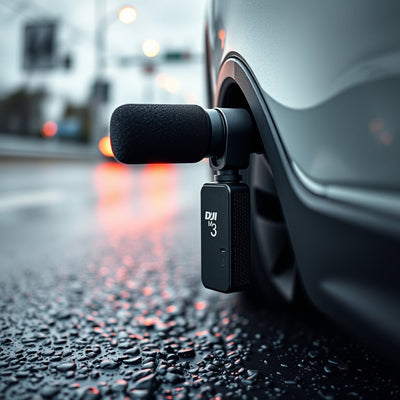
A new DJI Mic 3 review highlights 32-bit float backup recording, dual noise reduction, and multi-camera routing. The feature set matters for commercial drone crews who need clean audio even when wireless signal drops on location.

Quick answer
A DroneXL.co review of the DJI Mic 3 reports 32-bit float backup recording, two noise reduction levels, four mics to eight cameras, and up to 28 hours with the case.
- 32-bit float backup is designed to protect audio even when wireless signal drops
- Two noise reduction levels give operators more control in different field environments
- Four mics can route to eight cameras, supporting multi-angle production setups
- The charging case supports up to 28 hours of total use according to the review
Evidence: DroneXL.co
DJI buying context
Match product news to hardware you can actually deploy.
Check inspected DJI aircraft, repair support, and trade-in timing before deciding whether to upgrade, repair, or wait.

Verified facts
What the available evidence confirms
| Feature | Reported capability | Operational relevance |
|---|---|---|
| Backup recording | 32-bit float backup | Protects usable audio when wireless signal drops on set |
| Noise reduction | Two levels | Lets operators adapt to indoor and outdoor recording conditions |
| Multi-camera routing | Four mics to eight cameras | Supports multi-angle commercial and drone video workflows |
| Case battery life | Up to 28 hours with case | Extends field sessions without frequent charging stops |
A new review of the DJI Mic 3 published by DroneXL.co on November 4, 2026, points to a meaningful shift in how compact wireless audio systems handle signal loss. According to the review by Jake Sloan, the DJI Mic 3 includes 32-bit float backup recording, which is designed to preserve usable audio even when the wireless connection between transmitter and receiver drops. For commercial drone operators who capture interviews, client testimonials, or on-location narration alongside aerial footage, that backup capability changes the risk calculation around audio capture.
The review also highlights two noise reduction levels, routing from four microphones to as many as eight cameras, and up to 28 hours of total use when paired with the charging case. These are not just convenience features. They speak to how production teams are managing multi-camera shoots, longer field days, and unpredictable acoustic environments without carrying a full broadcast audio kit.
What the DJI Mic 3 review actually reports
The primary reporting from DroneXL.co describes the DJI Mic 3 as an audio system built around redundancy. The 32-bit float backup means the transmitter records a safety track independently of the wireless link. If a bodypack mic loses connection to the receiver, the recorded file should still contain clean, recoverable audio. For drone crews working near power lines, industrial equipment, or dense urban interference, that is a practical safeguard rather than a marketing detail.
The review also notes two selectable noise reduction levels. That gives operators a simple choice between heavier processing for noisy outdoor environments and lighter processing for controlled indoor settings. In commercial video production, where a single shoot may move from a warehouse floor to a rooftop launch site, having two clear options reduces the need to fix audio in post-production.
The multi-camera routing capability is another point worth attention. According to the review, four microphones can be routed to up to eight cameras. That configuration supports the kind of multi-angle shoots common in construction documentation, inspection reporting, and corporate drone service packages where ground cameras and aerial cameras run simultaneously.
Why backup audio matters for commercial drone workflows
Drone operators often treat audio as a secondary concern because the aircraft itself does not capture usable sound. But the final deliverable for many commercial jobs includes voiceover, client interviews, site walkthroughs, or safety briefings. If that audio fails, the aerial footage alone may not satisfy the contract. A system with 32-bit float backup reduces the chance that a wireless dropout forces a reshoot or an awkward client conversation.
The reported 28-hour total runtime with the charging case also fits the pattern of long field deployments. Inspection teams, agricultural survey crews, and media operators often start before sunrise and finish after dark. A compact audio kit that can keep pace with multiple drone battery rotations removes one more logistical constraint from the day.
For operators building out a commercial video service, the DJI Mic 3 review suggests that audio redundancy is becoming a standard expectation rather than a premium add-on. Buyers who previously accepted wired lavalier setups or lower-cost wireless systems may need to reconsider what a professional client expects from a production package.
What this means for drone owners and the market
The DJI Mic 3 sits outside the core drone hardware category, but it reflects the same product philosophy that drives DJI's aerial platforms: compact, integrated, and oriented toward reducing failure points. For drone owners who already carry DJI cameras, gimbals, or enterprise controllers, adding a matching audio system can simplify charging, transport, and workflow. That consistency matters when a team is moving between job sites and cannot afford to manage multiple proprietary ecosystems. For owners evaluating service and lifecycle risk, Drone Wiki explains the relevant repair, parts, resale, or operational path.
In the pre-owned DJI market, accessory launches like the Mic 3 can shift how buyers evaluate complete kits. A used drone package that includes compatible audio gear, gimbals, or production accessories may become more attractive to commercial buyers than a bare aircraft. Operators who are planning to resell equipment later should consider whether keeping original accessories and matching components together preserves more value than selling pieces separately. For current pricing, availability, and inspected pre-owned options, readers can consult the Drone Wiki.
The review does not provide official pricing or enterprise warranty details, so procurement teams should treat the reported capabilities as editorial observations rather than verified specifications. Still, the direction is clear: compact wireless audio is moving toward the same reliability standards that professional drone operators already expect from their aircraft.
What buyers and fleet managers should watch next
Fleet managers who oversee multiple drone crews should pay attention to how audio systems integrate with existing camera and drone workflows. The reported ability to route four microphones to eight cameras suggests that DJI is thinking about multi-operator environments, not just solo creators. If that routing works reliably in the field, it could reduce the number of audio recorders and sync steps required on larger shoots.
Repair and maintenance considerations are also relevant. Wireless audio transmitters and receivers are subject to physical wear, battery degradation, and connector damage. Operators who invest in compact systems like the DJI Mic 3 should plan for eventual battery service, cable replacement, and firmware support. A small audio transmitter that fails on set can be just as disruptive as a drone battery that will not hold charge.
The practical takeaway from the DroneXL.co review is that audio redundancy should now be part of the commercial drone production checklist. Buyers evaluating new equipment should ask whether their audio chain can survive a wireless dropout, how many cameras they need to route, and how long the system can run without external power. Those questions are no longer optional for operators who sell professional video deliverables.
FAQ
Frequently asked questions
What is the main improvement in the DJI Mic 3 according to the review?
The DroneXL.co review highlights 32-bit float backup recording as a key feature. It is designed to preserve usable audio even if the wireless signal between transmitter and receiver drops during recording.
How many cameras can the DJI Mic 3 support?
According to the review, the DJI Mic 3 can route four microphones to up to eight cameras, which supports multi-angle production setups where ground and aerial cameras run at the same time.
Why should drone operators care about a wireless microphone system?
Commercial drone jobs often include interviews, site walkthroughs, or voiceover capture. If that audio fails, the aerial footage alone may not meet the client's requirements, so backup audio recording reduces reshoot risk.
Which sources support this update?
The visible evidence links identify DroneXL.co; each source is used only for the claim it directly supports.
What remains subject to change?
Retail pricing, availability, product bundles and regulatory timelines can change. Readers should verify the latest terms with the named retailer, manufacturer or regulator before acting.
How should buyers or operators use this analysis?
Use the verified facts as a starting point, then compare mission fit, lifecycle support, maintenance needs and current procurement terms before making a purchase or fleet decision.
Konzultált források
- DroneXL.co - primary source
A közzététel időpontjában további hivatalos dokumentáció nem állt rendelkezésre.
A Reboot Hub szerkesztősége vásárlási, javítási, viszonteladási és üzemeltetési elemzéseket nyújt dróntulajdonosok számára. Ha hibát észlel, kérjük, jelezze nekünk a szerkesztői irányelvünknek megfelelően a javítás érdekében.