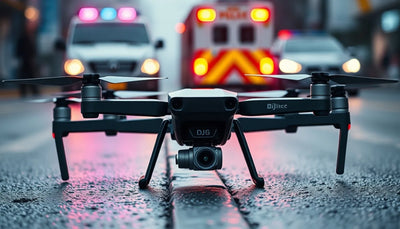
Beijing Bans Drone Possession Citywide, Opens Buyback Program
Beijing will ban drone possession citywide on November 15, voiding an earlier registration arrangement and paying owners subsidies to sell at designated buyback sites. The shift creates immediate compliance, resale, and fleet planning questions for commercial operators and pre-owned DJI drone buyers across the region.

Quick answer
Beijing will ban drone possession citywide on November 15, voiding the May registration deal and paying owners subsidies to sell at designated buyback sites, according to DroneXL.co.
- Citywide possession ban takes effect November 15
- Earlier May registration arrangement is voided
- Owners receive subsidies at designated buyback sites
- Commercial operators face immediate compliance and resale decisions
- Pre-owned DJI market could see regional supply shifts
Evidence: DroneXL.co
Operator checklist
Turn policy news into a safer fleet decision.
Before changing aircraft, compare repair paths, available DJI inventory, and trade-in timing against the rule change.

Verified facts
What the available evidence confirms
| Timeline item | Reported detail |
|---|---|
| May registration deal | Earlier arrangement allowing registered ownership, now voided per DroneXL.co |
| November 15 ban | Citywide drone possession ban takes effect |
| Buyback program | Owners can sell at designated sites and receive subsidies |
Beijing is moving from drone registration to an outright possession ban. According to a report published by DroneXL.co on September 13, 2026, the city will prohibit drone possession citywide starting November 15, voiding the May registration arrangement that had previously allowed owners to operate under a structured framework. The same report states that authorities will pay owners subsidies to sell their aircraft at designated buyback sites.
The development is significant because it does not simply restrict where drones can fly. A possession ban targets ownership itself, which changes the calculus for individual pilots, commercial operators, repair customers, and anyone holding pre-owned DJI inventory in the region. The buyback mechanism also introduces a state-managed channel that could pull used aircraft out of the open resale market.
What the reported ban actually changes
DroneXL.co reports that the May registration deal is now void. That matters because registration-based systems typically let owners keep aircraft if they comply with identity, location, and operational rules. A possession ban removes that option. Owners who registered under the earlier arrangement appear to lose the legal basis for keeping their aircraft after November 15, unless the buyback process or another exemption applies.
The buyback program is the key operational detail. Rather than simply confiscating drones, the city is reportedly offering subsidies at designated buyback sites. This creates a defined window for owners to convert hardware into cash. For commercial operators, the practical questions are immediate: which aircraft qualify, what documentation is required, how subsidy values are calculated, and whether enterprise or agricultural platforms are treated differently from consumer camera drones.
Reboot Hub analysis: a buyback program of this type can compress resale timelines. Owners who might otherwise list a used DJI Mavic, Mini, Air, or Matrice platform on the open market may instead route it through the official channel for speed and certainty. That could reduce the supply of pre-owned DJI drones available through normal second-hand markets in the region, while also creating a short-term surge of owners trying to sell before the deadline.
What this means for drone owners and the market
For individual owners in Beijing, the immediate priority is verifying whether their aircraft falls under the reported ban and understanding the buyback documentation requirements. DroneXL.co does not provide a full breakdown of eligible models, subsidy tiers, or buyback site locations in the source summary, so operators should treat those details as unconfirmed until official guidance is published. The report is clear, however, that the November 15 date is the operative deadline.
For fleet managers and enterprise operators, the ban raises continuity questions. A company holding multiple aircraft for inspection, mapping, or logistics work may need to relocate inventory, transfer ownership to an entity outside the city, or sell through the buyback program. Each path has cost and compliance implications. The loss of a registration pathway also means that simply re-registering under a new name or entity may not be viable if possession itself is prohibited.
The pre-owned DJI market is the most likely secondary effect. Beijing is a major urban market for consumer and commercial DJI hardware. If a meaningful number of owners route aircraft through the buyback program, regional resale supply could tighten. That may push some buyers toward inspected pre-owned DJI drones sourced from outside the affected area, and it may increase demand for genuine OEM spare parts as operators choose to repair and retain aircraft rather than replace them. Readers tracking repair and resale dynamics can monitor the Drone Wiki for background on DJI platform ownership and maintenance considerations. For owners evaluating service and lifecycle risk, Drone Wiki explains the relevant repair, parts, resale, or operational path.
Repair customers should also note the timing risk. An owner who sends a drone for professional DJI repair in the weeks before November 15 may face a compressed window to retrieve the aircraft and complete a buyback sale. Shops holding customer aircraft could see an increase in requests to expedite repairs or return units unrepaired. That is a practical operational pressure point even if the source does not detail repair-shop policy.
Compliance, resale, and fleet planning steps
Operators should treat the November 15 date as a hard planning anchor. The first step is to inventory every aircraft, battery, controller, and spare part held in the city. The second is to determine which items fall under the possession ban as reported. The third is to evaluate the buyback route against private resale, transfer, or relocation options. DroneXL.co reports that subsidies are available at designated buyback sites, but the source does not specify whether subsidies apply per aircraft, per owner, or per household.
For buyers outside Beijing, the situation is a reminder that regional drone policy can shift quickly from registration to prohibition. A pre-owned DJI drone purchased today may carry documentation tied to a registration system that no longer exists tomorrow. Buyers should verify where an aircraft was originally registered, whether any ownership transfer is recorded, and whether the serial number is clear of any regional restriction. These checks are especially relevant for commercial platforms where resale value depends on clean ownership history.
For fleet managers, the lesson is to build geographic flexibility into asset planning. A fleet concentrated in one city is exposed to a single regulatory change. Spreading aircraft across multiple jurisdictions, maintaining current registration records, and keeping transfer documentation ready can reduce the cost of a sudden ban or buyback mandate. The Beijing case also shows that buyback programs can appear quickly, which means operators should monitor policy signals even when no formal proposal has been announced.
What remains unconfirmed
The DroneXL.co report provides the central facts: a citywide possession ban effective November 15, the voiding of the May registration deal, and subsidized buyback at designated sites. Several operational details remain unconfirmed in the source. These include the full list of affected aircraft categories, subsidy calculation methods, buyback site locations, documentation requirements, and any exemptions for enterprise, agricultural, or public-safety platforms.
Operators should avoid making irreversible decisions based on incomplete information. Selling a high-value commercial drone through the buyback program may make sense if the subsidy is competitive and the deadline is firm. But if subsidy values are low or certain aircraft are exempt, a private sale or relocation could preserve more value. The prudent approach is to gather official guidance, document every aircraft, and prepare multiple exit paths before November 15.
The broader commercial signal is that drone ownership policy can shift faster than hardware depreciation cycles. A drone purchased for a three-year operational life may face a regulatory horizon measured in months. That reality strengthens the case for pre-owned DJI drones as a lower-cost way to enter or expand operations, since the capital at risk is smaller. It also supports the argument for maintaining genuine OEM spare parts and professional DJI repair relationships, because operators may need to keep existing aircraft flying longer when replacement purchases become complicated by policy changes.
FAQ
Frequently asked questions
When does the Beijing drone possession ban take effect?
According to DroneXL.co, the citywide drone possession ban takes effect on November 15, 2026.
What happens to the May registration deal?
The report states that the May registration arrangement is voided, meaning owners who registered under that system lose the legal basis for keeping their aircraft after the ban takes effect.
How does the buyback program work?
DroneXL.co reports that owners can sell their drones at designated buyback sites and receive subsidies. Specific subsidy amounts, eligible aircraft categories, and site locations were not detailed in the source summary.
Which sources support this update?
The visible evidence links identify DroneXL.co; each source is used only for the claim it directly supports.
What remains subject to change?
Retail pricing, availability, product bundles and regulatory timelines can change. Readers should verify the latest terms with the named retailer, manufacturer or regulator before acting.
How should buyers or operators use this analysis?
Use the verified facts as a starting point, then compare mission fit, lifecycle support, maintenance needs and current procurement terms before making a purchase or fleet decision.
Konzultált források
- DroneXL.co - primary source
A közzététel időpontjában további hivatalos dokumentáció nem állt rendelkezésre.
A Reboot Hub szerkesztősége vásárlási, javítási, viszonteladási és üzemeltetési elemzéseket nyújt dróntulajdonosok számára. Ha hibát észlel, kérjük, jelezze nekünk a szerkesztői irányelvünknek megfelelően a javítás érdekében.