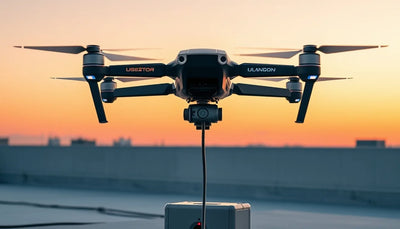
Antigravity cuts drone price by swapping headset for wrist control
Antigravity halved the price of its drone by replacing the headset with a wristwatch-style controller, according to The Verge. The move signals a shift toward simpler, lower-cost control interfaces that could reshape entry-level drone pricing and ownership economics.

Quick answer
Antigravity halved the price of its drone by replacing the headset with a wristwatch-style controller, as reported by The Verge.
- The price reduction comes from removing the headset component.
- Control shifts to a wristwatch-style interface.
- The move targets a lower-cost entry point for drone buyers.
- It signals broader experimentation with simplified drone control hardware.
Antigravity has cut the price of its drone in half by removing the headset from the package and replacing it with a wristwatch-style control interface, according to a report published by The Verge. The development is a notable pricing experiment in the consumer drone segment, where the cost of bundled control hardware has long shaped the entry-level buying decision.
Market context
Turn market news into a buy, repair, or trade-in decision.
Compare pre-owned availability, resale timing, and repair economics before the market moves again.

The report frames the move as a deliberate trade-off: by stripping out the headset, Antigravity is lowering the barrier to purchase while betting that a wrist-mounted controller can deliver enough of the flight experience to satisfy a broader audience. For commercial observers, the announcement matters less for the specific product and more for what it says about how drone makers are reconsidering the relationship between control hardware, retail price, and customer acquisition.
The reported change and why it matters
The Verge reports that Antigravity halved the price of its drone specifically by swapping its headset for wristwatch control. That is a significant reduction in the total cost of entry, and it was achieved without changing the drone itself. The source does not provide detailed technical specifications for the wristwatch controller, so Reboot Hub analysis cannot verify range, latency, or compatibility claims. The central verified fact is the pricing shift and the hardware substitution.
For drone buyers, this kind of change has practical consequences. A lower upfront price can make a drone accessible to first-time operators, hobbyists, and small businesses that would otherwise delay a purchase. But the removal of a headset also changes the flight experience. Headset-based control, particularly for FPV-style flying, offers immersive situational awareness that a wrist interface may not replicate. Buyers should evaluate whether the lower price aligns with how they actually intend to fly.
What this means for drone owners and the market
The Antigravity pricing move is a signal that consumer drone manufacturers are testing whether simplified control hardware can unlock new demand. If wristwatch control proves acceptable to buyers, other manufacturers may follow with lower-cost bundles that strip out expensive accessories. That could put downward pressure on entry-level drone pricing across the segment and change what buyers expect to receive in the box.
For owners of existing drones, the announcement is a reminder that control hardware and bundled accessories can account for a meaningful portion of a product's retail price. When a manufacturer removes a component to cut cost, it can also affect resale value and the perceived completeness of a used package. Operators and buyers evaluating pre-owned DJI drones or other second-hand equipment should pay close attention to which accessories are included, because missing controllers, headsets, or proprietary cables can materially change the value of a listing. Reboot Hub analysis suggests that the pre-owned market often reflects these bundle differences more sharply than new retail pricing does, and buyers can use resources like the Drone Wiki to understand how hardware changes affect ownership and repair decisions.
The commercial implication is broader than one product. Drone pricing has historically been anchored by the cost of the aircraft, the controller, and any display or headset hardware. If wristwatch-style control becomes a viable alternative, the industry could see a new tier of lower-priced drones that compete on simplicity rather than immersive capability. Fleet managers and procurement teams should monitor whether this approach spreads to more capable platforms or remains confined to entry-level consumer models.
Repair, spare parts, and long-term ownership considerations
Any change in bundled hardware has downstream effects on repair and spare parts. A drone sold with a wristwatch controller instead of a headset may require different replacement components, different firmware support, and different troubleshooting workflows. The Verge report does not detail Antigravity's spare parts strategy or repair network, so Reboot Hub cannot confirm how service and parts availability will work for the new bundle. That uncertainty is itself a consideration for buyers who plan to keep a drone for multiple years.
For commercial operators and repair customers, the lesson is to assess not just the purchase price but the total cost of ownership. A cheaper drone with a less common controller type could be harder to service if the manufacturer does not maintain a robust parts channel. In the DJI ecosystem, by contrast, genuine OEM spare parts and professional DJI repair services are widely available, which supports longer service life and more predictable maintenance. Buyers comparing platforms should weigh that service infrastructure against the appeal of a lower upfront price. For owners evaluating service and lifecycle risk, Drone Wiki explains the relevant repair, parts, resale, or operational path.
The bigger picture for drone pricing and control interfaces
The Antigravity move fits into a broader pattern of experimentation in drone control. Manufacturers have tried smartphone-only control, gesture control, and modular controllers in an effort to reduce cost or simplify operation. Wristwatch control is another step in that direction, and The Verge's report positions the price cut as the headline outcome. Whether the market accepts the trade-off will depend on real-world usability, which the source does not evaluate in depth.
For fleet operators and commercial buyers, the development is worth tracking because control interface choices affect training time, operational efficiency, and pilot comfort. A wrist-mounted controller may be adequate for casual or short-duration flights, but it is not clear from the source whether it supports the precision and reliability that commercial missions require. Reboot Hub analysis suggests that enterprise buyers should continue to prioritize proven control systems with established support channels, while watching consumer experiments like this one for signals about where the broader market is heading.
Ultimately, the Antigravity announcement is a pricing story with product design implications. It shows that drone makers are willing to remove hardware to hit lower price points, and it raises questions about what buyers are willing to give up in exchange. For anyone buying, selling, repairing, or operating drones, the key takeaway is to evaluate the full bundle, not just the headline price.
FAQ
Frequently asked questions
What did Antigravity change about its drone?
According to The Verge, Antigravity halved the price of its drone by removing the headset and replacing it with a wristwatch-style control interface.
Why does the price cut matter for drone buyers?
The lower price lowers the barrier to entry, but buyers should consider whether the wristwatch controller meets their flight needs and whether missing accessories affect long-term value.
How could this affect the pre-owned drone market?
Bundle changes like this can affect resale value, because used listings with missing controllers or headsets may be worth less. Buyers should verify included accessories before purchasing pre-owned equipment.
Which sources support this update?
The article distinguishes reported information from analysis and does not present an unverified source as official confirmation.
What remains subject to change?
Retail pricing, availability, product bundles and regulatory timelines can change. Readers should verify the latest terms with the named retailer, manufacturer or regulator before acting.
How should buyers or operators use this analysis?
Use the verified facts as a starting point, then compare mission fit, lifecycle support, maintenance needs and current procurement terms before making a purchase or fleet decision.
Konzultált források
- The Verge via Google News - primary source
A közzététel időpontjában további hivatalos dokumentáció nem állt rendelkezésre.
A Reboot Hub szerkesztősége vásárlási, javítási, viszonteladási és üzemeltetési elemzéseket nyújt dróntulajdonosok számára. Ha hibát észlel, kérjük, jelezze nekünk a szerkesztői irányelvünknek megfelelően a javítás érdekében.