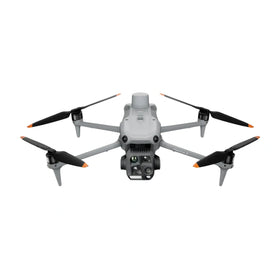
Shockwave Warfare: The Pentagon’s New Bunker-Buster and the Drone Revolution
The Pentagon is abandoning brute-force bunker busters for a precision shockwave approach, a tactical shift that will redefine UAV payload design, mission profiles, and airspace risk assessments for commercial operators flying under Part 107. This new doctrine threatens to accelerate military-grade sensor transfers into the civilian sector, creating immediate compliance and insurance liability challenges for surveying, mapping, and inspection firms. Reboot Hub analyzes the strategic, regulatory, and second-hand market implications of this seismic change.

Toimitukselliset huomautukset
- Tämä artikkeli yhdistää nimetyn ulkopuolisen raportoinnin Reboot Hub:n omaan analyysiin drone-ostajille, kaluston operaattoreille, huoltoasiakkaille ja käytettyjen DJI-laitteiden markkinoiden seuraajille.
- Lähdefaktat on erotettu tulkinnasta. Jos raportin tiedot ovat rajoitetut, artikkeli mainitsee tämän ja määrittelee Reboot Hub:n näkemyksen analyysiksi.
- Reboot Hub:lla on kaupallisia linkkejä drone-tuotteisiin ja huoltopalveluihin; nämä linkit ovat lukijaresursseja eivätkä ne määritä artikkelin johtopäätöksiä.
The United States Department of Defense is quietly rewriting the playbook for one of its most iconic weapons. On May 31, 2026, exclusive reports detail a radical new Pentagon initiative to reinvent the bunker-buster bomb. The goal, according to defense officials, is to move beyond the traditional brute-force approach of giant, massive ordnance and instead manipulate shock waves to destroy deeply buried targets with surgical precision. This is not merely an incremental upgrade; it is a doctrinal shift that will ripple through the defense industry and, critically, the commercial drone sector.
For analysts at Reboot Hub, this development signals a fundamental change in how airborne platforms, from stealth fighters to next-generation drones, will be armed and deployed. The implications for UAV manufacturers, payload designers, and even everyday commercial drone pilots operating under FAA Part 107 are profound. We are witnessing the birth of a new era in precision strike, one that will prioritize low-observable, high-altitude, and long-endurance platforms-and that directly impacts the used drone market as older, brute-force systems become obsolete.
The Physics of Precision: Beyond the Giant Bomb
For decades, the standard approach to destroying a hardened bunker was simple: drop a very large bomb. The GBU-43/B MOAB (Massive Ordnance Air Burst) and the GBU-57 MOP (Massive Ordnance Penetrator) are the poster children of this philosophy. The MOP, a 30,000-pound behemoth, relies on sheer kinetic energy and a massive explosive charge to crack reinforced concrete buried hundreds of feet underground. But this approach has critical limitations. The delivery aircraft (a B-2 Spirit or B-52) must fly into heavily defended airspace. The bomb is enormous, limiting magazine depth. And the collateral damage from such a large blast can be politically and strategically unacceptable.
Fleet readiness
Keep DJI hardware available without overbuying new units.
Use this news as a planning signal for inspected DJI aircraft, repair support, and trade-in timing.
The new Pentagon concept aims to solve these problems by manipulating the shock wave itself. Instead of a single, massive detonation, engineers are exploring the use of multiple, precisely timed smaller charges or advanced energetic materials that can focus and shape the explosive force. Think of it as a seismic lens. By controlling the velocity and shape of the shock wave as it travels through earth and reinforced concrete, the military can create a "tunnel" of destruction that reaches the target while leaving the surrounding structure intact. This is not science fiction; it is the next frontier in munitions design.
For drone manufacturers like General Atomics and Kratos, this is a golden opportunity. Their platforms, the MQ-9 Reaper and XQ-58 Valkyrie, are perfectly suited to carry these new, smaller, and more sophisticated munitions. The ability to deploy multiple shockwave-manipulating bombs from a single drone swarm multiplies the lethality and survivability of the strike package. This directly influences the pre-owned DJI drones market, as military-grade technology trickles down into civilian and dual-use applications.
What This Means for Drone Payloads and Airspace
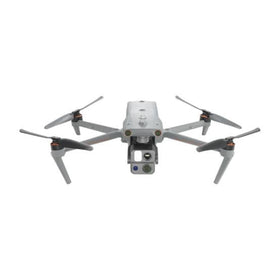
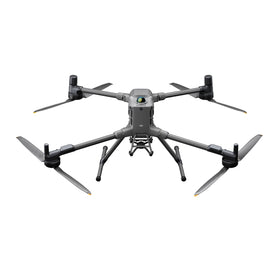
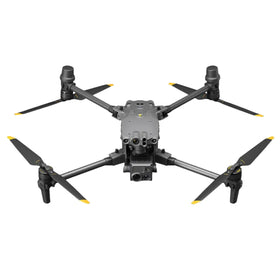
The commercial drone sector must pay close attention. The core technology behind shockwave manipulation-precise timing, advanced sensors, and compact, high-energy payloads-will inevitably find its way into civilian applications. We are already seeing the miniaturization of military-grade sensors for use in DJI Matrice 300 RTK and Autel EVO Max 4T platforms. The same trend will accelerate for specialized payloads.
Ready to Upgrade Your Fleet?
Browse our collection of inspected pre-owned DJI drones - inspected, flight-tested, and backed by a 6-month warranty. Save up to 40% versus retail.
For commercial operators, this means several things. First, expect new regulations from the FAA regarding the transport and operation of "advanced energetic materials" by unmanned aircraft. Part 107 operators who currently fly for surveying, inspection, or agriculture may find their airspace restricted near military test ranges or critical infrastructure. Second, the insurance industry will react. Insurers will need to assess the risk of shockwave-generating payloads being used near civilian areas, even for legitimate commercial purposes like demolition or geological surveying.
Third, and most immediately, this creates a massive opportunity in the second-hand market. As the U.S. military and allied nations retire older-generation bunker-buster bombs and the aircraft designed to carry them (like the B-1B Lancer, which is already being phased out), a wave of mature, high-performance sensor and targeting systems will flood the surplus market. These systems, once stripped of their classified components, can be repurposed for high-end commercial work. This is where Reboot Hub's expertise in the used drone market becomes invaluable.
Q&A: The Shockwave Doctrine and Your Drone Business
What does the Pentagon's shockwave bomb program mean for a commercial drone operator in 2026?
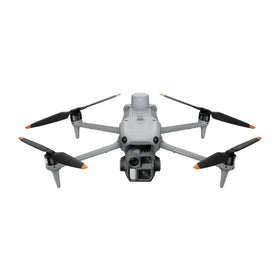
For a commercial operator flying a DJI Mavic 3E for roof inspections, the direct impact may seem small. However, the indirect effects are significant. The Pentagon's investment will accelerate the development of compact, high-precision sensors and energetic materials. This technology will trickle down into civilian payloads within 2-3 years. If you are in the business of industrial inspection (power plants, bridges, dams), you will soon have access to payloads that can perform non-destructive testing with unprecedented accuracy. Conversely, the airspace around critical infrastructure will become more restricted. The FAA is already proposing new rules for "sensitive airspace" that could require additional waivers for Part 107 operators. The key takeaway: stay informed and invest in versatile, upgradable platforms.
How will this affect the value of my current drone fleet?
This is a critical question for anyone holding drone inventory. The shift towards precision, low-collateral-damage weapons will accelerate the obsolescence of older, "brute-force" military drones like the MQ-1 Predator and early-model MQ-9 Reapers. As these are retired, their components-especially their high-end electro-optical/infrared (EO/IR) sensors and synthetic aperture radars (SAR)-will enter the civilian market. This will create a temporary surplus of high-end sensor technology, potentially driving down the price of used high-end surveying drones. However, for operators flying modern platforms like the DJI Matrice 350 RTK or the Autel EVO Max 4T, the value remains strong. The key is to own a platform with a modular payload bay that can accept future sensor upgrades.
What should I do to prepare my business for this change?
First, audit your current fleet. If you are flying a drone with a fixed payload that cannot be upgraded, consider trading it in for a modular platform. Second, talk to your insurance broker. The risk landscape is changing, and you need to ensure your policy covers operations near critical infrastructure. Third, follow the regulatory developments closely. The FAA is likely to propose new "Operations Over People" and "Operations at Night" rules that specifically address the carriage of advanced materials. Fourth, and most importantly, consider the second-hand market. As military-grade tech becomes available, it is an excellent time to buy high-quality, pre-owned DJI drones at a fraction of the retail price. Reboot Hub offers a curated selection of these platforms, each flight-tested and backed by a warranty.
The Commercial Pilot's Bottom Line: Adapt or Be Grounded
The Pentagon's decision to reinvent the bunker-buster is not an isolated event. It is a symptom of a larger global trend towards precision, efficiency, and reduced collateral damage in all forms of aerial operations. This trend is already reshaping the commercial drone industry. We see it in the demand for RTK modules for centimeter-level accuracy, in the adoption of LiDAR for infrastructure inspection, and in the push for BVLOS (Beyond Visual Line of Sight) waivers for long-range pipeline patrols.
The commercial operator who ignores this shift does so at their own peril. The airspace of 2026 is more complex, more regulated, and more technologically demanding than ever before. The drones that were state-of-the-art in 2023 are now entry-level. The sensors that were military-only are now available on the second-hand market. The key to survival and success is to stay agile, invest in modular hardware, and partner with a trusted source for your equipment.
At Reboot Hub, we understand the pressures you face. Our mission is to provide the highest quality pre-owned DJI drones and professional DJI repair services to keep your fleet operational and profitable. Whether you are upgrading from a Mavic 2 to a Matrice 350, or need a critical repair after a hard day in the field, we are your partner in the field. The future of flight is precision. Make sure your equipment is ready for it.
--
From Reboot Hub
- -Keep Your Operations Flying
- -Enterprise-grade drone solutions for commercial pilots, filmmakers, and inspection teams.
- -Pre-owned Fleet
- - - -Fully inspected DJI drones with 6-month warranty. Save up to 40%.
- - - - Browse Inventory -> - - -Expert Repair
- - - -Professional diagnostics with genuine OEM parts. Same-day estimates.
- - - - Book a Repair -> - - -Spare Parts
- - - -Batteries, propellers, gimbals -- premium OEM components, fast shipping.
- - - - Shop Parts -> - - -