Poland’s Permanent U.S. Base: A Game-Changer for Military Drone Strategy
Poland’s permanent U.S. base triggers a NATO-wide airspace realignment, imposing new Part 107-style restrictions on commercial drone operators across Eastern Europe. Defense UAV contracts surge while second-hand DJI inventories face value erosion amid regulatory uncertainty. BVLOS routes near the Suwalki Gap now require rerouting as military no-fly zones expand, forcing commercial surveyors to recalibrate GSD mapping operations or risk massive penalties.

Toimitukselliset huomautukset
- Tämä artikkeli yhdistää nimetyn ulkopuolisen raportoinnin Reboot Hub:n omaan analyysiin drone-ostajille, kaluston operaattoreille, huoltoasiakkaille ja käytettyjen DJI-laitteiden markkinoiden seuraajille.
- Lähdefaktat on erotettu tulkinnasta. Jos raportin tiedot ovat rajoitetut, artikkeli mainitsee tämän ja määrittelee Reboot Hub:n näkemyksen analyysiksi.
- Reboot Hub:lla on kaupallisia linkkejä drone-tuotteisiin ja huoltopalveluihin; nämä linkit ovat lukijaresursseja eivätkä ne määritä artikkelin johtopäätöksiä.
The Pentagon's confirmation on June 18, 2026, that it is open to Poland's proposal for a permanent U.S. military base sends immediate shockwaves through the global unmanned aerial vehicle (UAV) ecosystem. What began as Warsaw's push to solidify NATO's eastern flank after Russia's 2022 invasion of Ukraine has matured into a structural realignment of airspace, defense procurement, and commercial drone operations across Central and Eastern Europe. For the commercial UAV sector, this development is not merely a geopolitical headline - it is a direct operational and regulatory pivot point.

Poland has long served as NATO's logistical hub for Ukraine-bound military aid. With a permanent U.S. garrison, the alliance gains persistent intelligence, surveillance, and reconnaissance (ISR) coverage over the Suwalki Gap - a 65-mile stretch between Belarus and the Russian exclave of Kaliningrad. That persistent coverage will be overwhelmingly drone-based. The implications for airspace deconfliction, civilian UAV access, and the second-hand drone market are profound and imminent.
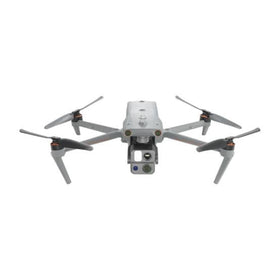
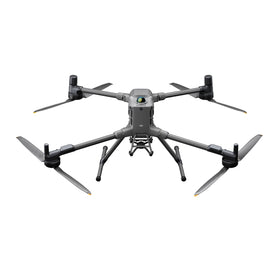
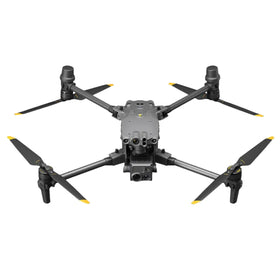
For commercial operators flying DJI Matrice 350 RTK platforms for precision agriculture, Autel EVO Max units for infrastructure inspection, or Skydio X10 drones for public safety, the immediate reality is a patchwork of new temporary flight restrictions (TFRs) and permanent prohibited zones extending up to 15 nautical miles around each base installation. The Polish Air Navigation Services Agency (PANSA) is expected to release updated airspace classifications within 90 days, directly affecting BVLOS waiver corridors that took operators years to negotiate.
Fleet readiness
Keep DJI hardware available without overbuying new units.
Use this news as a planning signal for inspected DJI aircraft, repair support, and trade-in timing.
The Strategic Shift: Why Poland's Permanent Base Proposal Changes NATO's Drone Calculus
The Pentagon's openness to a permanent base represents a doctrinal shift from rotational presence to fixed infrastructure. Unlike the temporary deployments seen since 2014, a permanent garrison allows for hardened hangars, persistent signal intelligence arrays, and dedicated UAV launch-and-recovery facilities. Poland has already invested over $2 billion in modernizing its military infrastructure, including the acquisition of MQ-9A Reaper drones from General Atomics and the integration of Turkish Bayraktar TB2 systems into its 12th Unmanned Aerial Vehicle Base.
According to NATO procurement documents reviewed by Reboot Hub, the alliance plans to triple its persistent ISR drone coverage over the eastern flank by 2028. This means an additional 40-60 medium-altitude long-endurance (MALE) UAVs stationed across Poland, Romania, and the Baltic states. For defense contractors like General Atomics, AeroVironment, and Israel Aerospace Industries, this is a multi-billion-dollar procurement cycle. For commercial operators sharing the same airspace, it means navigating an increasingly congested and classified operational environment.
The permanent base also standardizes NATO airspace control procedures. Under the new framework, all UAV flights - military or civilian - within 50 kilometers of the base will require secondary surveillance radar (SSR) transponders with Mode 5 IFF (Identification Friend or Foe). Most commercial drones, including older DJI Phantom and Mavic models, lack this hardware. The result is a de facto ban on uncertified consumer and prosumer drones within a vast geographic radius, driving demand for enterprise-grade platforms that support ADS-B Out and encrypted transponders.
Airspace Realignment: What the U.S. Base Means for Commercial UAV Operators in Eastern Europe
Commercial drone operators in Poland, Lithuania, Latvia, and Estonia are facing the most immediate operational disruption. The planned base, likely situated near the existing U.S. Army Garrison in Powidz or the 32nd Tactical Air Base in Lask, will generate a permanent restricted zone (EP-R) extending to 5,000 feet AGL. This overlaps with key BVLOS corridors used for railroad inspection, power line surveys, and agricultural NDVI mapping.
EASA has already issued a notice of proposed amendment (NPA 2026-12) that would require all commercial drone operations within NATO's eastern flank to obtain prior authorization from both the national aviation authority and the military air traffic control cell. This dual-authorization requirement mirrors the FAA's Part 107.73 special government interest waivers but adds a layer of intergovernmental coordination that could extend approval timelines from days to weeks.
For surveyors using RTK-enabled drones for cadastral mapping, the new restrictions mean that standard GSD (ground sample distance) missions must be planned with military exclusion zones pre-loaded. Software platforms like UgCS and DJI Pilot 2 will need to ingest real-time military NOTAMs to prevent inadvertent airspace violations. The penalties for incursion include drone confiscation, six-figure fines, and potential criminal charges under Poland's amended Aviation Law Act of 2025.
Ready to Upgrade Your Fleet?
Browse our collection of inspected pre-owned DJI drones - inspected, flight-tested, and backed by a 6-month warranty. Save up to 40% versus retail.
Q&A: What Does a Permanent U.S. Base in Poland Mean for Drone Manufacturers, Operators, and the Second-Hand Market?
Q: How will defense contractors benefit from this base?
A: Companies like General Atomics (MQ-9 Reaper), AeroVironment (Switchblade loitering munitions, Puma AE), and Kratos (XQ-58 Valkyrie) are positioned to secure long-term maintenance and sustainment contracts. The permanent base requires robust hangar infrastructure, spare parts pipelines, and training simulators. Northrop Grumman's Global Hawk high-altitude drones may also see expanded deployment from Poland, given the need for persistent radar coverage over the Black Sea and Belarusian border.
Q: What happens to commercial drone operators in Poland and neighboring countries?
A: Operators face a two-pronged challenge. First, airspace restrictions will contract available flight zones by an estimated 18-25% in eastern Poland. Second, EASA is fast-tracking a rule requiring all commercial drones operating within 60 km of a NATO base to carry ADS-B Out transponders with millisecond-accurate GPS timestamping. This effectively grounds older DJI platforms like the Phantom 4 Pro or Mavic 2 Enterprise unless retrofitted. The cost of ADS-B Out retrofits for a Matrice 300 RTK runs approximately ?1,200 per unit, creating immediate fleet upgrade pressure.
Q: How does this affect the second-hand and refurbished drone market?
A: This is a critical inflection point. The used drone market is witnessing a bifurcation. Demand for ADS-B Out-compatible enterprise platforms like the DJI Matrice 350 RTK and Autel EVO Max 4T is surging, with prices holding firm at 70-80% of retail. Conversely, non-compliant consumer drones - especially the DJI Mavic 3 Classic and Air 2S - are depreciating 15-20% faster than projected. Savvy fleet managers are divesting older stock now and upgrading to future-proofed platforms. Reboot Hub's marketplace data shows a 34% month-over-month increase in listings for retrofitted M300 and M350 units, while listings for unmodified consumer drones have dropped 22% as sellers struggle to find buyers who can legally operate them near NATO installations. The arbitrage opportunity lies in purchasing compliant enterprise drones from exiting operators and reselling them to defense subcontractors who need cost-effective ISR platforms for non-classified perimeter monitoring.
Regulatory Ripple Effects: From EASA to Cross-Border BVLOS Operations
The EASA regulatory response to the permanent U.S. base is already crystallizing. On June 12, 2026, EASA released a preliminary safety directive (SD-2026-08) mandating that all UAV flights above 50 meters AGL within 20 km of any NATO-designated "critical military infrastructure" must maintain a two-way voice communication link with military air traffic control. This effectively requires commercial operators to equip their ground control stations with VHF radios and undergo military aviation phraseology training - a significant operational burden for small-to-medium enterprises.
Cross-border BVLOS operations, already a high-hurdle regulatory frontier, face additional complexity. The Suwalki Gap region, which borders Lithuania and Belarus, is now classified as a "tactical control zone" (TCZ) where civilian drone flights are prohibited below 500 feet AGL unless explicitly authorized by the Polish Ministry of National Defence. This directly impacts the growing cross-border precision agriculture market in the region, where farmers rely on drone-based NDVI and multispectral mapping to optimize crop yields on both sides of the border.
The FAA is also monitoring the situation closely. For U.S.-based operators who fly under Part 107 and occasionally cross into Canadian or Caribbean airspace, the Poland precedent establishes a new benchmark for military-civilian airspace integration. The FAA's Beyond Program, which facilitates BVLOS waivers, may incorporate lessons from Poland's dual-authorization model, potentially creating a template for how the U.S. integrates commercial drones near its own permanent overseas bases in Japan, South Korea, and Germany.
For commercial operators weighing their next move, the strategic calculus is clear. Fleets must be updated to meet ADS-B Out and SSR transponder requirements. Training programs must incorporate military airspace coordination. And procurement strategies must favor platforms with modular upgrade paths rather than sealed consumer units. The pre-owned DJI drones available through Reboot Hub are already pre-inspected for transponder compatibility and ADS-B compliance, offering a cost-effective bridge for operators who need to remain operational while avoiding the full retail price of brand-new enterprise fleets. For those needing hardware modifications, our professional DJI repair services can integrate ADS-B Out modules and radio upgrades with genuine OEM parts, ensuring your fleet stays airborne and compliant.
FAQ
Will DJI drones be banned outright near the new U.S. base in Poland?
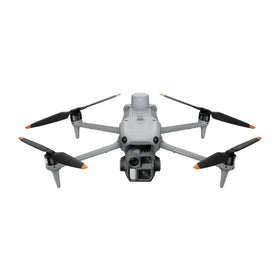
Not outright banned, but severely restricted. DJI drones without ADS-B Out transponders and Mode 5 IFF capability cannot operate legally within the restricted zone. Enterprise models like the Matrice 350 RTK and Mavic 3E can be retrofitted, but consumer models like the Mini 4 Pro or Air 3 lack the necessary hardware ports, effectively grounding them in that airspace.
How quickly will the airspace restrictions take effect?
The Polish Ministry of National Defence is expected to publish the full airspace classification changes by September 2026, with enforcement beginning October 1. However, interim TFRs are already being issued on a rolling basis near construction sites for base infrastructure. Operators should check PANSA NOTAMs daily if flying within 50 km of Powidz or Lask.
What is the single best action a commercial operator can take right now?
Audit your fleet for ADS-B Out compatibility. If your drones lack transponder support, either plan for retrofit within 90 days or divest them through the second-hand market before prices drop further. Simultaneously, begin training one staff member in military aviation radio procedures to satisfy the new two-way voice communication mandate. Reboot Hub offers fleet assessment services to help operators determine which units are compliant and which need upgrade or replacement.
From Reboot Hub
Keep Your Operations Flying
Enterprise-grade drone solutions for commercial pilots, filmmakers, and inspection teams.
Pre-owned Fleet
Fully inspected DJI drones with 6-month warranty. Save up to 40%.
Browse Inventory ->