ParaZero to Show DefendAir Counter-UAS Line at AUSA 2026
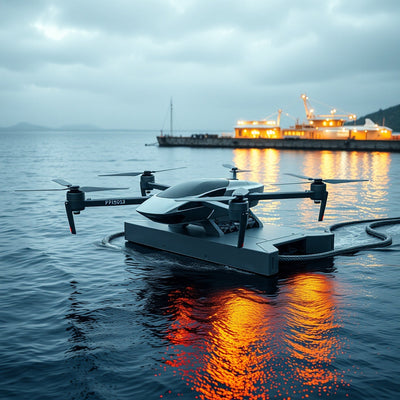
ParaZero Technologies will present its newest DefendAir counter-UAS platforms at the Association of the United States Army Annual Meeting in Washington, D.C. The showcase highlights net-based interception and autonomous counter-drone defense for security and defense buyers.

Quick answer
ParaZero Technologies announced it will present its latest DefendAir counter-UAS platforms, including net-based interception technology and autonomous counter-drone defense, at the Association of the United States Army Annual Meeting in Washington, D.C.
- Announcement dated October 9, 2026, from Kfar Saba, Israel
- Event is the Association of the United States Army Annual Meeting in Washington, D.C.
- Focus is net-based interception and autonomous counter-drone defense
- ParaZero trades on Nasdaq under ticker PRZO
Evidence: Source material · AeroVironment unmanned systems solutions · FAA UAS official guidance · Defense.gov official source
Fleet readiness
Keep DJI hardware available without overbuying new units.
Use defense and fleet news as a planning signal for repair support, inspected pre-owned aircraft, and replacement timing.

Verified facts
What the available evidence confirms
| Attribute | Source Detail |
|---|---|
| Company | ParaZero Technologies Ltd. (Nasdaq: PRZO) |
| Event | Association of the United States Army Annual Meeting |
| Location | Washington, D.C. |
| Technology focus | Net-based interception and autonomous counter-drone defense |
| Announcement date | October 9, 2026 |
ParaZero Technologies Ltd., the Israel-based aerospace defense company trading on Nasdaq under the ticker PRZO, announced on October 9, 2026 that it will present its newest DefendAir counter-UAS platforms at the Association of the United States Army Annual Meeting in Washington, D.C. The announcement, reported by Yahoo Finance via GlobeNewswire, frames the appearance as a showcase of the company's latest developments in net-based interception technology and autonomous counter-drone defense.
The AUSA Annual Meeting is one of the largest land power and defense industry gatherings in the United States, drawing military procurement officials, defense contractors, and security technology buyers. For ParaZero, the event represents a direct channel to the U.S. Army and allied defense ecosystem at a moment when counter-UAS capability has become a standing procurement priority across multiple branches of government and allied militaries.
What the AUSA 2026 appearance signals
According to the source report, ParaZero will present its latest DefendAir counter-UAS platforms with an emphasis on net-based interception and autonomous counter-drone defense. The company describes itself as an aerospace defense firm pioneering smart, autonomous solutions for both manned and unmanned aerial systems. That positioning matters because it places ParaZero's counter-UAS work inside a broader autonomy portfolio rather than as a standalone security accessory.
The choice of AUSA as the venue is commercially significant. Army-focused trade shows have become a primary venue for counter-UAS vendors seeking to move from pilot programs into larger procurement pipelines. By bringing the DefendAir line to Washington, D.C., ParaZero is signaling that its net-based interception approach is mature enough for defense buyers to evaluate alongside kinetic, electronic warfare, and directed-energy alternatives. The source does not provide pricing, unit volumes, or contract status, so the announcement should be read as a market visibility move rather than a confirmed order.
Why net-based interception is gaining defense attention
Net-based counter-UAS systems offer a distinct operational profile compared with jamming or kinetic defeat. A net interceptor is designed to physically capture a target drone without creating explosive fragmentation or relying on radio-frequency disruption that can affect friendly communications. For military bases, forward operating positions, and critical infrastructure sites, that can reduce collateral risk and simplify rules of engagement in permissive or mixed-use airspace.
The source summary highlights autonomous counter-drone defense as a core part of the DefendAir presentation. In practical terms, autonomy in this context typically means reducing the operator workload required to detect, track, and engage a small UAS threat. For defense procurement teams, autonomy is increasingly a threshold requirement because manual interception of fast, low-cost drones is difficult to scale across multiple sites or extended duty cycles. Reboot Hub analysis: the commercial drone market is watching this segment closely because defense-grade counter-UAS validation often shapes how regulators and enterprise security teams think about airspace risk around airports, stadiums, and logistics hubs.
What this means for drone owners and the market
For commercial drone operators and fleet managers, the steady expansion of counter-UAS offerings is a reminder that airspace access is becoming more contested and more scrutinized. Every new counter-drone platform shown at a major defense event reinforces the reality that unauthorized or non-compliant flights near sensitive sites are now treated as a serious security problem, not a nuisance. Operators who fly near military installations, government facilities, or large public events should expect detection and mitigation systems to become more common, more automated, and more capable of physically capturing a drone.
For buyers in the pre-owned DJI market, the counter-UAS trend has a quieter but real implication. As enterprise and government fleets upgrade or adjust their equipment around changing security requirements, the flow of inspected pre-owned DJI drones and OEM-pulled parts into secondary channels can shift. Reboot Hub has covered the broader DefendAir story before, including the FPV drone killer net launcher that achieved a reported 100 percent success result in its first U.S. demonstration, and that context matters for operators evaluating how quickly net-based interception is moving from concept to field demonstration. A buyer or fleet planner who understands where counter-UAS capability is heading can make more informed decisions about airframe selection, flight planning, and resale timing. For owners evaluating service and lifecycle risk, FPV Drone Killer Parazero S Defendair Net Launcher Achieves 100 Success In First Us Demo explains the relevant repair, parts, resale, or operational path.
The source does not state that ParaZero's DefendAir systems are being sold to commercial drone operators, and there is no indication in the announcement that the technology is intended for consumer use. The commercial relevance is indirect: defense validation can accelerate regulatory attention, shape security procurement at civilian infrastructure sites, and influence how drone manufacturers design remote identification and geofencing behavior. Fleet managers should treat this announcement as an early signal rather than an immediate operational change.
Reading the announcement without overreach
The source report is a company announcement distributed through GlobeNewswire and republished by Yahoo Finance. It confirms the event, the location, the technology focus, and the company's Nasdaq listing. It does not confirm contract awards, unit pricing, delivery timelines, or performance specifications. Readers should avoid inferring that the AUSA appearance represents a procurement decision by the U.S. Army or any other government buyer.
What the announcement does provide is a clear directional signal: ParaZero is prioritizing the U.S. defense market and positioning its DefendAir line as an autonomous, net-based answer to small drone threats. For defense analysts, security integrators, and commercial operators tracking the counter-UAS segment, the AUSA 2026 appearance is a useful checkpoint for how quickly net-based interception is maturing as a credible option alongside more established defeat mechanisms.
FAQ
Frequently asked questions
What did ParaZero announce for AUSA 2026?
ParaZero announced on October 9, 2026 that it will present its newest DefendAir counter-UAS platforms at the Association of the United States Army Annual Meeting in Washington, D.C., highlighting net-based interception technology and autonomous counter-drone defense.
Why does net-based counter-UAS matter for defense buyers?
Net-based interception can physically capture a target drone without explosive fragmentation or broad radio-frequency disruption, which may reduce collateral risk and simplify use near friendly forces or sensitive infrastructure.
Should commercial drone operators change anything after this announcement?
No immediate operational change is required, but operators flying near military or critical infrastructure sites should expect counter-UAS detection and mitigation systems to become more common and more automated over time.
Which sources support this update?
The visible evidence links identify Source material and AeroVironment unmanned systems solutions and FAA UAS official guidance and Defense.gov official source; each source is used only for the claim it directly supports.
What remains subject to change?
Retail pricing, availability, product bundles and regulatory timelines can change. Readers should verify the latest terms with the named retailer, manufacturer or regulator before acting.
How should buyers or operators use this analysis?
Use the verified facts as a starting point, then compare mission fit, lifecycle support, maintenance needs and current procurement terms before making a purchase or fleet decision.
Käytetyt lähteet
- Source material - primary source
- AeroVironment unmanned systems solutions - official company source
- FAA UAS official guidance - official regulator source
- Defense.gov official source - official government source
- DIU Blue UAS - official government source
Reboot Hub Editorial tarjoaa drone-omistajille ostaja-, huolto-, jälleenmyynti- ja toiminta-analyyseja. Jos huomaat virheen, ota meihin yhteyttä korjauspyynnön tekemiseksi toimituksellisen linjamme mukaisesti.