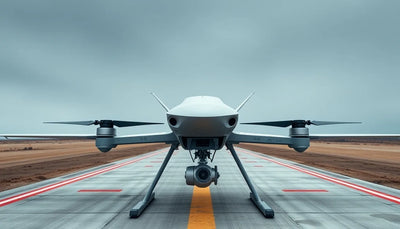
EHang Completes First Unmanned Passenger Flight in Sri Lanka
EHang has completed what is reported as the first unmanned passenger flight in Sri Lanka, marking a new regional milestone for autonomous aerial mobility and expanding the commercial conversation around passenger-grade drone operations.

Quick answer
EHang of China has completed what is reported as the first unmanned passenger flight in Sri Lanka, according to Dimension Network.
- The flight marks an early autonomous passenger drone milestone in South Asia.
- The report frames the event as a regional market development for unmanned aerial mobility.
- Commercial drone operators may see this as a signal of expanding autonomous flight acceptance in new markets.
- No verified technical specifications or certification details were included in the source.
EHang, the Chinese autonomous aerial vehicle company, has completed what is being reported as the first unmanned passenger flight in Sri Lanka, according to a report from Dimension Network. The development places EHang at the center of a new regional milestone for passenger-grade autonomous flight, extending the company's public demonstration footprint beyond its established test and exhibition locations.
Market context
Turn market news into a buy, repair, or trade-in decision.
Compare pre-owned availability, resale timing, and repair economics before the market moves again.

For commercial drone operators, fleet buyers, and repair-focused businesses, the Sri Lanka flight is less about a single aircraft and more about how autonomous passenger platforms are moving from controlled demonstration environments into broader international settings. The report does not include technical specifications, certification details, or operational parameters, so the commercial significance should be read carefully and without assuming regulatory approval or service readiness.
What the source actually reports
Dimension Network, a China-based outlet, reports that EHang completed the first unmanned passenger flight in Sri Lanka. The source summary is concise and does not provide aircraft model details, flight duration, altitude, passenger load, or the specific regulatory framework under which the flight took place. The central verifiable fact is the reported completion of the flight and its designation as a first for Sri Lanka.
Because the source is limited, Reboot Hub analysis should treat this as an early market signal rather than a confirmed commercial deployment. EHang has previously pursued autonomous passenger demonstrations in multiple international markets, and this report suggests the company is continuing to seek visibility in South Asia. For drone industry readers, the key takeaway is that autonomous passenger flight is being actively showcased in regions that have not historically been major civil aviation drone test markets.
Why South Asia matters for autonomous flight
South Asia presents a complex but potentially significant environment for unmanned aerial mobility. Dense urban populations, congested ground transport corridors, and growing tourism infrastructure create practical use cases for short-range aerial passenger services. Sri Lanka, with its coastal cities and tourism-driven economy, offers a visible platform for demonstrating autonomous flight in a setting that attracts international attention.
The reported EHang flight does not confirm that commercial passenger services are imminent in Sri Lanka. It does, however, indicate that autonomous aerial vehicle manufacturers are testing public and regulatory reception in new geographies. For fleet operators and procurement teams, this kind of demonstration can be an early indicator of where future service contracts, maintenance demand, and pilot training infrastructure may develop. Operators should monitor whether follow-up reports include certification language, local partner announcements, or government statements, as those would carry far more commercial weight than a single demonstration flight.
What this means for drone owners and the market
For commercial drone buyers and operators, the EHang report is a reminder that the unmanned aviation market is expanding along two parallel tracks. The first track is the established market for small and mid-size commercial drones used in inspection, mapping, agriculture, and public safety. The second track is passenger-grade autonomous flight, which remains largely experimental but is generating increasing international attention. These tracks share supply chain pressures, component demand, and regulatory scrutiny, even though their end users differ.
Operators who currently fly DJI platforms or manage mixed commercial fleets should not expect immediate changes to their day-to-day operations from this single report. The practical implication is more strategic: autonomous passenger demonstrations can accelerate public awareness of unmanned aviation and may influence how regulators approach all categories of drone activity in a given country. A successful high-profile demonstration can create political momentum for clearer drone rules, while a poorly managed event can trigger restrictive responses. For repair customers and pre-owned DJI drone buyers, the relevant question is whether broader market growth will support more consistent parts availability, service capacity, and resale demand. Reboot Hub analysis suggests that sustained international investment in autonomous flight tends to strengthen the overall commercial drone ecosystem, including the support infrastructure that keeps smaller fleets operational. Readers tracking the pre-owned DJI market and professional repair options can monitor these developments through the Drone Wiki. For owners evaluating service and lifecycle risk, Drone Wiki explains the relevant repair, parts, resale, or operational path.
Fleet managers should treat the Sri Lanka flight as a market intelligence data point rather than a procurement trigger. The absence of verified technical specifications or certification details means no responsible buyer should adjust purchasing plans based on this report alone. What operators can do is track whether EHang or other autonomous passenger developers begin publishing more detailed regulatory and operational disclosures in South Asia, as that would signal a shift from demonstration activity to commercial infrastructure planning.
What to watch next
The most useful follow-up signals will come from official statements by Sri Lankan aviation authorities, EHang corporate disclosures, or reporting that includes specific certification references. Demonstration flights can be staged under temporary permissions that do not reflect a clear path to routine commercial service. Without that regulatory context, the commercial value of the reported milestone remains limited.
For the broader drone market, the EHang report reinforces a pattern that has been building for several years: autonomous aerial vehicle developers are actively seeking international demonstration opportunities to build credibility and attract partners. This activity can have indirect benefits for the commercial drone repair and resale market, because a larger and more visible unmanned aviation sector tends to normalize drone operations and support demand for maintenance, parts, and inspected pre-owned equipment. Operators should remain measured, verify claims against official sources when available, and avoid overreacting to single-source demonstration reports.
FAQ
Frequently asked questions
Did EHang confirm the Sri Lanka flight through an official company statement?
The source data does not include an official EHang company statement. The report comes from Dimension Network and should be treated as a single-source account until additional confirmation is available.
Does this mean passenger drone services are approved in Sri Lanka?
No. The report describes a completed demonstration flight but does not include certification details, regulatory approvals, or commercial service announcements. A single flight does not establish routine passenger service authorization.
Should commercial drone operators change their fleet plans based on this news?
No immediate change is warranted. Operators can treat the report as an early market signal and monitor for follow-up regulatory or corporate disclosures that would indicate a more concrete commercial development.
Which sources support this update?
The article distinguishes reported information from analysis and does not present an unverified source as official confirmation.
What remains subject to change?
Retail pricing, availability, product bundles and regulatory timelines can change. Readers should verify the latest terms with the named retailer, manufacturer or regulator before acting.
How should buyers or operators use this analysis?
Use the verified facts as a starting point, then compare mission fit, lifecycle support, maintenance needs and current procurement terms before making a purchase or fleet decision.
Käytetyt lähteet
- Source material - primary source
Julkaisuhetkellä muita virallisia asiakirjoja ei ollut saatavilla.
Reboot Hub Editorial tarjoaa drone-omistajille ostaja-, huolto-, jälleenmyynti- ja toiminta-analyyseja. Jos huomaat virheen, ota meihin yhteyttä korjauspyynnön tekemiseksi toimituksellisen linjamme mukaisesti.