Drones Already Excel at Autonomous Work, So Why Do Robots Still Carry Humans
A new Huxiu analysis asks why drones already perform complex autonomous tasks while human-carrying robots remain limited. The question matters for commercial operators weighing proven aerial platforms against experimental ground robotics.

Quick answer
A Huxiu analysis argues drones already demonstrate advanced autonomous task performance, while human-carrying robots remain constrained by safety, energy, and operational complexity.
- Drones are framed as mature autonomous workers in commercial and inspection roles.
- Human-carrying robots face harder safety, power, and reliability requirements.
- The contrast highlights why drone fleets may remain the more practical near-term investment for operators.
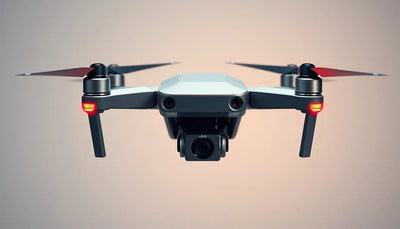
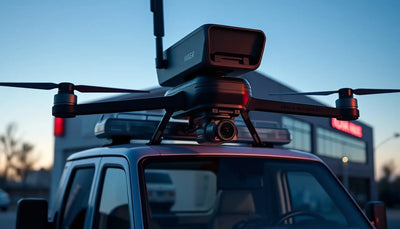
A new analysis from Huxiu, the China-based technology and business publication, poses a pointed question for the robotics and commercial drone sectors: drones are already functioning as capable autonomous students, so why do robots still need to carry humans? The report, circulated through Google News RSS on October 4, 2026, frames the comparison as a way to understand why aerial platforms have matured into dependable commercial tools while human-carrying ground robots remain constrained by a far more demanding set of requirements.
Market context
Turn market news into a buy, repair, or trade-in decision.
Compare pre-owned availability, resale timing, and repair economics before the market moves again.

The central observation is that drones have already crossed a meaningful threshold in practical autonomy. They perform inspection routes, agricultural passes, mapping missions, and logistics tasks with a level of repeatability that commercial buyers now treat as routine. Human-carrying robots, by contrast, must solve a much harder problem: keeping a person safe, comfortable, and in control across unpredictable ground environments. That gap, according to the Huxiu piece, is not a failure of robotics ambition but a reflection of how differently the two categories are judged.
Why drone autonomy matured faster than passenger robotics
The Huxiu report suggests that drones benefit from operating in comparatively structured airspace and from missions that can be defined, repeated, and verified. A commercial drone can fly a pre-planned route, capture consistent data, and return to a landing point without needing to manage the physical safety of an onboard human. That single difference removes an enormous regulatory and engineering burden. The absence of a passenger means the platform can fail safely, be grounded quickly, or be replaced without the same liability cascade that a human-carrying robot would trigger.
Reboot Hub analysis reads this as a useful lens for procurement decisions. Buyers evaluating autonomous systems should distinguish between platforms that automate a task and platforms that automate responsibility for a person. The first category, which includes most commercial drones, has reached a stage where inspection, mapping, and logistics workflows are commercially normal. The second category remains experimental in most markets, with safety certification, energy density, and public acceptance still unresolved. For fleet planners, that distinction matters more than the shared label of “autonomous robot.”
The commercial logic of proven aerial platforms
Huxiu’s framing also points to a practical commercial reality: businesses tend to adopt autonomy where the return on investment is measurable and the downside is contained. Drones fit that profile. A drone that inspects a bridge, surveys a construction site, or monitors a solar farm produces immediate operational value. If the mission fails, the cost is typically limited to the aircraft and the lost flight time. That risk profile has encouraged faster adoption across energy, agriculture, infrastructure, and public safety.
Human-carrying robots face the opposite equation. The potential value is large, but the cost of failure is measured in human injury or death. That raises the bar for every component, every software update, and every regulatory filing. The Huxiu piece implies that this is why the two categories have diverged so sharply despite drawing from overlapping sensor, battery, and autonomy research. For commercial operators, the lesson is not that passenger robots will never arrive, but that their timeline should not be confused with the timeline for drone-based automation.
What this means for drone owners and the market
For drone owners, repair customers, and fleet operators, the Huxiu analysis reinforces a practical point: mature drone platforms are currently the safer place to put working capital. The pre-owned DJI market reflects this logic. Operators who need proven inspection or mapping capability can acquire inspected pre-owned DJI drones at a lower entry cost than new enterprise units, while still accessing the same operational maturity that makes aerial automation commercially viable. The contrast with human-carrying robots strengthens the case for treating drones as depreciating work tools rather than speculative technology bets. For owners evaluating service and lifecycle risk, Drone Wiki explains the relevant repair, parts, resale, or operational path.
Buyers should also consider how quickly autonomy expectations are shifting. A drone that was considered advanced two years ago may now be viewed as a baseline tool. That has implications for resale value, spare parts planning, and repair decisions. Operators who maintain their aircraft well and source genuine OEM spare parts are better positioned to preserve value in a market where proven platforms remain in demand. For those evaluating the broader robotics landscape, the Reboot Hub Drone Wiki offers a grounded reference point for understanding how commercial drone categories are evolving without the noise of speculative passenger-robot hype.
The Huxiu piece does not provide technical specifications, pricing data, or named drone models. It is a conceptual analysis rather than a product report. That limits what can be verified about specific platforms, but the strategic point remains useful. Commercial operators should ask whether a given autonomous system is replacing a task or replacing a person. The answer determines the realistic timeline, the regulatory exposure, and the resale profile of the equipment. For most buyers today, task-replacing drones remain the more rational near-term investment.
What operators should watch next
Reboot Hub analysis: The next meaningful signal for the commercial drone market will be whether passenger-robot research begins to pull regulatory attention or capital away from aerial platforms. Huxiu’s analysis suggests that the two categories are not in direct competition for the same buyer today, but they do compete for engineering talent, component supply, and public perception. If human-carrying robots attract outsized investment while delivering little commercial deployment, that could create noise that distorts how businesses evaluate all autonomous systems.
Fleet managers should monitor whether drone autonomy continues to deepen in specific verticals such as energy inspection, public safety, and logistics. Those are the segments where repeatable missions, contained risk, and measurable returns have already produced commercial adoption. The Huxiu report implies that these are also the segments where drones will keep widening their lead over ground-based passenger robotics. For operators, the practical response is to focus on mission reliability, spare parts availability, and predictable maintenance costs rather than waiting for a breakthrough in human-carrying platforms.
Reboot Hub analysis: The source-limited nature of this report means that specific claims about market size, adoption rates, or regulatory timelines should be treated cautiously. What can be said with confidence is that the Huxiu analysis captures a real and observable divergence: drones have become routine autonomous workers in commercial settings, while human-carrying robots remain constrained by safety, energy, and operational complexity. That divergence is likely to persist, and it should inform how commercial buyers allocate budgets across the robotics spectrum.
FAQ
Frequently asked questions
Why are drones considered more mature autonomous systems than human-carrying robots?
Drones operate in repeatable, pre-planned missions without the safety burden of an onboard passenger. That allows faster commercial adoption because failures are less catastrophic and regulatory requirements are less demanding than those for human-carrying platforms.
What should a commercial operator do differently after reading this analysis?
Operators should prioritize proven aerial platforms for near-term automation needs and treat human-carrying robots as a longer-horizon category. Maintaining existing drone fleets with genuine OEM spare parts and disciplined repair practices helps preserve value in a market that rewards reliability.
How does this affect the pre-owned DJI drone market?
Because mature drone platforms remain the practical choice for commercial work, inspected pre-owned DJI drones continue to offer a cost-effective entry point for operators who need dependable inspection, mapping, or logistics capability without paying new-unit premiums.
Which sources support this update?
The article distinguishes reported information from analysis and does not present an unverified source as official confirmation.
What remains subject to change?
Retail pricing, availability, product bundles and regulatory timelines can change. Readers should verify the latest terms with the named retailer, manufacturer or regulator before acting.
How should buyers or operators use this analysis?
Use the verified facts as a starting point, then compare mission fit, lifecycle support, maintenance needs and current procurement terms before making a purchase or fleet decision.
Käytetyt lähteet
- Source material - primary source
Julkaisuhetkellä muita virallisia asiakirjoja ei ollut saatavilla.
Reboot Hub Editorial tarjoaa drone-omistajille ostaja-, huolto-, jälleenmyynti- ja toiminta-analyyseja. Jos huomaat virheen, ota meihin yhteyttä korjauspyynnön tekemiseksi toimituksellisen linjamme mukaisesti.