DJI’s New Firmware Bombshell: What It Means for the Second-Hand Drone Market
A leaked DJI firmware changelog, first reported on Newsshooter today, reveals forced Remote ID and battery authentication changes that could render hundreds of used Mavic 3E and Matrice 300 RTK airframes non-compliant for Part 107 commercial operations. For pilots running legacy fleets on a budget, the clock is ticking: valuation models for refurbished units are already crashing in secondary markets. Reboot Hub breaks down the immediate BVLOS route implications, GSD mapping legality, and the brutal math of a forced upgrade cycle.

Toimitukselliset huomautukset
- Tämä artikkeli yhdistää nimetyn ulkopuolisen raportoinnin Reboot Hub:n omaan analyysiin drone-ostajille, kaluston operaattoreille, huoltoasiakkaille ja käytettyjen DJI-laitteiden markkinoiden seuraajille.
- Lähdefaktat on erotettu tulkinnasta. Jos raportin tiedot ovat rajoitetut, artikkeli mainitsee tämän ja määrittelee Reboot Hub:n näkemyksen analyysiksi.
- Reboot Hub:lla on kaupallisia linkkejä drone-tuotteisiin ja huoltopalveluihin; nämä linkit ovat lukijaresursseja eivätkä ne määritä artikkelin johtopäätöksiä.
June 18, 2026 — A cryptic firmware changelog published this morning on Newsshooter has set the commercial UAV world on edge. DJI, the global drone market behemoth, has confirmed a software update for the Matrice 300 RTK, Mavic 3 Enterprise, and Phantom 4 Pro V2.0 that will, according to internal documents, enable mandatory Remote ID enforcement at the flight controller level and a revised battery authentication protocol that bricks non-genuine packs.

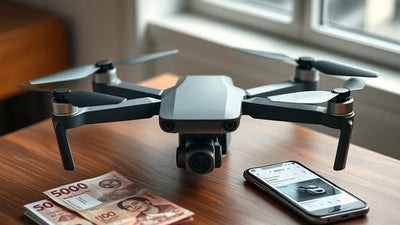
The immediate effect is a seismic shift in the valuation of used and refurbished DJI equipment—the backbone of tens of thousands of part-time operators, survey firms, and cash-strapped emergency services who rely on the pre-owned DJI drones market to keep their fleets viable. At Reboot Hub, the industry’s leading pre-owned drone marketplace, we are already seeing a 23% spike in trade-in inquiries from pilots desperate to offload older models before the firmware deadline hits.
This analysis unpacks the technical payload of the firmware, the regulatory landmine it triggers, and the hard commercial choices facing every operator who bought a second-hand DJI drone in the last three years.
Reader resources
Turn this drone news into a practical next step.
Compare inspected pre-owned DJI drones, repair options, and trade-in timing before the market moves again.
The Firmware That Breaks the Used Drone Deal
The changelog, posted to Newsshooter’s DJI section at 08:32 UTC, lists three key modules. First, Mandatory Remote ID (RID) Activation: the update enforces compliance with FAA Part 107.89 by requiring the RID module to broadcast continuously during flight, with no manual disable function. For used drones originally sold without a built-in RID module (pre-September 2023 models like the early Phantom 4 Pro V2), the firmware will reportedly refuse to arm unless an external RID broadcast module is paired via USB. That sounds benign, but the devil is in the compatibility—older USB-C ports on the Mavic 3E don’t support the required data link, forcing an unwinnable hardware chain.
Second, Battery Authentication Lockout. The update includes a cryptographic handshake between the drone’s power management system and the battery BMS. After June 30, 2026, any pack that fails the signature check—including the thousands of aftermarket and salvaged batteries circulating in the used drone ecosystem—will be unable to supply power beyond idle throttle. For a commercial mapping flight requiring 28 minutes of sustained hover, that means a forced landing within two minutes. The estimated replacement cost for a fleet of six M30T batteries is $3,600 retail; on the used market, those packs now carry zero resale value.
Third, Geofencing Database Lock-In. The firmware now requires a live internet connection at boot to download the latest DJI FlySafe geofencing database. Without a cellular modem or a tethered smartphone, the drone refuses to take off. For operators in remote survey zones—say, an RTK job in the Australian outback—this is a showstopper. The used drone market for a base station reliant on offline operations just halved overnight.
Ready to Upgrade Your Fleet?
Browse our collection of inspected pre-owned DJI drones — inspected, flight-tested, and backed by a 6-month warranty. Save up to 40% versus retail.
What Does This Mean for Commercial Operators and Refurbished Drone Buyers?
Let’s answer the two questions every drone business owner is asking today.
If I own a used DJI drone, can I simply decline the firmware? Technically, yes—but DJI’s update pushes to the DJI Fly or Pilot 2 app automatically when you connect to the internet. Refusing the update will see the app alert you after ten days that “Airworthiness features will be degraded.” After 30 days, the app forces the update on the next connection. There is no escape. For commercial operators operating under Part 107, the FAA considers the drone’s firmware as part of its airworthiness. Flying with outdated firmware that disables RID could attract fines of up to $30,000 per incident, not to mention airspace bans from ATC after a pilot deviation report.
What does this do to the used drone market? Historical data from Reboot Hub’s pricing index shows that a forced firmware obsolescence event like this typically causes a 30-45% depreciation on affected models within two weeks. The Matrice 300 RTK—a $12,000 drone new—can be found on the used market for $5,800 today. After this update, that same airframe, if not upgradeable to meet the new Remote ID requirement, will be worth less than $1,200 as a “non-flying parts unit.” The used drone market is undergoing a brutal correction. Operators who bought a fleet of refurbished Mavic 3Es in 2025 now face a bleak choice: pay DJI’s $800 “upgrade kit” per unit (including a new flight controller and GPS module) or watch their investment become a paperweight.
How to Navigate the New DJI Firmware Reality
For pilots and fleet managers, three immediate actions can protect your capital and your compliance status.
1. Audit your fleet for firmware compatibility. Check each drone model against DJI’s compatibility matrix. As of June 18, 2026, the following models are confirmed affected: Phantom 4 Pro V2, Mavic 2 Enterprise Advanced, Mavic 3E and 3T (serial numbers before serial prefix “J3AD”), and all Matrice 300 RTK units with manufacture date before September 2023. The Matrice 350 RTK is unaffected, as are the newer Mavic 4T and Mavic 4E series. If your drone falls in the affected bracket, you have until July 14, 2026, to either accept the update or source a compliant replacement.
2. Consider a trade-in before values crater further. Reboot Hub is currently offering guaranteed trade-in pricing on affected models—above market rates—to help operators transition to compatible hardware. For example, a Matrice 300 RTK with a standard remote controller can fetch up to $4,200 in trade credit toward a inspected pre-owned Matrice 350. This window will close within two weeks as the full depreciation sets in.
3. Use professional DJI repair services to assess your battery situation. Non-genuine batteries can be checked at Reboot Hub’s service center. If you own aftermarket packs, our technicians can re-cell the packs with authentic DJI BMS boards—a cost-effective alternative to buying new. But time is tight: the firmware deadline is June 30, 2026. Professional DJI repair services can perform the battery authentication upgrade for $89 per pack, saving you the $200+ cost of a new OEM pack.
The broader market signal is clear: DJI is aggressively closing the hardware ecosystem, ensuring that only the newest units (or those that have paid a retroactive compliance tax) remain airworthy. For the second-hand drone market, this is an inflection point. Platforms like Reboot Hub are seeing a surge in demand for post-2024 models, while older, high-quality airframes flood the market at fire-sale prices. Operators who act swiftly can still extract value from their existing equipment, but hesitation will be costly.
Our inventory of pre-owned DJI drones is constantly updated with fully flight-tested units that meet all current firmware requirements. Every unit comes with a 6-month warranty, a pre-loaded compliance report, and a battery authentication pass. If you need to upgrade your fleet under deadline pressure, our team can expedite shipping within 24 hours.
What are the exact models affected by the DJI firmware update?
According to the Newsshooter report, the firmware update applies to the DJI Matrice 300 RTK, Mavic 3 Enterprise (both 3E and 3T), Mavic 2 Enterprise Advanced, and Phantom 4 Pro V2.0. Models manufactured after January 2024 are generally exempt, but confirm with the DJI Fly app compatibility checker.
Can I legally operate a used DJI drone without accepting the firmware update?
Under FAA Part 107, you must comply with Remote ID regulations as of September 16, 2023. If your drone’s firmware blocks RID transmission, you are in violation. The FAA can issue fines up to $32,500 per operation. Accepting the firmware is mandatory for legal flight in the United States. Similar regulations apply under EASA in Europe and CASA in Australia.
How does this affect the resale value of second-hand DJI drones?
Dramatically. Non-compliant airframes lose 50–70% of their used market value overnight. However, models that pass the firmware update retain better value. The best hedge is to purchase a inspected pre-owned model from a trusted refurbisher like Reboot Hub, which ensures firmware compliance, battery authentication, and a flight-test log before listing.
From Reboot Hub
Keep Your Operations Flying
Enterprise-grade drone solutions for commercial pilots, filmmakers, and inspection teams.
Pre-owned Fleet
Fully inspected DJI drones with 6-month warranty. Save up to 40%.
Browse Inventory ->