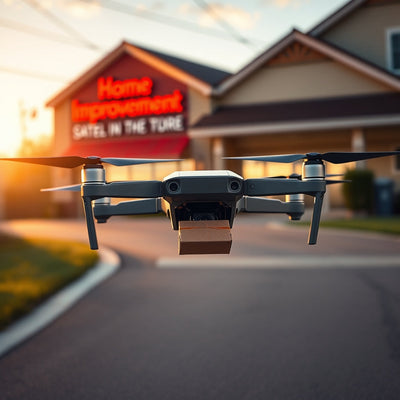
DJI Mini 3 Discount Drops $50, Signals Entry-Level Price Shift
Mashable reports a $50 discount on the beginner-friendly DJI Mini 3. The price move matters for commercial operators watching entry-level hardware costs, training fleets, and the pre-owned DJI Mini 3 resale market.

Mashable reports that the beginner-friendly DJI Mini 3 drone is currently available at a $50 discount. The deal, surfaced through Google News DJI coverage, points to a modest but meaningful price adjustment in the entry-level camera drone segment. For commercial operators, training coordinators, and pre-owned market watchers, even a $50 shift on a popular starter platform can ripple through procurement math and resale expectations.
This is not a product launch or a regulatory event. It is a pricing signal. When a widely recognized consumer tech outlet flags a discount on a DJI Mini series model, the immediate question for the commercial side of the market is whether the promotion reflects inventory clearing, seasonal demand management, or broader competitive pressure on sub-250-gram camera drones. Reboot Hub analysis suggests the answer is likely a mix of all three, with the Mini 3 occupying a transitional position in DJI's lineup as newer models continue to absorb attention.
The reported discount and what it covers
According to Mashable, the DJI Mini 3 is priced $50 below its typical level. The source frames the model as beginner-friendly, which aligns with how the Mini series has historically been positioned: lightweight, approachable, and relatively forgiving for new pilots. The report does not specify a retailer, a promotional window, or whether the discount applies to a base bundle or a Fly More-style package. That absence of detail is worth noting for buyers who want to compare the promotion against pre-owned pricing.
DJI buying context
Match product news to hardware you can actually deploy.
Check inspected DJI aircraft, repair support, and trade-in timing before deciding whether to upgrade, repair, or wait.

From an operator perspective, the key variable is not the $50 figure in isolation. It is what the discount implies about the floor price for a capable entry-level DJI camera drone. When new-unit promotions compress the gap between new and pre-owned hardware, resale listings have to adjust. Sellers holding inspected pre-owned Mini 3 units may need to recalibrate asking prices to remain competitive against discounted new inventory. Buyers, meanwhile, gain leverage in both channels.
What this means for drone buyers
For a buyer evaluating a first DJI platform or a cost-controlled addition to a training fleet, a $50 discount is a modest but real reduction. The Mini 3 remains a relevant option for operators who need a simple, lightweight camera drone without the complexity or cost of larger enterprise platforms. The reported promotion does not change the core value proposition, but it does lower the entry threshold slightly at a time when many small operators are watching every hardware dollar.
The more interesting consequence sits in the pre-owned market. When new Mini 3 units are discounted, the spread between a new unit and a pristine pre-owned DJI Mini 3 narrows. Buyers who might have accepted pre-owned hardware to save money may now decide the savings are not sufficient to forgo a new-unit warranty or retail purchase experience. Sellers and platforms that list inspected pre-owned units, including the Pristine Pre Owned Dji Mini 3, have to position their pricing and condition transparency carefully during promotional windows like this one. For buyers comparing ownership options, Pristine Pre Owned Dji Mini 3 provides a practical next step for model, condition, and replacement timing.
Fleet managers should treat the discount as a data point rather than a trigger. A single $50 promotion does not signal a permanent repricing of the Mini 3, but it does suggest that DJI and its retail partners are actively managing demand for the model. Operators planning multi-unit purchases for training or light inspection work should monitor whether similar discounts recur, spread to bundles, or deepen over the coming weeks.
Entry-level pricing pressure and the pre-owned DJI market
The Mini series has long served as the on-ramp for DJI ownership. When that on-ramp gets cheaper, the entire downstream market feels it. Pre-owned Mini 2, Mini 3, and Mini 3 Pro listings all compete within a narrow band of buyer expectations. A $50 move on the Mini 3 compresses that band further, forcing sellers of older or higher-mileage units to differentiate on condition, included accessories, or verified inspection history.
Reboot Hub analysis suggests that promotional activity on current-generation entry models tends to accelerate depreciation on the previous generation more than on the discounted model itself. Buyers who see a new Mini 3 at a reduced price may be less willing to pay a premium for a used Mini 3 Pro or a heavily used Mini 3. The practical takeaway for resellers is to keep pricing responsive to new-unit promotions and to emphasize inspection quality and genuine OEM spare parts availability as differentiators that a retail discount cannot match.
Repair economics also shift slightly. The Mini 3 is a repairable platform with a steady flow of OEM-pulled parts in the service market. When new units are discounted, some owners may choose replacement over repair for heavily damaged aircraft. That dynamic can reduce demand for certain repair jobs while increasing the supply of salvageable donor units, which in turn feeds the parts ecosystem. It is a quiet but real adjustment that service shops should watch.
What operators should do differently
The immediate action for a buyer or fleet manager is straightforward: compare the discounted new-unit price against inspected pre-owned listings before committing. The $50 promotion narrows the gap, but it does not eliminate the value case for a well-inspected pre-owned unit with verified condition and transparent history. The decision should hinge on total cost, warranty expectations, and how quickly the aircraft will be put into service.
For resellers and repair providers, the discount is a reminder that entry-level DJI pricing moves quickly and that pre-owned listings must be actively managed. A static asking price set weeks ago may already be misaligned with current retail conditions. Operators who track these shifts and adjust their procurement or listing strategy accordingly will capture better margins than those who treat pre-owned pricing as fixed.
The broader signal is that DJI's entry-level segment remains competitively contested. Discounts on beginner-friendly models are not unusual, but each one provides a small window into how the manufacturer and its retail partners are managing inventory and demand. For commercial readers, that signal is worth more than the $50 itself.
Is the DJI Mini 3 discount confirmed by DJI?
The source data attributes the $50 discount report to Mashable. No direct confirmation from DJI or a specific retailer is included in the available reporting.
Does a new-unit discount affect pre-owned DJI Mini 3 pricing?
Yes, in practical terms. When new Mini 3 units are discounted, the price gap between new and pre-owned narrows, which can pressure resale asking prices and shift buyer preference toward new inventory.
Should fleet operators buy now because of the $50 discount?
A single $50 promotion is not a strong reason to accelerate a fleet purchase. Operators should compare new and pre-owned total costs, monitor whether the discount recurs or deepens, and decide based on operational need rather than the promotion alone.
Käytetyt lähteet
- DIU Blue UAS - official government source
Julkaisuhetkellä muita virallisia asiakirjoja ei ollut saatavilla.
Reboot Hub Editorial tarjoaa drone-omistajille ostaja-, huolto-, jälleenmyynti- ja toiminta-analyyseja. Jos huomaat virheen, ota meihin yhteyttä korjauspyynnön tekemiseksi toimituksellisen linjamme mukaisesti.