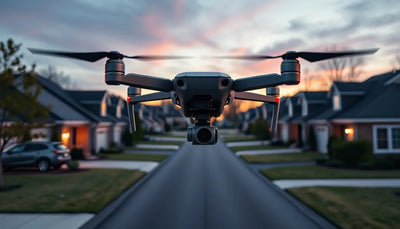
Beijing Tightens Drone Controls as Owners Turn to Buyback Points
Beijing has tightened drone controls, and local owners are now visiting buyback points to offload units. The shift signals near-term pressure on consumer drone ownership in the capital and a changing resale and repair landscape for operators and buyers watching China's drone market.

Quick answer
Beijing has tightened drone controls, and owners are flocking to buyback points to offload their units, according to Morning Post reporting.
- Beijing authorities have introduced tighter drone controls.
- Owners are visiting buyback points to sell or surrender drones.
- The trend points to reduced consumer drone ownership in the capital.
- Commercial operators and resale buyers should monitor how this affects pre-owned drone supply.
Beijing has moved to tighten drone controls, and the immediate market response is already visible on the ground: owners are lining up at buyback points to offload their units. The development, reported by the Morning Post, points to a meaningful shift in how consumer drone ownership is being treated in the Chinese capital and raises practical questions for commercial operators, resellers, and repair customers who track the pre-owned DJI market.
Market context
Turn market news into a buy, repair, or trade-in decision.
Compare pre-owned availability, resale timing, and repair economics before the market moves again.

The report does not detail the full text of the new control measures or the specific enforcement timeline. What is clear is that a segment of Beijing drone owners has decided that holding onto a consumer drone is no longer worth the compliance burden or operational uncertainty. That behavioral shift matters because it can quickly change the supply of used drones, the flow of units into repair channels, and the pricing environment for buyers outside China who source pre-owned DJI equipment.
What the Beijing development signals
The Morning Post report describes a visible rush of owners toward buyback points following the tightening of drone controls in Beijing. Buyback points are typically locations where consumers can sell or surrender devices, often for a reduced price or as part of a government-supported disposal channel. The fact that owners are actively using these points suggests that the new restrictions are being taken seriously rather than treated as a temporary or lightly enforced policy change.
For commercial observers, the key signal is not the exact wording of the regulation but the speed of the owner response. When a major city like Beijing tightens drone rules, it can create a localized oversupply of consumer drones as owners exit the market. That oversupply can then move through resale, export, or parts-recovery channels. Reboot Hub analysis suggests that any sudden increase in offloaded consumer drones could influence the availability and pricing of pre-owned DJI units in secondary markets over the following months.
What this means for drone owners and the market
The most immediate impact is on Beijing-based owners, who now face a clearer choice between compliance, sale, or surrender. For buyers and fleet managers outside China, the development is a reminder that drone ownership rules can change quickly in key markets, and that regulatory shifts often precede changes in used-equipment supply. A buyer evaluating a pre-owned DJI drone today should ask where the unit originated and whether its sale was driven by a policy change rather than normal upgrade cycles.
For repair customers and parts buyers, the buyback trend may eventually increase the number of units entering teardown and parts-recovery channels. When owners offload drones through buyback programs, some of those units are resold intact, while others are dismantled for components. That can create new availability of genuine OEM spare parts, but it can also introduce units with unclear maintenance histories into the broader market. Operators who want dependable equipment should review sourcing and inspection practices carefully, and resources like the Drone Wiki can help buyers understand what to check before purchasing a pre-owned DJI drone. For owners evaluating service and lifecycle risk, Drone Wiki explains the relevant repair, parts, resale, or operational path.
Fleet managers should also treat this as a planning signal. If tighter controls spread beyond Beijing or influence national policy, the flow of consumer drones into secondary and parts markets could accelerate. That would be relevant for operators who depend on pre-owned DJI airframes for cost-sensitive missions or who need OEM-pulled parts to keep existing fleets flying. The current reporting is limited to Beijing, but the commercial lesson is broader: regulatory pressure in one major city can reshape equipment availability far beyond that city's borders.
Why the pre-owned DJI market is watching closely
DJI remains the dominant consumer and commercial drone brand in China, and Beijing is one of its most important urban markets. When owners in Beijing offload DJI drones through buyback points, the units do not simply disappear. They can reappear in domestic resale markets, cross-border trade, or parts inventories. For buyers of pre-owned DJI drones, that means the supply picture may improve, but the quality picture may become more mixed.
The Morning Post report does not specify which drone models are being offloaded, nor does it provide pricing data from the buyback points. Reboot Hub analysis therefore treats the pricing impact as uncertain. In past regulatory tightening episodes, a sudden wave of owner exits has sometimes lowered resale prices in the short term, especially for consumer models that are easy to transport and resell. However, without verified transaction data, buyers should not assume that prices will fall immediately or uniformly across model lines.
What operators can do differently is adjust their sourcing diligence. A drone that was offloaded quickly during a policy change may have been well maintained or may have been stored for months before sale. Buyers should verify flight logs, battery health, gimbal condition, and any signs of prior repair. For commercial buyers who rely on pre-owned DJI equipment, the Beijing buyback trend is a reason to strengthen inspection standards rather than a reason to rush into purchases.
The broader regulatory and supply chain picture
Beijing's move fits into a longer pattern of Chinese cities and authorities tightening oversight of low-altitude flight. Urban drone restrictions are not new, but the reported rush to buyback points suggests that this round of controls has changed owner behavior more quickly than previous measures. For the commercial drone industry, that is a meaningful data point: when compliance becomes more difficult, consumer owners exit first, while enterprise operators with formal approvals and mission-critical needs tend to adapt.
Reboot Hub analysis: That distinction matters for the repair and resale ecosystem. Consumer drones exiting the market may feed the pre-owned and parts supply chain, but enterprise fleets are less likely to be offloaded through consumer buyback points. As a result, the Beijing trend may increase the supply of consumer-grade pre-owned DJI units while leaving enterprise and industrial equipment availability relatively unchanged. Buyers should not assume that a consumer buyback wave will translate into more available Matrice or other commercial platforms.
The source-limited nature of this report means that several important details remain unknown. The specific regulatory text, the geographic scope, the buyback pricing structure, and the volume of units being offloaded have not been independently confirmed in the available reporting. Reboot Hub analysis treats the development as a leading indicator of owner sentiment and potential secondary-market shifts, not as a confirmed change in national drone policy or DJI product availability.
FAQ
Frequently asked questions
Why are Beijing drone owners going to buyback points?
According to Morning Post reporting, Beijing has tightened drone controls, and owners are visiting buyback points to offload their units rather than continue holding them under the new restrictions.
Will this affect pre-owned DJI drone prices outside China?
The pricing impact is uncertain because the report does not include transaction data. A wave of offloaded consumer drones could increase pre-owned supply over time, but buyers should not assume immediate or uniform price changes across DJI models.
What should a buyer or fleet manager do after this news?
Buyers should strengthen sourcing diligence for pre-owned DJI drones, verify flight logs and battery health, and monitor whether the Beijing buyback trend expands to other cities or affects parts availability in repair channels.
Which sources support this update?
The article distinguishes reported information from analysis and does not present an unverified source as official confirmation.
What remains subject to change?
Retail pricing, availability, product bundles and regulatory timelines can change. Readers should verify the latest terms with the named retailer, manufacturer or regulator before acting.
How should buyers or operators use this analysis?
Use the verified facts as a starting point, then compare mission fit, lifecycle support, maintenance needs and current procurement terms before making a purchase or fleet decision.
Käytetyt lähteet
- Source material - primary source
Julkaisuhetkellä muita virallisia asiakirjoja ei ollut saatavilla.
Reboot Hub Editorial tarjoaa drone-omistajille ostaja-, huolto-, jälleenmyynti- ja toiminta-analyyseja. Jos huomaat virheen, ota meihin yhteyttä korjauspyynnön tekemiseksi toimituksellisen linjamme mukaisesti.