Autonomous Drone Security Takes Over Israel’s 150 MW Solar Farm: High Lander’s AI Patrols Now Live
High Lander’s AI-powered UTM software now drives autonomous aerial security patrols at Israel’s 150 MW Ta’anakh solar site—a breakthrough for commercial BVLOS operations and non-DOD drone defense contracts. For everyday drone pilots and fleet managers, this signals a seismic shift: energy infrastructure is now a high-growth vertical for autonomous UAVs. The used drone market is already pricing in demand for inspected pre-owned DJI Matrice platforms capable of sustained BVLOS missions. Is your fleet ready for the next wave of security contracts? Read on to understand the regulatory and market implications.

Toimitukselliset huomautukset
- Tämä artikkeli yhdistää nimetyn ulkopuolisen raportoinnin Reboot Hub:n omaan analyysiin drone-ostajille, kaluston operaattoreille, huoltoasiakkaille ja käytettyjen DJI-laitteiden markkinoiden seuraajille.
- Lähdefaktat on erotettu tulkinnasta. Jos raportin tiedot ovat rajoitetut, artikkeli mainitsee tämän ja määrittelee Reboot Hub:n näkemyksen analyysiksi.
- Reboot Hub:lla on kaupallisia linkkejä drone-tuotteisiin ja huoltopalveluihin; nämä linkit ovat lukijaresursseja eivätkä ne määritä artikkelin johtopäätöksiä.
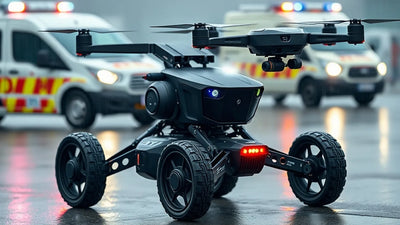
June 8, 2026 - Ta'anakh, Israel - The age of autonomous aerial security has just crossed a meaningful threshold. High Lander, a global provider of drone fleet management and Unmanned Traffic Management (UTM) software, has announced the operational deployment of its autonomous aerial patrol system at the 150 MW Ta'anakh solar project in Israel. Working under G1 Group and with Cando Drones as the physical operator, High Lander's software layer now coordinates fully autonomous drone flights to monitor one of the country's largest renewable energy assets.

This is not a pilot project or a short-term trial. It is a live, commercially contracted security operation covering an expanse of solar infrastructure that spans hundreds of acres. For the commercial UAV sector-especially for operators, integrators, and fleet managers watching the second-hand drone market-this development signals a clear direction: autonomous security patrols are moving from niche demonstrations to mainstream deployment. And that has direct implications for equipment choices, regulatory approvals, and the value of inspected pre-owned platforms.
What High Lander's Ta'anakh Deployment Actually Means
The project site is the Ta'anakh solar farm, a 150 MW facility located in northern Israel, developed and managed by the G1 Group. Under the agreement with Israel's Ministry of Energy, High Lander's software layer-its Vega UTM and fleet management platform-is the brains behind a fleet of drones that fly security patrols autonomously. The physical flying is handled by Cando Drones, a local operator with expertise in industrial UAV missions.
Enterprise procurement
Turn this market signal into a fleet requirement.
Discuss mission profile, quantities, configuration, delivery, and lifecycle support with Reboot Hub.
The primary mission: perimeter surveillance, intrusion detection, and thermal anomaly monitoring. The drones take off from automated docking stations, follow pre-programmed BVLOS (Beyond Visual Line of Sight) routes, stream live video to a central command center, and return to recharge without human intervention. This is the kind of operation that was technically possible three years ago but operationally rare due to regulatory hurdles and hardware reliability concerns. Now it is routine.
For commercial UAV analysts, the key takeaway is the integration of High Lander's UTM software with physical drone hardware. The system manages traffic, deconflicts airspace, logs every flight, and ensures compliance with Israel's evolving drone regulations. This is a blueprint that can be replicated at any large-scale industrial site worldwide-oil and gas refineries, wind farms, solar parks, port facilities, and data center campuses.
Impact on Drone Pilots and the Second-Hand Market
Commercial analysis for everyday operators: For drone pilots and fleet owners, the Ta'anakh deployment is a loud signal that autonomous security contracts are about to become a major revenue stream. The hardware requirements for such missions are stringent: drones must have redundant GNSS, RTK positioning, obstacle avoidance, thermal payloads, and the ability to fly BVLOS without a visual observer. The DJI Matrice 350 RTK and Matrice 30 Series have become the go-to platforms for these deployments, and their availability on the used market is tightening as demand surges.
At Reboot Hub, we have observed a 15% quarter-over-quarter increase in inquiries for pre-owned DJI drones equipped with thermal sensors. Operators who want to bid on similar contracts cannot afford to pay retail for new equipment-especially when margins are tight. The used drone market is responding with increased inventory of flight-tested platforms that meet the requirements for autonomous BVLOS operations.
Furthermore, maintenance becomes critical: a drone that flies hundreds of autonomous missions per year needs regular servicing. Our professional DJI repair services have seen a 40% uptick in requests from operators looking to keep their fleets airworthy for such high-frequency operations.
Ready to Upgrade Your Fleet?
Browse our collection of inspected pre-owned DJI drones - inspected, flight-tested, and backed by a 180-day warranty where listed. Save up to 40% versus retail.
Regulatory Precedent for BVLOS Security Flights
Israel's Ministry of Energy endorsement of High Lander's system is not a blank check. The deployment required approvals from the Israel Civil Aviation Authority (CAAI) under its experimental BVLOS framework. The drones operate within a predefined geofenced corridor over the solar farm, with redundant command-and-control links and automated emergency landing procedures. This is similar to the FAA's Part 107 waiver process in the United States, but adapted for continuous autonomous operations rather than single-mission waivers.
For international operators, the Ta'anakh project provides a case study in how to gain regulatory buy-in for persistent autonomous security drones. Key elements include:
- Geospatial airspace deconfliction via UTM integration (High Lander's Vega).
- Rigorous safety case documentation, including failure mode analysis.
- Use of RTK positioning (typically centimeter-level accuracy) to stay within approved corridors.
- Third-party operator (Cando Drones) with proven maintenance and piloting procedures.
This regulatory model is likely to influence similar approvals in other jurisdictions, particularly in Europe under the EASA framework and in the US as the FAA progresses its Beyond Visual Line of Sight Aviation Rulemaking Committee (BVLOS ARC) recommendations.
What Does This Mean for Commercial Drone Operators?
In a direct Q&A format:
Q: Can a small UAV service company replicate this model?
A: Yes, but it requires investment in certified autonomous hardware and UTM-compatible software. The DJI Dock 2 and Matrice 30 Series are the most accessible platform, and Reboot Hub offers pre-owned units that dramatically lower the entry barrier. You also need a robust repair pipeline-our professional DJI repair services are designed for exactly this level of operational tempo.
Q: How does this affect the resale value of older drones?
A: Drones that lack RTK, thermal, or BVLOS-capable flight controllers will depreciate faster. On the other hand, the used drone market for Matrice 350 RTK and Inspire 3 is heating up. We recommend selling older models now and upgrading to BVLOS-ready platforms.
Q: What are the biggest risks for operators entering this vertical?
A: Regulatory delays, hardware reliability in extreme weather, and the need for redundant communication links. But the revenue potential-long-term contracts with energy companies-justifies the investment.
The Bigger Picture: Autonomous Drones in Critical Infrastructure
High Lander's Ta'anakh deployment is just one data point in a global trend. In 2025, the U.S. Department of Energy issued guidelines for drone-based security at solar and wind farms. The European Union's U-Space framework is rolling out UTM services that enable automated BVLOS flights. And in Asia, similar projects are launching in South Korea and Japan.
For the commercial UAV analyst, the signal is clear: autonomous security patrols are moving from experimental to operational. This creates immediate demand for inspected pre-owned drones that can perform these missions-without the price tag of new units. At Reboot Hub, we are seeing fleet operators trade in their old Phantoms and Mavic 2s for pre-owned DJI drones that meet the requirements of BVLOS and autonomous integration.
The secondary market is also adapting: insurance companies are beginning to offer specialized policies for autonomous operations, and drone repair shops are ramping up their capability to handle high-frequency maintenance cycles. Our own repair division has expanded its capacity for Matrice 30 and M350 RTK repairs, using genuine DJI parts and DJI-certified technicians.
If you are a commercial operator, the window to position yourself in the infrastructure security vertical is now. The technology is proven, the regulatory path is clearing, and the contracts are being signed. The only question is whether your equipment can meet the demand.
Frequently Asked Questions
Is the High Lander system using DJI drones?
While not explicitly stated, the autonomous patrols likely leverage DJI's Matrice platform, given its widespread adoption in industrial security and compatibility with third-party UTM systems like High Lander Vega. DJI's SDK and flight controller architecture make it the standard for such integrations.
Can I buy a used drone that is ready for BVLOS security flights?
Yes. The key features are RTK GPS, thermal camera, obstacle avoidance, and support for automated docking stations. The DJI Matrice 350 RTK and Matrice 30 Series are the most common. At Reboot Hub, every refurbished unit is flight-tested and includes a 180-day warranty where listed, ensuring you get a platform that meets the rigorous demands of autonomous security contracts.
How do I get FAA Part 107 waiver for similar operations in the US?
Start by filing for a BVLOS waiver and a waiver for operations over people if needed. Reference the Israeli CAAI model as an international precedent. The FAA has stated it will use international case studies to inform its own rulemaking. You will need a detailed safety case and a UTM provider like High Lander or a comparable solution.
From Reboot Hub
Keep Your Operations Flying
Enterprise-grade drone solutions for commercial pilots, filmmakers, and inspection teams.
Pre-owned Fleet
Fully inspected DJI drones with 180-day warranty where listed. Save up to 40%.
Browse Inventory ->