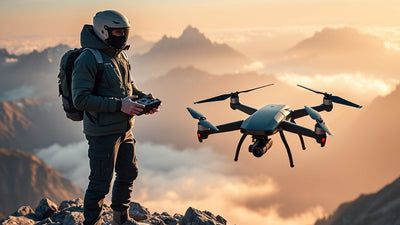
Apache Gets a Wingman: £10M for British Drone Swarms
British Army Apache attack helicopters are getting drone wingmen. A £10M investment fuels a new era of manned-unmanned teaming. For commercial operators, this signals a massive shift in BVLOS certification pathways and airspace integration rules. The race for AI-driven swarming is here, and it will redefine both military doctrine and the second-hand drone market for high-end autonomous platforms.

Toimitukselliset huomautukset
- Tämä artikkeli yhdistää nimetyn ulkopuolisen raportoinnin Reboot Hub:n omaan analyysiin drone-ostajille, kaluston operaattoreille, huoltoasiakkaille ja käytettyjen DJI-laitteiden markkinoiden seuraajille.
- Lähdefaktat on erotettu tulkinnasta. Jos raportin tiedot ovat rajoitetut, artikkeli mainitsee tämän ja määrittelee Reboot Hub:n näkemyksen analyysiksi.
- Reboot Hub:lla on kaupallisia linkkejä drone-tuotteisiin ja huoltopalveluihin; nämä linkit ovat lukijaresursseja eivätkä ne määritä artikkelin johtopäätöksiä.
In a decisive move that signals the future of aerial warfare and autonomous systems integration, the British government has announced a - 10 million investment to develop drone wingmen for the Army's fleet of Apache attack helicopters. The funding, unveiled on June 1, 2026, will accelerate the development of uncrewed aerial systems (UAS) designed to fly alongside the AgustaWestland Apache AH-64E, a platform already renowned for its battlefield lethality.
This investment marks a pivotal moment for the UK's defense drone sector, placing British-based firms at the forefront of what military strategists call "Manned-Unmanned Teaming" (MUM-T). The program aims to field a new class of drones that can act as sensor extensions, decoys, electronic warfare platforms, and even kinetic strike assets, all while being directed by the Apache's pilot or a ground-based controller. For the global drone industry, the implications are profound: this is a live, funded blueprint for integrating high-performance UAVs into complex, contested airspace.
The - 10 Million Mandate: What the Apache Wingman Program Entails
The funding, administered through the UK Ministry of Defence's (MoD) Rapid Capabilities Office, is directed at several British aerospace firms. While specific company names remain under embargo, industry sources point to established defense primes and agile startups specializing in autonomous flight, AI-driven sensor fusion, and swarming algorithms. The core requirement is a drone that can operate at the Apache's tactical speed and altitude, communicate securely, and carry modular payloads.
Enterprise procurement
Turn this market signal into a fleet requirement.
Discuss mission profile, quantities, configuration, delivery, and lifecycle support with Reboot Hub.
This is not a distant concept. The MoD has set an aggressive timeline, with prototype flights expected within 18 months. The Apache wingman will likely be a fixed-wing or hybrid VTOL design, optimized for endurance and payload rather than the pure agility of a quadcopter. The program explicitly calls for "loyal wingman" capabilities: the drone must be able to fly autonomously, respond to dynamic threats, and, critically, take a hit for the manned aircraft if necessary.
This investment directly supports the UK's broader "Future Combat Air System" (FCAS) strategy, which envisions a network of crewed and uncrewed platforms working in concert. The Apache wingman is the first tactical, rotorcraft-specific element of this vision, bridging the gap between fast-jet drones and ground-based UAS.
Manned-Unmanned Teaming: The Technical and Regulatory Frontier
For commercial UAV operators and industry analysts, the Apache wingman program is more than a military procurement story-it is a case study in the future of Beyond Visual Line of Sight (BVLOS) operations and airspace integration. The core technical challenges are identical to those facing commercial drone delivery and infrastructure inspection companies: reliable detect-and-avoid (DAA) systems, secure command and control (C2) links, and fail-safe autonomy.
The military context accelerates these technologies. The Apache wingman will require a DAA system capable of operating in GPS-denied environments and against electronic warfare threats. This directly feeds into the commercial sector, where companies are struggling to certify BVLOS operations under frameworks like the UK Civil Aviation Authority's (CAA) Innovation Sandbox or the FAA's Part 107 waivers. The military's investment in hardened, redundant C2 links will inevitably trickle down to civilian applications, potentially lowering the certification barrier for commercial BVLOS flights.
Furthermore, the "swarming" aspect of the program-where multiple drones coordinate without direct human input-mirrors the commercial push for drone-in-a-box and fleet automation solutions. The algorithms that allow an Apache pilot to command a formation of drones are the same algorithms that could one day manage a fleet of inspection drones over a wind farm or a delivery network in a city.
Ready to Upgrade Your Fleet?
Browse our collection of inspected pre-owned DJI drones - inspected, flight-tested, and backed by a 6-month warranty. Save up to 40% versus retail.
What This Means for Commercial Drone Operators and the Second-Hand Market
While the Apache wingman program is a military initiative, its ripples will be felt across the entire drone ecosystem. For everyday commercial pilots operating under Part 107 in the United States or the CAA's CAP 722 regulations in the UK, the key takeaway is the acceleration of autonomous flight technology. The - 10 million investment directly funds the development of AI-driven flight controllers, advanced sensor suites, and robust communication protocols that will eventually become standard in civilian platforms.
For operators flying missions like precision agriculture, thermal inspection, or LiDAR surveying, the hardware and software developed for the Apache wingman will likely filter down to the commercial market within 3-5 years. We can expect to see more affordable, reliable BVLOS-capable drones that can autonomously navigate complex environments. This will open new revenue streams for commercial operators, particularly in long-linear infrastructure inspection (pipelines, power lines, railways) where BVLOS is currently the single biggest barrier to scale.
The second-hand and refurbished drone market will also be impacted. As defense contracts push the envelope for performance, older military-grade platforms-and the components they use-will eventually enter the civilian supply chain. We are already seeing this trend with thermal sensors and gimbals originally designed for tactical ISR (Intelligence, Surveillance, Reconnaissance) missions appearing on the used market. Operators looking to upgrade their fleets should monitor this space closely. At Reboot Hub, we specialize in helping operators navigate this transition. Whether you are looking to sell your current fleet or acquire pre-owned DJI drones that offer near-new performance at a fraction of the cost, the evolving landscape demands a strategic approach to asset management.
Furthermore, the military's focus on modular payloads and open architecture for the Apache wingman aligns directly with the commercial trend towards universal payload mounts and API-driven integration. This means that in the near future, a commercial operator could potentially use a drone originally designed for a military role-or at least built on the same architecture-for civilian applications. The used drone market is already seeing increased demand for ruggedized, high-endurance airframes, and this program will only accelerate that trend.
Industry Reaction and Competitive Landscape
The announcement has been met with strong approval from UK defense industry bodies. ADS Group, the trade organization representing aerospace, defense, security, and space sectors, called the investment "a critical step in maintaining the UK's sovereign capability in uncrewed systems." The program is expected to create hundreds of high-skilled engineering jobs, particularly in the West Country and the Midlands, where many of the UK's aerospace specialists are based.
Internationally, this move puts pressure on other NATO allies. The US Army has its own "Air Launched Effects" (ALE) program for helicopter-borne drones, and the UK's investment signals a commitment to interoperability. The Apache wingman will likely be designed to exchange data with US systems, reinforcing the UK's position as a key partner in coalition operations. For manufacturers like General Atomics, Kratos, and Boeing, the UK program represents both a potential competitor and a potential customer for their own loyal wingman concepts.
From a financial perspective, the - 10 million is an initial seed investment. Industry analysts expect the total program cost to exceed - 200 million over the next decade, covering development, testing, procurement, and sustainment. This will create a sustained demand for engineers, software developers, and manufacturing capacity, further solidifying the UK's drone industry.
The Regulatory Ripple Effect: BVLOS and Autonomy Certification
Perhaps the most significant long-term impact of the Apache wingman program will be on the regulatory environment for commercial drones. The military is effectively paying for the research and development of the world's most advanced BVLOS and autonomous flight systems. The certification and safety standards developed for this program will likely inform the CAA, EASA, and FAA's future rulemaking for civilian operations.
Commercial operators should pay close attention to the technical specifications that emerge from the Apache wingman program. The DAA system, the C2 link security protocols, and the failsafe mechanisms will set a new baseline for what is considered "safe enough" for BVLOS flight. This could dramatically shorten the certification timeline for commercial BVLOS operations, moving from the current case-by-case waiver system to a more streamlined, type-certified approach.
For those in the drone repair and maintenance sector, the program also signals a shift towards more complex, integrated systems. The days of simple, off-the-shelf drone repairs are giving way to sophisticated avionics and AI-driven subsystems. This is why services like professional DJI repair services are becoming increasingly critical for operators who want to maintain peak performance and compliance with evolving standards.
Conclusion: A New Era for Drone Warfare and Commerce
The - 10 million investment in British Apache wingman drones is more than a headline; it is a strategic inflection point. It confirms that the future of military aviation is collaborative, autonomous, and networked. For the commercial drone industry, it provides a glimpse of the technologies that will define the next decade: reliable BVLOS, AI-driven autonomy, and modular, ruggedized airframes.
At Reboot Hub, we are watching these developments closely. As the lines between military and commercial drone technology continue to blur, the opportunities for informed operators-whether they are buying, selling, or repairing drones-will only grow. The Apache wingman is not just a weapon; it is a harbinger of the autonomous sky.
Frequently Asked Questions
What is the Apache wingman drone program?
The Apache wingman drone program is a - 10 million UK Ministry of Defence initiative to develop uncrewed aerial systems that can fly alongside and support the Army's Apache AH-64E attack helicopters. The drones will perform tasks such as reconnaissance, electronic warfare, and decoy operations, all while being directed by the Apache pilot or a ground controller.
How will this affect commercial drone operators?
The program will accelerate the development of Beyond Visual Line of Sight (BVLOS) technology, advanced detect-and-avoid systems, and AI-driven autonomy. These technologies are directly transferable to commercial applications like infrastructure inspection, precision agriculture, and drone delivery. Commercial operators can expect to see more reliable and affordable BVLOS-capable drones entering the market within 3-5 years.
Where can I find refurbishment-labeled drones for my fleet?
Reboot Hub (reboot-hub.com) offers a wide selection of inspected pre-owned DJI drones that have been professionally inspected, flight-tested, and backed by a 6-month warranty. This is an excellent option for operators looking to upgrade their fleet while saving up to 40% compared to retail prices.
--
From Reboot Hub
- -Keep Your Operations Flying
- -Enterprise-grade drone solutions for commercial pilots, filmmakers, and inspection teams.
- -Pre-owned Fleet
- - - -Fully inspected DJI drones with 6-month warranty. Save up to 40%.
- - - - Browse Inventory -> - - -Expert Repair
- - - -Professional diagnostics with genuine OEM parts. Same-day estimates.
- - - - Book a Repair -> - - -Spare Parts
- - - -Batteries, propellers, gimbals -- premium OEM components, fast shipping.
- - - - Shop Parts -> - - -