UNIFY.C2 and Squarehead Partner on Passive Counter-UAS Detection
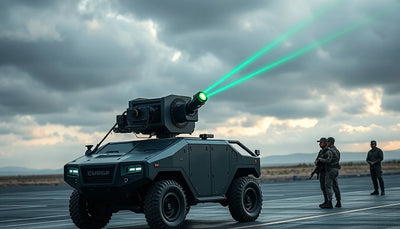
UNIFY.C2 and Squarehead Technology announced a strategic partnership focused on passive, multi-sensor counter-UAS detection at scale. The collaboration signals growing demand for quieter, sensor-based drone awareness around sensitive sites, with implications for security procurement and commercial airspace planning.

Quick answer
UNIFY.C2 and Squarehead Technology announced a strategic partnership to deliver passive, multi-sensor counter-UAS detection at scale, as reported by SUAS News.
- The partnership focuses on passive acoustic and multi-sensor detection rather than active jamming or kinetic systems.
- The announcement targets scalable counter-UAS awareness for security-sensitive sites.
- Reboot Hub analysis: passive detection demand may influence how commercial operators plan flights near protected perimeters.
Evidence: SUAS News · AeroVironment unmanned systems solutions · FAA UAS official guidance · DIU Blue UAS
Fleet readiness
Keep DJI hardware available without overbuying new units.
Use defense and fleet news as a planning signal for repair support, inspected pre-owned aircraft, and replacement timing.

UNIFY.C2 has announced a strategic partnership with Squarehead Technology, a company described by SUAS News as a global leader in advanced acoustic sensing. The collaboration is framed around delivering passive, multi-sensor counter-UAS detection at scale, according to the September 2026 report from SUAS News. The announcement is the central development here, and the available reporting remains limited to the partnership itself rather than detailed technical or commercial terms.
For commercial drone operators, fleet managers, and buyers watching the defense-adjacent security market, the move matters less for any single product spec and more for what it signals about how counter-drone infrastructure is evolving. Passive detection systems are becoming a more prominent part of the conversation around protected airspace, and partnerships like this one suggest that vendors are positioning for larger, more integrated deployments rather than one-off sensor sales.
What the partnership actually involves
SUAS News reports that UNIFY.C2 and Squarehead Technology are partnering specifically around passive, multi-sensor counter-UAS detection. The phrasing points to a combination of acoustic sensing and command-and-control integration, with Squarehead contributing its acoustic expertise and UNIFY.C2 providing the operational layer that ties sensor data into a usable picture. The source does not provide detailed specifications, pricing, deployment timelines, or named customer sites, so those elements should not be assumed.
Reboot Hub analysis: The emphasis on passive detection is notable. Passive systems listen for or observe drones without emitting signals, which can make them attractive in environments where active jamming or radar emissions are undesirable. For security teams, passive sensors can support persistent awareness without interfering with nearby communications or creating regulatory complications. For commercial operators, that distinction matters because passive detection is less likely to disrupt legitimate drone flights than active countermeasures.
Why passive counter-UAS is gaining commercial attention
The announcement arrives as counter-drone technology continues to move beyond purely military applications. Airports, energy facilities, data centers, stadiums, and logistics hubs have all shown interest in understanding what is flying near their perimeters. Passive acoustic and multi-sensor approaches fit that need because they can be deployed without the same licensing or safety burdens associated with active interception systems.
Reboot Hub analysis suggests that the commercial drone ecosystem should pay attention to this shift. When security infrastructure around sensitive sites becomes more common, it changes the operational environment for legitimate pilots. A drone flying near a facility equipped with passive detection may be recorded, classified, and logged even if no one confronts the operator. That is not necessarily a threat to lawful flight, but it does mean that airspace awareness is becoming a two-way street: operators are watching the ground, and the ground is increasingly watching operators.
What this means for drone owners and the market
For individual drone owners and small commercial operators, the immediate impact of this partnership is indirect. There is no new regulation, no product recall, and no change to DJI firmware or spare parts availability in the source material. But the broader trend toward passive counter-UAS detection has practical implications. Operators who fly near industrial or government sites should assume that their flights may be detected by systems that do not announce themselves. That makes pre-flight airspace checks and documented flight planning more valuable, not because of any single rule, but because passive detection creates a record that could later be reviewed. For owners evaluating service and lifecycle risk, Drone Wiki explains the relevant repair, parts, resale, or operational path.
The pre-owned DJI market is also worth watching in this context. As detection infrastructure grows, some enterprise and public-sector buyers may tighten their procurement standards around drone telematics, remote identification compliance, and fleet traceability. Pilots and small businesses looking at inspected pre-owned DJI drones should prioritize models with clean documentation and current firmware, since those factors can matter when a flight is later reviewed against sensor logs. For operators who want to understand how detection systems and airspace awareness tools are evolving, the Drone Wiki offers a practical reference point for staying current on drone hardware and operational considerations.
Fleet managers should treat this announcement as an early signal rather than a procurement trigger. If passive counter-UAS detection becomes standard at more commercial sites, the practical response is not to avoid flying, but to ensure that every flight is defensible: logged, authorized where required, and conducted with equipment that can be identified. That is a low-cost adjustment with real long-term value as the airspace becomes more instrumented.
What to watch next
The most important next step is whether UNIFY.C2 and Squarehead Technology name specific deployment environments, integration partners, or performance benchmarks. SUAS News did not include those details in the reported announcement, so the partnership remains directional rather than operational from an outside perspective. Buyers and operators should watch for follow-on announcements that clarify whether the system is aimed primarily at government customers, critical infrastructure operators, or broader commercial security markets.
For now, the responsible reading is straightforward: two specialized vendors are combining acoustic sensing with command-and-control software to pursue a growing counter-UAS market. That is not a dramatic regulatory shift, but it is a measurable sign that passive detection is maturing from a niche capability into a scalable product category. Commercial operators who treat airspace awareness as part of their own operational discipline will be better positioned as that category grows.
FAQ
Frequently asked questions
What did UNIFY.C2 and Squarehead Technology announce?
SUAS News reported that the two companies announced a strategic partnership focused on passive, multi-sensor counter-UAS detection at scale. The report did not include detailed technical specifications or commercial terms.
Does this partnership change drone regulations?
No. The announcement does not introduce new rules, restrictions, or compliance requirements for commercial or recreational drone operators. It signals a market trend in security infrastructure rather than a regulatory change.
Should commercial drone operators do anything differently after this news?
Operators flying near sensitive industrial or government sites should assume their flights may be passively detected and logged. Maintaining clean flight documentation, current firmware, and traceable drone records is a practical way to stay prepared as detection infrastructure expands.
Which sources support this update?
The visible evidence links identify SUAS News and AeroVironment unmanned systems solutions and FAA UAS official guidance and DIU Blue UAS; each source is used only for the claim it directly supports.
What remains subject to change?
Retail pricing, availability, product bundles and regulatory timelines can change. Readers should verify the latest terms with the named retailer, manufacturer or regulator before acting.
How should buyers or operators use this analysis?
Use the verified facts as a starting point, then compare mission fit, lifecycle support, maintenance needs and current procurement terms before making a purchase or fleet decision.
Fuentes consultadas
- SUAS News - primary source
- AeroVironment unmanned systems solutions - official company source
- FAA UAS official guidance - official regulator source
- DIU Blue UAS - official government source
Reboot Hub Editorial ofrece análisis de compra, reparación, reventa y operatividad para propietarios de drones. Si detecta algún error, contáctenos para solicitar una revisión de corrección conforme a nuestra política editorial.