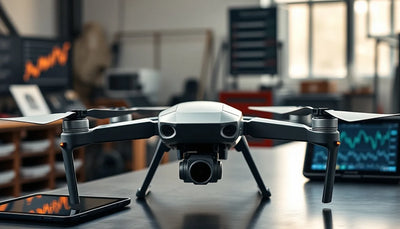
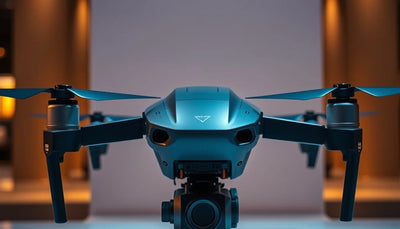
Skydio Hits 1,000 Dock Deployments: What Drone Operators Need to Know
Skydio announced over 1,000 field installations of its drone Dock system just one year after first shipping. The milestone signals growing acceptance of autonomous base stations and reshapes fleet planning for commercial operators and the pre-owned drone market.

Just one year after shipping its first production Dock system, Skydio has announced that more than 1,000 of its autonomous drone docking stations are now deployed in the field. The milestone, reported by DroneDJ on July 7, 2026, underscores a rapid shift from manual piloting toward persistent, remote automated operations. For fleet operators, repair professionals, and buyers in the commercial drone space, the news signals that dock-based workflows are moving from early adoption into mainstream viability.
While Skydio’s Dock is often compared to DJI’s enterprise docking solutions, the company’s rapid deployment count suggests that a growing number of enterprises see value in eliminating the need for onsite pilots. This changes procurement math: instead of buying multiple drones and paying pilots per shift, operators can deploy fewer aircraft that live on docks and fly on schedule. The ripple effects extend to maintenance cycles, spare part demand, and the second-hand drone market, where older platforms may become trade-in candidates as fleets standardize around dock-compatible models.
Scale and speed of deployment
Skydio’s claim of 1,000 Dock installations in the field within 12 months of first production shipments is notable not just for the number but for the pace. Typical enterprise drone adoption cycles involve lengthy pilots, security reviews, and site preparation. Hitting quadruple-digit deployments in a year indicates that Skydio has either streamlined the installation process, tapped into a segment that was already ready for autonomy, or both. The source data does not break down deployments by vertical, region, or fleet size, but the aggregate figure provides a benchmark against which other docking solutions can be measured.
Market context
Turn market news into a buy, repair, or trade-in decision.
Compare pre-owned availability, resale timing, and repair economics before the market moves again.

For fleet managers considering dock investments, this milestone offers a reference point for vendor maturity. A one-year track record with 1,000 units means Skydio now has field telemetry on reliability, weather resistance, and remote recovery. Operators evaluating similar systems from DJI or other manufacturers can use this number to gauge competitive pressure — if Skydio is scaling fast, rivals may need to accelerate product or support improvements to retain market share.
The practical implication is clear: autonomous dock deployments are no longer experimental. Commercial buyers who delayed dock adoption due to perceived immaturity should reassess their timeline. On the repair side, a larger installed base means a growing need for specialized maintenance of dock hardware — not just drones themselves. Parts obsolescence and repair protocols will increasingly need to cover docking stations as a separate category.
What this means for drone buyers
For anyone purchasing drones today — whether new or inspected pre-owned units — Skydio’s milestone reinforces a strategic consideration: compatibility with autonomous infrastructure. Buyers selecting a platform now should evaluate whether that platform supports dock-based operations, either natively or through third-party adapters. Even if immediate deployment does not include a dock, future fleet expansion may rely on them, and retrofitting incompatible models can be costly.
In parallel, the growth of dock deployments may increase supply of lightly used drones from operators upgrading to dock-compatible fleets. This creates an opportunity for cost-conscious buyers to acquire pre-owned DJI drones that have been well maintained and are being traded in as part of a fleet standardization process. For sellers, the trend toward dock-centric operations suggests that platforms not designed for autonomous landing and charging may depreciate faster. The drone trade-in guide at Reboot Hub provides a framework for evaluating when to trade up to dock-ready hardware versus holding existing airframes.
Fleet managers should also plan for dock maintenance. As docks proliferate, so does the need for professional DJI repair services that can service both drone and base station electronics. Even Skydio docks, which are proprietary, will have components that intersect with standard drone hardware — gimbal motors, batteries, communication modules. Having a reliable repair partner becomes essential when downtime of a dock can ground an entire autonomous operation.
Operational implications for fleet managers
The 1,000-deployment milestone suggests that Skydio has solved some of the hardest operational problems: reliable docking in GPS-denied environments, secure data transfer, and remote health monitoring. Fleet managers should analyze their own use cases against what docks now seem to deliver. Routine inspections of infrastructure — power lines, pipelines, solar farms — are natural candidates. So are security patrols and construction site monitoring, where consistent daily flights provide measurable return on investment.
However, docks are not a universal fix. They require installation permits, power supply, network connectivity, and weather protection. The source does not provide average installation cost, but operators should include site preparation in their total cost of ownership calculations. Additionally, reliance on a single vendor’s dock ecosystem can create lock-in. Had Skydio not hit this deployment number, the risk would feel speculative; now it is a real consideration for procurement decisions.
From a repair perspective, the rise of dock deployments changes spare part inventory planning. Docks contain wear items — mechanisms for opening/closing, battery contacts, and environmental seals. Fleet operators who maintain their own stock of OEM-pulled parts for drones may need to expand into dock-specific components. Repair workflows also need to accommodate larger, fixed installations that may be in remote locations. The era of simply swapping a battery between flights is giving way to site-based maintenance scheduling.
Market impact on pre-owned DJI drones and repair services
Skydio’s rapid expansion in the dock market does not directly harm DJI’s position — DJI has its own well-established dock ecosystem with the DJI Dock and Matrice series. But it does intensify competition in the autonomous segment. When multiple vendors offer viable docks, the installed base of compatible drones becomes a competitive moat. Fleet operators may be more willing to invest in a dock if they already own a fleet of compatible airframes.
For the pre-owned DJI drone market, this dynamic is a double-edged sword. On one hand, operators who choose to standardize on DJI docks will seek to acquire more Matrice or M30 series drones, driving demand for both new and pre-owned units. On the other hand, Skydio’s milestone may prompt some fleets to switch ecosystems, putting their existing DJI drones up for sale. This increases supply of high-quality used aircraft, which benefits buyers looking for inspected pre-owned units at lower price points.
Repair services also gain from this cross-ecosystem churn. Drones being sold often have minor issues that professional repair can address to raise resale value. And as docks age, their electronic components will require specialized service. The growing installed base of all dock systems — Skydio, DJI, and others — creates a sustained need for electronics repair, battery refurbishment, and firmware rework. Operators should build relationships with repair centers that can handle both drone and dock hardware.
One operator-facing takeaway: now is the time to evaluate your fleet’s dock compatibility. Whether you lean toward Skydio or DJI, choose a platform with a clear path to automation. If you own older airframes that lack dock support, consider trading them toward dock-ready models. The pre-owned DJI drones at Reboot Hub represent a cost-effective bridge for fleets that want to test dock deployment without committing to the newest hardware. Alternatively, if you already operate a dock-compatible fleet, verify that your professional DJI repair services are equipped to handle the increased complexity of base station maintenance.
How does Skydio’s deployment count compare to DJI’s dock installations?
The source does not provide comparable data for DJI’s dock deployments. However, DJI launched its DJI Dock earlier and has a larger global installed base of enterprise drones. Skydio’s 1,000 installations in one year is an aggressive pace, but without a direct DJI number, a fair comparison is not possible.
Should I switch to a dock-based system if I already have a manual drone fleet?
That depends on your operation’s repeatability and scale. Docks excel at high-frequency, scheduled inspections and surveillance over fixed sites. If your missions are ad-hoc or involve varied locations, docks may not deliver ROI. The milestone indicates that docks are productive for many, but a migration should be based on your specific flight patterns and site conditions.
How will the pre-owned drone market change as more docks are deployed?
Increased dock adoption may accelerate fleet turnover, injecting more used drones into the market. That benefits buyers seeking affordable, high-quality pre-owned platforms. Sellers should act while demand for manually flown drones remains solid among hobbyists and small businesses that do not need dock automation.
Fuentes consultadas
- DroneDJ report on Skydio 1,000 Dock deployments - primary reporting source
- Skydio Dock for X10 official product page - official product source
- Skydio integrated products page - official company product context
Reboot Hub Editorial ofrece análisis de compra, reparación, reventa y operatividad para propietarios de drones. Si detecta algún error, contáctenos para solicitar una revisión de corrección conforme a nuestra política editorial.
Este artículo constituye un comentario de mercado para operadores y compradores de drones y no representa asesoramiento financiero. Reboot Hub no brinda asesoría financiera ni recomienda transacciones de valores.