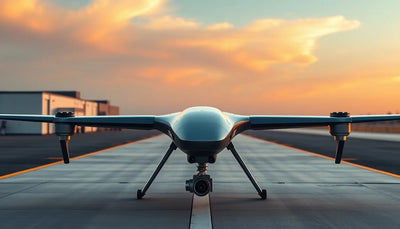
Shunde Drone Skills Competition Opens in Lecong, Signaling Low-Altitude Economy Push
A drone skills competition has opened in Lecong, part of Shunde in China, as the region pushes deeper into the low-altitude economy. The event points to growing demand for trained commercial drone operators and repair-capable technicians across the sector.

Quick answer
A drone skills competition opened in Lecong, Shunde, China, as part of a regional push into the low-altitude economy.
- The event was reported by content.foshanplus.com as a current affairs item tied to low-altitude economic development.
- Shunde and Lecong are named as the host region and location for the competition.
- The competition focuses on drone skills, indicating rising demand for operator and technical workforce development.
- The low-altitude economy framing suggests commercial drone activity is becoming a regional economic priority.
Evidence: DJI ROMO official robot vacuum page · DJI Support ROMO beginner guide
Market context
Turn market news into a buy, repair, or trade-in decision.
Compare pre-owned availability, resale timing, and repair economics before the market moves again.

A drone skills competition has opened in Lecong, a town within the Shunde district of Foshan in China's Guangdong province, according to a report published by content.foshanplus.com. The event is being framed by local reporting as part of a broader push to unlock what the source describes as a new low-altitude track for the regional economy. While the source does not detail the exact number of competitors, the specific skill categories, or the prize structure, the existence of the event itself is a meaningful signal for anyone watching how China's commercial drone sector is maturing beyond hardware sales and into workforce development.
The competition's location matters. Shunde is a manufacturing-heavy district within the Pearl River Delta, an area that already hosts dense supply chains for electronics, logistics, and industrial equipment. A drone skills competition held there suggests that local government and industry stakeholders see practical value in building a labor pool capable of operating, maintaining, and supporting commercial unmanned systems. For drone buyers and fleet operators outside China, this kind of regional event is worth tracking because it often precedes more formal training programs, service networks, and second-hand market activity.
What the Shunde event signals about the low-altitude economy
The primary reporting from content.foshanplus.com describes the competition as part of unlocking a new low-altitude track, a phrase that aligns with China's broader policy interest in low-altitude economic activity such as drone delivery, inspection, mapping, and agricultural operations. Reboot Hub analysis: when a district like Shunde invests attention in drone skills, it is usually not a one-off publicity exercise. It tends to reflect an expectation that local companies will need certified or at least demonstrably skilled operators in the near term.
For commercial operators, the practical implication is straightforward. Regions that build drone skills programs also tend to generate more local drone activity, more service demand, and eventually more equipment turnover. That turnover is where pre-owned DJI drones and genuine OEM spare parts become commercially relevant. As operators in a region gain formal skills, they often upgrade from entry-level platforms to more capable enterprise equipment, releasing inspected pre-owned units into the secondary market.
Why workforce development matters for drone service economics
The Shunde competition is not just about flying. Drone skills events in commercial contexts typically include maintenance, troubleshooting, and component handling, though the source report does not confirm which specific tasks were included in Lecong. Even without that detail, the event points to a structural reality in the drone industry: the cost of operating a fleet is increasingly tied to labor and repair capability, not just the purchase price of the aircraft.
Fleet managers should read this as a reminder that trained technicians are becoming a scarce operational asset. When a region publicly promotes drone skills, it is often responding to employers who are struggling to find people who can safely handle commercial platforms, diagnose faults, and manage battery and airframe wear. For buyers of pre-owned DJI drones, this also matters because a better-trained operator base tends to produce better-maintained used equipment, which supports stronger resale values and more predictable repair histories.
What this means for drone owners and the market
For individual drone owners, repair customers, and fleet planners, the Shunde event is a useful leading indicator rather than a direct market event. It suggests that the low-altitude economy is moving from policy language into practical workforce building, which over time increases the supply of skilled service providers and the volume of commercial flight hours. That shift has consequences for maintenance demand, spare parts availability, and the quality of pre-owned equipment entering the market. Operators who want to understand how DJI platforms hold up under commercial use, or what to look for when buying an inspected pre-owned unit, can consult the Drone Wiki for model-specific context. For owners evaluating service and lifecycle risk, Drone Wiki explains the relevant repair, parts, resale, or operational path.
One operator-facing takeaway is to pay attention to how regional training and skills programs affect equipment resale patterns. When a district like Shunde encourages drone skills development, it often accelerates the replacement cycle for older commercial platforms. That can increase the supply of pre-owned DJI drones available for inspection and resale, which is good for buyers who want capable hardware without paying full retail. It also increases demand for genuine OEM spare parts, because commercially used aircraft accumulate wear faster than consumer drones flown recreationally.
Reading the broader commercial signal without overstating it
The source report is limited in scope. It confirms that a drone skills competition opened in Lecong and that it is connected to low-altitude economic development, but it does not provide attendance figures, sponsor names, competition categories, or policy documents. Reboot Hub analysis should therefore avoid claiming that this event alone proves a specific market shift. What it does show is that local institutions in a major Chinese manufacturing district are treating drone skills as a public priority, and that is consistent with a broader pattern of commercial drone activity expanding beyond hardware sales into services, training, and maintenance.
Buyers and operators should treat this as a watch item rather than a trigger for immediate purchasing decisions. The more useful question is whether similar skills competitions and training initiatives begin appearing in other manufacturing and logistics hubs. If they do, the commercial drone market will likely see a steady increase in professionally operated fleets, which in turn supports a more liquid pre-owned market and a more consistent flow of OEM-pulled parts into the repair ecosystem.
FAQ
Frequently asked questions
What happened in Lecong, Shunde?
A drone skills competition opened in Lecong, within the Shunde district of Foshan, China, according to a report from content.foshanplus.com. The event is being presented as part of a regional effort to develop the low-altitude economy.
Why should drone buyers care about a skills competition in China?
Regional drone skills programs often indicate that local commercial drone activity is expanding. That can lead to more trained operators, more flight hours, faster equipment turnover, and a larger supply of pre-owned commercial drones entering the secondary market.
Does this event directly change DJI pricing or repair costs?
No. The source report does not include pricing, repair, or DJI-specific data. The event is best understood as a market signal that workforce development in the low-altitude economy is advancing, which may influence equipment resale and service demand over time.
Which sources support this update?
The visible evidence links identify DJI ROMO official robot vacuum page and DJI Support ROMO beginner guide; each source is used only for the claim it directly supports.
What remains subject to change?
Retail pricing, availability, product bundles and regulatory timelines can change. Readers should verify the latest terms with the named retailer, manufacturer or regulator before acting.
How should buyers or operators use this analysis?
Use the verified facts as a starting point, then compare mission fit, lifecycle support, maintenance needs and current procurement terms before making a purchase or fleet decision.
Fuentes consultadas
- content.foshanplus.com - primary source
- DJI ROMO official robot vacuum page - official product page
- DJI Support ROMO beginner guide - official support guide
Reboot Hub Editorial ofrece análisis de compra, reparación, reventa y operatividad para propietarios de drones. Si detecta algún error, contáctenos para solicitar una revisión de corrección conforme a nuestra política editorial.