Shandong Drone Delivery Push Turns Street Lights Into Landing Pads
A new report from Sohu details how Shandong province is accelerating low-altitude logistics, with drones delivering packages and street light poles converted into landing infrastructure. The development signals growing demand for reliable commercial UAV fleets, maintenance networks, and spare parts planning across China's expanding drone economy.

Quick answer
A Sohu report indicates Shandong province is accelerating low-altitude economy integration, with drones delivering packages and street light poles being converted into landing and charging infrastructure.
- Shandong is scaling drone delivery as part of its low-altitude economy push
- Street light poles are being repurposed as drone landing and charging points
- The development signals rising demand for commercial UAV fleet uptime and maintenance
- Operators should monitor infrastructure-driven delivery expansion in Chinese urban areas
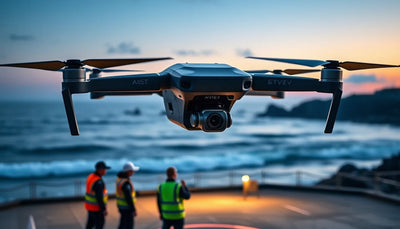
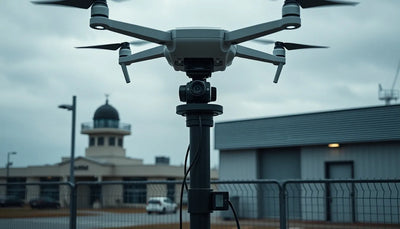
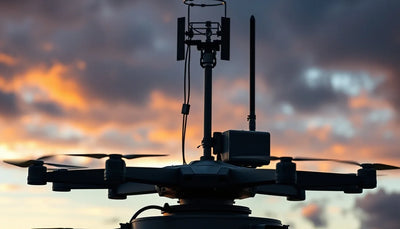
Shandong province is moving quickly to embed drone logistics into everyday urban life, according to a new Sohu report on China's accelerating low-altitude economy. The report describes delivery drones carrying packages through city environments while street light poles are converted into compact landing and charging stations, effectively turning ordinary municipal infrastructure into a distributed network of small "airports" for unmanned aircraft.
Market context
Turn market news into a buy, repair, or trade-in decision.
Compare pre-owned availability, resale timing, and repair economics before the market moves again.

The development matters beyond China's borders because it illustrates how regional governments are treating drone delivery not as a pilot curiosity but as a permanent layer of urban logistics. For commercial operators, fleet buyers, and maintenance providers, that shift changes the math on uptime, spare parts planning, and the kind of hardware that can sustain repeated daily cycles in dense environments.
What the Sohu report describes
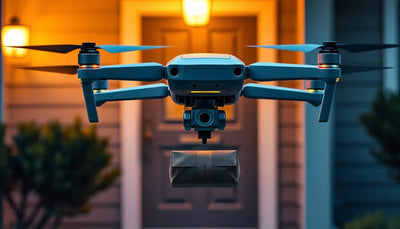
The Sohu report frames Shandong's low-altitude economy as accelerating and increasingly integrated into daily life. The central image is a delivery drone bringing packages to residents while street light poles double as landing infrastructure. That combination of airborne delivery and ground-based micro-infrastructure is the operational core of the story.
Reboot Hub analysis: the street light pole detail is commercially significant. Converting existing poles into landing and charging points reduces the need for dedicated ground stations, which lowers the capital cost of expanding a delivery network. But it also concentrates wear on drones that must repeatedly execute precise landings on small pads in urban wind conditions, near pedestrians, and around moving traffic. That kind of duty cycle tends to surface maintenance issues faster than open-field testing.
Reboot Hub analysis: The report does not specify which drone models, manufacturers, or delivery companies are involved in the Shandong deployment. Readers should treat the operational specifics as source-limited. What is clear is that a provincial-level push is underway, and the infrastructure model being described is one that other regions are likely to study closely.
Why street light infrastructure changes fleet economics
Repurposing street light poles as landing pads is a practical response to a core constraint in urban drone delivery: where do aircraft safely land, recharge, and wait between jobs? Building dedicated drone ports is expensive and land-intensive. Using existing poles spreads the network across a city without requiring new real estate.
For fleet operators, this model has a direct consequence: aircraft will fly shorter legs between more frequent landings. That can reduce battery depth-of-discharge per leg, which is generally good for pack longevity, but it increases the number of takeoffs, landings, and charging cycles per shift. Each landing is a mechanical event. Landing gear, gimbal mounts, propeller edges, and sensor housings all accumulate stress from repeated pad contacts, especially in gusty urban corridors.
Operators planning for this kind of deployment should expect maintenance intervals to be driven less by flight hours and more by cycle count. A drone that performs forty short delivery hops in a day may need different preventive care than one that flies a single long survey mission. That distinction is already visible in enterprise fleet discussions, and the Shandong model makes it more concrete.
What this means for drone owners and the market
The Shandong report is a signal that commercial drone demand is shifting toward high-cycle, infrastructure-supported logistics. For individual owners and smaller operators, the immediate relevance may be indirect, but it is real. As delivery networks expand, the supply of used commercial airframes, OEM-pulled parts, and repair expertise tends to follow. Regions with dense drone activity often become hubs for maintenance capacity and parts availability. For owners evaluating service and lifecycle risk, Drone Wiki explains the relevant repair, parts, resale, or operational path.
For buyers considering pre-owned DJI drones, the lesson is to pay attention to how a unit was used, not just how many hours it logged. A drone that spent a season doing repeated urban landings on compact pads may have different wear patterns than one used for mapping or inspection. For readers evaluating the pre-owned market, the Reboot Hub Drone Wiki provides context on how usage patterns affect drone condition and repair decisions.
Fleet managers should also watch how municipal infrastructure partnerships evolve. If cities begin treating street light poles as shared drone infrastructure, the operational bottleneck shifts from aircraft availability to pad access, scheduling, and maintenance coordination. That could favor operators who standardize on a small number of airframe types, keep genuine OEM spare parts on hand, and build repair relationships before demand spikes.
The broader low-altitude economy signal
Shandong's push is part of a wider Chinese policy direction toward normalizing low-altitude commercial flight. The Sohu report's emphasis on daily life integration suggests the goal is not just industrial demonstration but routine consumer-facing service. Package delivery is the most visible use case, but the same infrastructure could support medical courier routes, municipal inspection work, and emergency response staging.
For the global commercial UAV market, the implication is that infrastructure investment is becoming a leading indicator of where drone service demand will concentrate next. Regions that build landing, charging, and airspace management capacity early tend to attract operators, maintenance providers, and parts distributors. Buyers and repair customers in those regions typically benefit from faster parts turnaround and more competitive service pricing over time.
Reboot Hub analysis: the Shandong model also raises questions about standardization. If street light poles become de facto landing infrastructure, pad dimensions, charging connectors, and communication protocols will matter enormously. Operators with mixed fleets may face compatibility friction. Those who standardize on well-supported platforms with accessible OEM parts will likely have an easier time adapting to whatever infrastructure becomes dominant.
The report does not provide data on delivery volumes, fleet sizes, or accident rates. Those metrics will be important to watch as the deployment matures. For now, the development is best understood as an infrastructure and market-structure story rather than a hardware specification story.
FAQ
Frequently asked questions
What is happening with drone delivery in Shandong?
A Sohu report indicates Shandong province is accelerating its low-altitude economy, with drones delivering packages and street light poles being converted into landing and charging infrastructure for unmanned aircraft.
How does street light infrastructure affect drone maintenance?
Frequent short-hop landings on compact urban pads increase takeoff and landing cycles, which can accelerate wear on landing gear, propellers, and sensor housings even when total flight hours remain moderate.
What should commercial drone buyers watch after this development?
Buyers and fleet managers should monitor how infrastructure-driven delivery expands in dense urban areas, and should evaluate pre-owned or fleet aircraft based on usage cycles and maintenance history rather than flight hours alone.
Which sources support this update?
The article distinguishes reported information from analysis and does not present an unverified source as official confirmation.
What remains subject to change?
Retail pricing, availability, product bundles and regulatory timelines can change. Readers should verify the latest terms with the named retailer, manufacturer or regulator before acting.
How should buyers or operators use this analysis?
Use the verified facts as a starting point, then compare mission fit, lifecycle support, maintenance needs and current procurement terms before making a purchase or fleet decision.
Fuentes consultadas
No había documentación oficial adicional disponible al momento de la publicación.
Reboot Hub Editorial ofrece análisis de compra, reparación, reventa y operatividad para propietarios de drones. Si detecta algún error, contáctenos para solicitar una revisión de corrección conforme a nuestra política editorial.