Ørsted's Turbine Drone Looks Like a DJI Heavy Lifter the US Taxes 100%
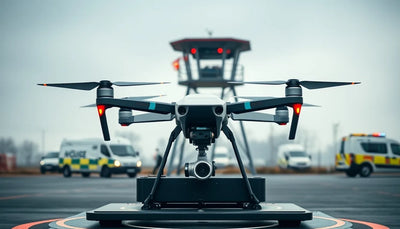
Ørsted's turbine inspection drone closely resembles a DJI heavy-lift platform that carries a 100% US import tariff. The visual similarity raises procurement and repair cost questions for commercial operators evaluating enterprise drone fleets.

Quick answer
Ørsted's turbine inspection drone visually resembles a DJI heavy-lift platform that faces a 100% US import tariff, according to DroneXL reporting.
- Ørsted operates a turbine inspection drone that looks like a DJI heavy lifter
- The similar DJI-class platform is subject to a 100% US import tariff
- Commercial operators should factor tariff exposure into heavy-lift drone procurement
- The visual similarity raises questions about supply chain and parts sourcing
The offshore wind sector is leaning harder on heavy-lift drones for turbine inspection work, and a recent industry report highlights an awkward commercial wrinkle. According to DroneXL, Ørsted's turbine inspection drone closely resembles a DJI heavy-lift platform that carries a 100% import tariff in the United States. The observation matters because enterprise drone buyers increasingly evaluate not just the aircraft itself, but the full cost stack behind it: import duties, spare parts, repair logistics, and resale value.
DJI buying context
Match product news to hardware you can actually deploy.
Check inspected DJI aircraft, repair support, and trade-in timing before deciding whether to upgrade, repair, or wait.

For commercial operators, the Ørsted example is a useful reference point. A major energy company running turbine inspection missions with a heavy-lift airframe signals that the use case is maturing. But the tariff question attached to visually similar DJI hardware means US-based fleet managers cannot simply copy the European playbook without checking the import and parts cost implications first.
What the source actually reports
The central claim comes from DroneXL, which noted that Ørsted's turbine drone looks like a DJI heavy lifter that the United States taxes at 100%. The report does not confirm that Ørsted is flying a DJI-made airframe, nor does it provide a model number, purchase price, or official confirmation from Ørsted. The comparison is visual and editorial, based on the drone's appearance in published turbine inspection footage or imagery.
That distinction is important for commercial readers. A visual resemblance is not the same as a confirmed OEM relationship. Reboot Hub analysis would treat this as a supply chain signal rather than a verified product identification. Still, the observation is commercially relevant because DJI's enterprise heavy-lift platforms, including the Matrice-class systems commonly used for industrial inspection, have faced significant US import restrictions and tariff exposure in recent years.
For a European energy company, the tariff environment is different. Ørsted operates primarily in European offshore wind markets, where DJI-class hardware does not face the same 100% US import duty. That means the same visual platform can have radically different procurement economics depending on where the fleet is registered and operated.
Why heavy-lift inspection drones are commercially significant
Offshore wind turbine inspection is a demanding mission profile. Operators need drones that can carry thermal cameras, LiDAR sensors, and sometimes ultrasonic testing equipment while maintaining stable flight in high-wind marine environments. Heavy-lift platforms exist precisely because smaller consumer drones cannot carry the sensor payloads or deliver the flight endurance required for blade and tower inspections at scale.
Ørsted's use of a heavy-lift drone for turbine work reinforces what many commercial operators already understand: inspection drones are now core infrastructure tools, not experimental gadgets. When a major offshore wind developer deploys these systems routinely, it signals that the reliability and data quality have reached an operational threshold. That has downstream effects on insurance requirements, maintenance planning, and the secondary market for inspected pre-owned enterprise drones.
The tariff angle complicates that picture in the US. If a heavy-lift platform visually similar to Ørsted's carries a 100% import duty, then the effective acquisition cost for a US-based operator can be double the base price. That changes fleet math significantly, especially for smaller inspection companies that cannot absorb tariff premiums as easily as a large utility or energy developer.
What this means for drone owners and the market
The Ørsted report matters for US commercial operators in three practical ways. First, it highlights that heavy-lift inspection drones are now mainstream enough for major energy companies to deploy them visibly. Second, it reminds buyers that tariff exposure is not abstract; it directly affects acquisition cost, spare parts pricing, and repair economics. Third, it suggests that operators evaluating enterprise drones should ask hard questions about parts availability and service support before committing to a platform.
For repair customers and fleet managers, the tariff issue has a direct operational consequence. A 100% import duty does not only apply to complete aircraft. It can also affect OEM spare parts, batteries, gimbals, and replacement modules shipped into the US. That means repair costs for tariff-exposed platforms can run materially higher than for domestically sourced or non-tariffed alternatives. Operators who rely on OEM-pulled parts and genuine OEM spare components should factor tariff inflation into their maintenance budgets. For those managing pre-owned DJI fleets, understanding the tariff and parts landscape is part of responsible procurement, and the Drone Wiki offers a practical reference for operators sorting through platform and repair decisions.
For the pre-owned DJI market specifically, tariff pressure can cut both ways. On one hand, existing pre-owned units already inside the US avoid the incremental import duty, which can make inspected pre-owned heavy-lift drones more attractive relative to new imports. On the other hand, if spare parts remain tariff-exposed, the total cost of ownership for a pre-owned platform can still climb over time. Buyers should evaluate the full lifecycle cost, not just the sticker price of the aircraft. For owners evaluating service and lifecycle risk, Drone Wiki explains the relevant repair, parts, resale, or operational path.
Fleet managers should also consider mission fit. The Ørsted example involves offshore wind inspection, but the same heavy-lift class serves power line inspection, construction monitoring, agricultural spraying, and public safety work. A platform that makes economic sense for a European offshore wind developer may not make sense for a US-based inspection firm if the tariff doubles the acquisition cost and inflates repair parts for the life of the asset.
The broader procurement and policy context
The 100% tariff referenced in the DroneXL report is consistent with broader US policy pressure on Chinese-made drone hardware. Over the past several years, US regulators and lawmakers have repeatedly targeted DJI and other Chinese manufacturers with import restrictions, federal procurement bans, and proposed legislation aimed at limiting their use in critical infrastructure and government operations. The tariff is one layer of that policy environment.
For commercial operators, the policy signal is clear: reliance on tariff-exposed heavy-lift platforms carries financial and regulatory risk. Even if a specific drone is legal to buy today, future policy changes could affect parts availability, firmware support, or resale value. That uncertainty should push buyers toward platforms with transparent supply chains, documented repair paths, and service networks that can source parts without constant tariff friction.
Reboot Hub analysis suggests that the Ørsted visual comparison is less about identifying a specific model and more about recognizing a market pattern. Heavy-lift inspection drones are becoming standard tools in energy and infrastructure work. At the same time, US import policy is making some of the most widely used platforms more expensive to acquire and maintain. Operators who plan around that tension will make better procurement and repair decisions than those who treat the tariff as a one-time line item.
The pre-owned market is one place where that planning shows up concretely. Inspected pre-owned DJI drones that are already in the US can offer a practical alternative to tariff-burdened new imports, provided the buyer verifies battery health, airframe condition, and parts availability. For enterprise operators running multi-aircraft fleets, the ability to source genuine OEM spare parts without triggering repeated import duties can be a meaningful cost advantage over the life of the fleet.
FAQ
Frequently asked questions
Is Ørsted's turbine drone confirmed to be a DJI product?
No. The DroneXL report describes a visual resemblance between Ørsted's turbine inspection drone and a DJI heavy-lift platform. No official confirmation from Ørsted or DJI is included in the source data.
Why does the 100% US tariff matter for commercial drone operators?
A 100% import tariff can double the acquisition cost of a heavy-lift drone and may also inflate the price of OEM spare parts, batteries, and repair components. US operators should include tariff exposure in their total cost of ownership calculations.
Should fleet managers consider pre-owned heavy-lift drones instead of new imports?
Pre-owned heavy-lift drones already inside the US avoid the incremental import duty on the aircraft itself. However, buyers should still verify parts availability and repair support, since spare components may remain subject to tariffs depending on how they are sourced.
Which sources support this update?
The article distinguishes reported information from analysis and does not present an unverified source as official confirmation.
What remains subject to change?
Retail pricing, availability, product bundles and regulatory timelines can change. Readers should verify the latest terms with the named retailer, manufacturer or regulator before acting.
How should buyers or operators use this analysis?
Use the verified facts as a starting point, then compare mission fit, lifecycle support, maintenance needs and current procurement terms before making a purchase or fleet decision.
Fuentes consultadas
- DroneXL via Google News - primary source
No había documentación oficial adicional disponible al momento de la publicación.
Reboot Hub Editorial ofrece análisis de compra, reparación, reventa y operatividad para propietarios de drones. Si detecta algún error, contáctenos para solicitar una revisión de corrección conforme a nuestra política editorial.