Nanshan Drone Competition Opens New Low-Altitude Economy Entry Point
A drone competition in Shenzhen's Nanshan district is being positioned as a strategic entry point for the low-altitude economy. The event highlights how competitive flying can drive commercial drone adoption, operator development, and regional market activity.

Quick answer
A drone competition in Shenzhen's Nanshan district is being positioned as a strategic entry point for the low-altitude economy, according to a Sohu industry report.
- The event is reported as a national first stop for this type of competition
- The organizer, Zexin Future, is using the event to open a new market entry point
- The competition targets the broader low-altitude economy ecosystem
- The development signals growing regional investment in commercial drone activity
A drone competition in Shenzhen's Nanshan district is being positioned as more than a sporting event. According to a Sohu industry report, the event represents a deliberate attempt to open a new entry point into China's expanding low-altitude economy, with the organizer Zexin Future using the competition as a strategic platform rather than a standalone race.
Market context
Turn market news into a buy, repair, or trade-in decision.
Compare pre-owned availability, resale timing, and repair economics before the market moves again.

The report frames the Nanshan event as a national first stop, suggesting that competitive drone flying is being integrated into broader commercial and industrial drone development efforts. For operators and buyers watching the Chinese drone market, this signals that regional governments and private companies are investing in talent pipelines, public awareness, and infrastructure that could shape demand for commercial UAV services, parts, and maintenance over the next several years.
What the Nanshan event signals about low-altitude economy strategy
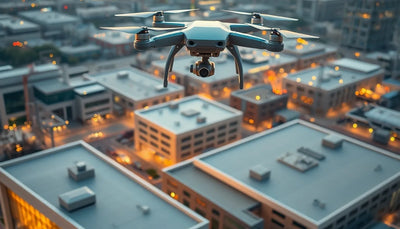
The Sohu report describes the competition as a mechanism for opening a new entry point into the low-altitude economy, a term that encompasses drone logistics, inspection, mapping, agricultural spraying, and urban air mobility. By anchoring the event in Nanshan, a district within Shenzhen known for technology development, the organizers are placing competitive flying inside a commercial innovation narrative rather than treating it as a hobbyist activity.
This matters because competitive drone events have historically served as testing grounds for pilot skill, flight control systems, and component durability. When a region frames such an event as an economic development tool, it suggests that the participants, equipment suppliers, and repair networks involved are being viewed as part of a larger industrial ecosystem. Reboot Hub analysis suggests that competitive flying can accelerate operator proficiency in ways that translate directly to commercial inspection and mapping workflows, where precise low-altitude maneuvering is a core requirement.
Why competitive flying influences commercial drone adoption
The report's emphasis on using a single competition to open a market entry point points to a broader pattern in the drone industry: events that concentrate pilots, hardware, and technical expertise in one location often generate follow-on commercial activity. Pilots who compete in drone racing or precision flying events frequently move into commercial roles, bringing with them refined control skills and a practical understanding of flight dynamics under pressure.
Reboot Hub analysis: For fleet operators and drone buyers, this pattern has practical implications. Regions that invest in competitive drone infrastructure are likely to develop stronger local pools of trained pilots, more active maintenance and repair networks, and greater public acceptance of low-altitude operations. The Nanshan event, as reported by Sohu, should be read as an early indicator of where commercial drone service demand may concentrate in the coming years. Operators planning expansion into southern China's urban and industrial corridors may want to track how this competition series evolves and whether it leads to permanent training facilities or recurring events.
What this means for drone owners and the market
For individual drone owners and small commercial operators, the Nanshan competition highlights the growing professionalization of pilot skills. As competitive events become tied to economic development goals, the distinction between recreational flying and commercial readiness narrows. Buyers evaluating pre-owned DJI drones or planning to enter commercial drone work should consider that regional skill standards may rise as more pilots gain structured competitive experience.
The event also carries implications for the pre-owned drone market. Competitive flying and commercial training programs typically generate demand for reliable, inspected hardware that can withstand repeated use. Operators who want to enter the low-altitude economy without the full cost of new enterprise equipment often look to inspected pre-owned platforms and genuine OEM spare parts as a practical entry path. For readers evaluating these options, the Drone Wiki provides reference material on drone models, maintenance considerations, and ownership decisions relevant to commercial and semi-professional use.
Repair and parts demand is another area where competitive events create measurable effects. High-intensity flying accelerates wear on motors, frames, and battery systems, which in turn supports local repair ecosystems. Regions that host recurring competitions tend to develop denser networks of technicians and parts suppliers, which benefits all drone owners in the area, not just competitors. Fleet managers operating in or near Shenzhen should monitor whether the Nanshan event leads to permanent service infrastructure that could reduce downtime for commercial operations. For owners evaluating service and lifecycle risk, Drone Wiki explains the relevant repair, parts, resale, or operational path.
What operators should watch next
The Sohu report does not provide detailed operational data on the competition's scale, participant numbers, or specific drone categories involved. As a source-limited report, it establishes the strategic framing of the event but leaves open questions about execution, sponsorship structure, and follow-on investment. Operators should treat the development as a directional signal rather than a confirmed market shift.
What buyers, pilots, and fleet managers can reasonably do after reading this is straightforward: track whether the Nanshan competition becomes a recurring series, whether it attracts commercial drone manufacturers or service providers as sponsors, and whether local government agencies announce supporting policies for low-altitude operations. Any of these follow-on developments would strengthen the case that competitive drone events are becoming a legitimate channel for commercial market development in China's most active drone regions.
FAQ
Frequently asked questions
What is the Nanshan drone competition?
According to a Sohu industry report, the Nanshan drone competition is a drone flying event in Shenzhen's Nanshan district, organized by Zexin Future and described as a national first stop for opening a new entry point into the low-altitude economy.
Why does this competition matter for commercial drone operators?
Reboot Hub analysis: The event signals that competitive drone flying is being integrated into broader low-altitude economy development, which could lead to stronger pilot talent pools, denser repair networks, and increased commercial drone service demand in the region.
How does this affect the pre-owned drone market?
Competitive and training-driven demand for reliable, inspected hardware may increase interest in pre-owned DJI drones and genuine OEM spare parts as cost-effective entry paths for operators entering the low-altitude economy.
Which sources support this update?
The article distinguishes reported information from analysis and does not present an unverified source as official confirmation.
What remains subject to change?
Retail pricing, availability, product bundles and regulatory timelines can change. Readers should verify the latest terms with the named retailer, manufacturer or regulator before acting.
How should buyers or operators use this analysis?
Use the verified facts as a starting point, then compare mission fit, lifecycle support, maintenance needs and current procurement terms before making a purchase or fleet decision.
Fuentes consultadas
- Sohu - primary source
No había documentación oficial adicional disponible al momento de la publicación.
Reboot Hub Editorial ofrece análisis de compra, reparación, reventa y operatividad para propietarios de drones. Si detecta algún error, contáctenos para solicitar una revisión de corrección conforme a nuestra política editorial.