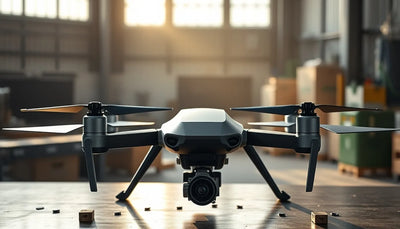
Modified DJI Neo 2 Hits 163 km/h With Custom 3D Printed Mounts
A modified DJI Neo 2 reportedly reached 163 km/h using custom 3D printed mounts. We break down what this means for drone buyers, repair customers, and the pre-owned DJI market.

According to a report from Geeky Gadgets, circulated through Google News DJI, a modified DJI Neo 2 has reached a top speed of 163 km/h. The modification reportedly relied on custom 3D printed mounts to achieve this performance figure. This is a notable data point for the drone community, particularly for buyers and operators who follow aftermarket performance trends on DJI's compact drone lineup.
This report is source-limited. The central claim—that a modified DJI Neo 2 hit 163 km/h—comes directly from the Geeky Gadgets article as aggregated by Google News DJI. There is no official confirmation from DJI, and no verified specification context was available to cross-check the figures. Reboot Hub analysis below treats the speed figure as a reported claim rather than a confirmed specification.
The reported modification and its significance
The Geeky Gadgets report describes a DJI Neo 2 that was modified with custom 3D printed mounts, allowing it to reach 163 km/h. For context, the stock DJI Neo 2 is a compact consumer drone designed for portability and ease of use, not outright speed. The reported figure of 163 km/h would place this modified unit well beyond typical consumer drone performance envelopes, which is why the story has drawn attention in the DJI product news cycle.
DJI buying context
Match product news to hardware you can actually deploy.
Check inspected DJI aircraft, repair support, and trade-in timing before deciding whether to upgrade, repair, or wait.

The use of 3D printed mounts is significant because it points to a growing aftermarket ecosystem around DJI hardware. Rather than relying on factory-designed components, the modifier in this report used custom-fabricated parts to change the drone's aerodynamic or structural characteristics. This is not an official DJI accessory path, and it carries implications for durability, flight stability, and warranty status.
For fleet operators and individual buyers, the practical takeaway is that the DJI Neo 2 platform is being pushed beyond its intended design parameters by third-party modifiers. That does not make the stock drone faster, nor does it suggest DJI endorses such modifications. It does, however, signal that the Neo 2's frame and motor system can tolerate aggressive aftermarket changes—at least in a single reported instance.
What this means for drone buyers
For drone buyers, the reported 163 km/h modification is a reminder that the DJI Neo 2 is a platform with active aftermarket interest, but it is not a reason to expect stock performance anywhere near that figure. Buyers should treat the stock Neo 2 as a compact, user-friendly drone, not a high-speed racer. The modification story is useful for understanding the platform's ceiling, but it does not change the product's official positioning. For buyers comparing ownership options, Pristine Pre Owned Dji Neo 2 provides a practical next step for model, condition, and replacement timing.
For those considering a pre-owned DJI Neo 2, this report raises a practical question: has the unit been modified? A drone that has been fitted with custom 3D printed mounts or other aftermarket parts may behave differently from a stock unit, and it may not be eligible for standard repair or support pathways. Buyers in the second-hand market should ask sellers directly whether any modifications have been made, and they should verify that the drone's firmware and hardware match factory specifications.
For repair customers, the implication is straightforward: modified drones can be harder to service. Custom mounts and non-standard parts may require specialized attention, and OEM spare parts may not fit if the frame has been altered. If you are buying a used DJI Neo 2 and plan to rely on professional DJI repair services, a stock unit is the safer choice. For those who already own a modified unit, it is worth documenting exactly what was changed before seeking repair, so a technician can assess compatibility.
Reboot Hub's pre-owned DJI inventory, including the Pristine Pre Owned Dji Neo 2, is inspected to ensure parts and firmware match factory specifications, which matters when aftermarket modifications are circulating in the broader market.
Operational and repair considerations from the report
The reported modification also highlights a broader operational reality: pushing a consumer drone to 163 km/h involves more than just adding mounts. High-speed flight places stress on motors, propellers, battery systems, and flight controllers. If the Geeky Gadgets report is accurate, the modified Neo 2 sustained enough structural integrity to reach that speed, but that does not mean the drone is reliable at that velocity over time.
For fleet managers and commercial operators, the lesson is to keep drones within their documented performance envelopes. A one-off speed record, even if verified, does not translate into a repeatable operational capability. The risk of component fatigue, thermal stress, and control instability increases significantly at speeds the manufacturer did not design for. The reported 163 km/h figure is an interesting benchmark, but it should not inform procurement or flight planning decisions.
From a repair perspective, the aftermarket nature of this modification is worth noting. Custom 3D printed mounts are not OEM components, and they may not be covered under any standard service agreement. If a modified drone crashes or suffers a component failure, repair costs could be higher, and parts availability could be limited. Operators who value predictable maintenance should stick with stock configurations or documented, reversible modifications.
For the pre-owned DJI market, this report is a useful cautionary tale. The existence of modified units in circulation means that buyers cannot assume every used Neo 2 is factory-standard. Asking about modification history, checking for non-standard parts, and verifying firmware status are all reasonable steps before completing a purchase. Sellers who can document a stock configuration will have an easier time in the market.
Market implications and what to watch next
The Geeky Gadgets report, while source-limited, reflects a persistent trend in the drone market: enthusiasts and tinkerers will push consumer hardware beyond its intended limits. This is not new, but the Neo 2's compact size makes it an appealing testbed for such projects. The reported 163 km/h figure may prompt more aftermarket experimentation, which could increase the supply of modified used drones in the second-hand market.
For buyers, the takeaway is to be more careful, not more excited. A modified drone that reaches 163 km/h is a novelty, not a product category. The stock DJI Neo 2 remains a capable, portable drone for casual and semi-professional use. The modification story does not change its value proposition, but it does change the risk profile of buying used without asking questions.
For repair and service providers, the report reinforces the importance of inspecting drones for non-standard parts. As aftermarket modifications become more common, the ability to identify and work around custom components will become a differentiator. Professional DJI repair services that stick to OEM-pulled parts and factory specifications will be better positioned to serve buyers who want predictable outcomes.
Looking ahead, the key question is whether DJI responds to this kind of aftermarket activity. The company has historically focused on consumer-friendly designs rather than high-speed performance, and there is no indication that the Neo 2 will be repositioned. The report from Geeky Gadgets is best read as a signal of community interest, not a preview of official product direction.
Is the 163 km/h speed confirmed by DJI?
No. The 163 km/h figure comes from a Geeky Gadgets report aggregated by Google News DJI. DJI has not confirmed this modification or the speed claim, and no verified specification context was available for this article.
Should I buy a used DJI Neo 2 that has been modified?
Buyers should be cautious with modified units. Custom 3D printed mounts and other aftermarket parts may affect flight behavior, repair compatibility, and warranty status. A stock, inspected pre-owned unit is generally a safer choice for predictable performance and serviceability.
Does this modification affect the pre-owned DJI market?
It could, indirectly. The report highlights that modified Neo 2 units exist in the wild, which means second-hand buyers should ask about modification history. Sellers who can document a stock configuration will likely find it easier to transact with informed buyers.
Fuentes consultadas
No había documentación oficial adicional disponible al momento de la publicación.
Reboot Hub Editorial ofrece análisis de compra, reparación, reventa y operatividad para propietarios de drones. Si detecta algún error, contáctenos para solicitar una revisión de corrección conforme a nuestra política editorial.