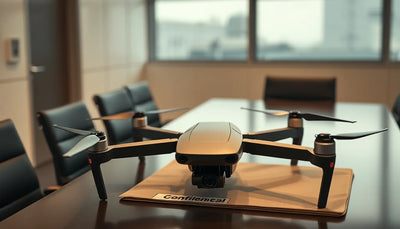
Military Demand for Cheap Drones Sparks $900M 3D Printing Boom
A new report reveals the military’s push for low-cost drones is fueling a $900 million surge in 3D printing. Commercial fleet operators and repair customers should watch how additive manufacturing reshapes part costs and aftermarket supply chains.

The military’s drive to field inexpensive, expendable drones is accelerating the adoption of additive manufacturing on an industrial scale. A recent report from All3DP highlights a $900 million surge in 3D printing investments linked directly to defense drone requirements. For commercial operators, repair customers, and participants in the pre-owned drone market, this trend is more than a headline—it signals a structural shift in how drone components are designed, produced, and sourced.
While the immediate beneficiaries are defense contractors, the ripple effects are already reaching civilian fleets. Lower production costs for airframes, faster prototyping timelines, and the potential for on-demand spare parts could alter the economic calculus for everyone who buys, flies, or repairs drones. Understanding the mechanics of this boom helps operators prepare for changes in part availability, total cost of ownership, and the relative value of pre-owned hardware.
The $900 million 3D printing surge behind military drone programs
According to the All3DP report, the armed forces’ appetite for cheap drones has triggered a wave of capital flowing into additive manufacturing technologies. The $900 million figure represents a measurable bet that 3D printing will become a core method for producing drone structures, components, and even complete airframes at a fraction of the cost of traditional machining.
Market context
Turn market news into a buy, repair, or trade-in decision.
Compare pre-owned availability, resale timing, and repair economics before the market moves again.

Defense organizations are interested in speed and supply chain resilience. 3D printing allows them to produce parts near the point of use, reduce inventory overhead, and iterate designs without retooling factories. For commercial operators who depend on consistent access to pre-owned DJI drones and OEM components, this military-led push validates additive manufacturing as a viable production method—but it also raises questions about long-term part standardization and quality assurance.
One concrete implication is that the cost floor for drone hardware is likely to drop over the next few years. If defense programs prove that 3D printed drones can meet reliability thresholds, commercial equivalents may follow, putting downward pressure on the price of new airframes. That, in turn, could influence the residual value of inspected pre-owned drones, making them either a better bargain or a less attractive alternative to ultra-cheap printed models.
How additive manufacturing is reshaping drone cost structures
The All3DP report explains that the military’s need for cheap drones stems partly from operational tactics that accept high attrition rates. When a drone is expected to be lost in combat, its unit cost must be low enough to justify the mission. 3D printing addresses that requirement by slashing material waste, reducing labor hours, and enabling designs that consolidate multiple parts into single prints.
For commercial repair customers, the most relevant change is the growing availability of 3D printed spare parts. While genuine OEM parts remain the gold standard for flight safety and performance, additive manufacturing is beginning to offer a parallel channel for non-critical components such as landing gear brackets, camera mounts, and protective housings. Some repair shops are already experimenting with in-house printing to speed turnaround times, but the technology still faces hurdles with material strength and certification.
A second implication involves inventory strategy. Fleet operators who currently stockpile OEM spare parts may find that on-demand 3D printing reduces the need for large warehouses. Instead, they could maintain digital files for commonly broken parts and print replacements as needed. This shift would be especially valuable for operators of older platforms, where OEM stock is thinning and hunting for used parts becomes unreliable.
For those who rely on professional DJI repair services, the rise of additive manufacturing means repair technicians will need to decide when to use printed parts versus OEM replacements. The safest path is to reserve printed components for cosmetic or non-structural repairs, while keeping genuine parts for flight-critical systems such as motor mounts, prop adapters, and frame arms that bear flight loads.
What this means for drone buyers
The military 3D printing boom will not immediately change the buying landscape for commercial operators, but it does introduce new factors to consider when evaluating drone purchases—whether new or pre-owned.
First, buyers should watch the cost trajectory of new 3D printed airframes. If the military successfully field-cheapens production methods, consumer and enterprise drones that incorporate printed parts may appear at lower price points within 18 to 24 months. That could make the gap between a new entry-level drone and a certified pre-owned DJI drone narrower, affecting budget allocation decisions.
Second, the durability of 3D printed parts remains a concern. Military drones designed for a single-use mission have different reliability requirements than commercial aircraft flown hundreds of times. Buyers should be cautious and insist on parts traceability, especially when considering aftermarket printed components. Until independent testing standards emerge, the safest move is to stick with genuine OEM spares for flight-critical assemblies.
Third, the resale value of pre-owned DJI drones may rise if demand for rugged, proven platforms increases among operators who are not ready to trust printed hardware. Fleets that invest in well-maintained, inspected pre-owned DJI equipment could benefit from slower depreciation as the market absorbs 3D printing as a lower-tier option rather than a premium one.
Finally, operators should reassess their repair strategies. Having a relationship with a repair provider that uses genuine OEM parts offers peace of mind that 3D printed patchwork cannot yet guarantee. For critical missions, the extra cost of professional repair with factory components is often worth the reliability.
Actionable takeaways for fleet managers and repair customers
The $900 million figure in the All3DP report is a concrete reminder that the drone industry’s supply chain is evolving. Fleet managers can prepare by taking three practical steps.
- Evaluate your part criticality list. Identify which drone components are safety-of-flight and which are replaceable by printed equivalents. Document your tolerance for non-OEM parts in your maintenance manual.
- Build relationships with both OEM repair centers and local 3D printing vendors. Knowing who can print a landing gear skid in 24 hours versus who can supply a genuine DJI arm gives you options when a drone goes down.
- Monitor defense procurement trends. The technologies validated in military contracts often diffuse into the civilian market. Subscribe to industry sources that track additive manufacturing standards for aviation.
For the operator who asks, “What should I do differently after reading this?” the answer is: revisit your total cost of ownership model. If 3D printing drives down the price of new drones, the breakeven point for buying pre-owned versus new shifts. Use a drone trade-in guide to calculate when upgrading your fleet makes financial sense, and factor in the growing role of printed parts in aftermarket repair. Stay grounded, stay informed, and let the data guide your procurement decisions.
Can 3D printed drone parts replace OEM components in commercial operations?
Not yet, and not for flight-critical parts. While 3D printing advances rapidly, certified OEM components from DJI and other major manufacturers still offer traceable materials, fatigue testing, and quality control that printed parts lack. For non-structural items like battery trays or camera gimbals, printed alternatives may become acceptable, but safety-of-flight components should remain genuine OEM.
Will the military's focus on cheap drones affect the pre-owned DJI market?
It could, indirectly. If low-cost 3D printed drones flood the market, they may satisfy entry-level demand and put pressure on used DJI prices. Conversely, commercial operators who need proven reliability may pay a premium for well-maintained, inspected pre-owned DJI drones over unproven printed airframes. The net effect depends on how quickly 3D printing earns the trust of enterprise buyers.
How can I prepare my fleet for changes driven by additive manufacturing?
Start by separating primary and secondary parts. Maintain a stock of OEM spares for essential components, but experiment with printed parts for low-risk accessories. Train your repair team on basic 3D printing safety and sourcing. Finally, keep an open line with repair services that offer genuine DJI parts, so you can pair reliable hardware with cost-saving innovations when appropriate.
Fuentes consultadas
- Source - primary source
- Defense.gov official source - official government source
- Reboot Hub professional DJI repair services - official service context
- DJI Support - official support source
Reboot Hub Editorial ofrece análisis de compra, reparación, reventa y operatividad para propietarios de drones. Si detecta algún error, contáctenos para solicitar una revisión de corrección conforme a nuestra política editorial.