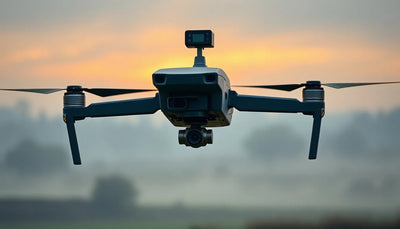
General Atomics Wildfire Breaks Cover as MQ-9 Reaper Successor
The War Zone reports the USAF is pursuing lower-cost armed drones after heavy MQ-9 losses, with General Atomics' Wildfire emerging as a successor concept. The shift signals changing defense procurement priorities that could reshape commercial drone supply chains and second-hand market expectations.

Quick answer
The War Zone reports the USAF is seeking lower-cost armed drones to replace MQ-9 Reaper missions after significant losses, with General Atomics' Wildfire shown as a successor concept.
- Primary reporting comes from The War Zone, not official USAF confirmation
- Wildfire is presented as a lower-cost successor to the MQ-9 Reaper
- The USAF is reportedly responding to high Reaper attrition rates
- No verified technical specifications were available for this report
- Commercial drone market impact remains source-limited analysis
Evidence: The War Zone · Defense.gov official source
Fleet readiness
Keep DJI hardware available without overbuying new units.
Use defense and fleet news as a planning signal for repair support, inspected pre-owned aircraft, and replacement timing.

Verified facts
What the available evidence confirms
| Aspect | MQ-9 Reaper | Wildfire successor concept |
|---|---|---|
| Reported role | Armed ISR and strike | Same mission set, lower-cost focus |
| Source status | Established platform | First look via The War Zone reporting |
| Official confirmation | Widely documented | Not confirmed in source data |
The War Zone has published a first look at General Atomics' Wildfire, a platform described as a successor to the MQ-9 Reaper. The report frames the development around a US Air Force search for lower-cost armed drones that can perform the same missions as the Reaper, following what the outlet describes as heavy losses of the existing fleet.
For commercial drone operators, fleet managers, and buyers tracking the broader unmanned aircraft market, the story matters less for its military specifics and more for what it signals about procurement thinking. When defense buyers push toward cheaper, more replaceable airframes, that pressure tends to influence component sourcing, manufacturing capacity, and long-term service expectations across the wider UAV industry.
What the source actually reports
According to The War Zone, the USAF is hunting for new lower-cost armed drones to perform the same missions as the MQ-9 Reaper in the wake of significant Reaper losses. The outlet's first look at the Wildfire concept positions it as General Atomics' answer to that emerging requirement. The reporting is source-limited: the central claim is attributed to the named primary reporting source, not to an official Air Force announcement or company confirmation.
The practical implication is that defense procurement priorities may be shifting from highly capable but expensive platforms toward attritable designs that can be lost without crippling budget impact. For commercial operators, that is a familiar logic. Fleet economics have always favored airframes that balance capability against replacement cost, and the defense market appears to be converging on the same calculation.
Why lower-cost airframes change the supply chain
A push toward cheaper armed drones has downstream effects that extend beyond military hangars. Manufacturers that build lower-cost airframes typically rely on higher-volume component production, simplified maintenance procedures, and faster repair turnarounds. Those same pressures shape the commercial drone parts ecosystem, where OEM-pulled parts and professional repair services become more important as operators seek to keep airframes flying longer without paying full replacement prices.
The source does not provide technical specifications, pricing, or production timelines for Wildfire. Reboot Hub analysis suggests that if the reported direction holds, it could reinforce a broader industry trend toward serviceable, modular platforms rather than sealed, disposable designs. That trend would favor operators who plan maintenance proactively and source genuine OEM spare parts before failures occur.
What this means for drone owners and the market
Commercial drone buyers should read the Wildfire report as an early indicator of procurement sentiment rather than a product announcement. The source-limited nature of the reporting means no operator should make purchasing decisions based on unconfirmed specifications or imagined commercial availability. What is actionable is the direction: defense buyers are reportedly prioritizing cost per mission over maximum capability per airframe.
For pre-owned DJI drone owners and fleet managers, that direction has a familiar echo. The commercial market has long rewarded operators who treat drones as depreciating service assets rather than permanent capital equipment. Pristine pre-owned units and inspected pre-owned airframes hold value precisely because replacement economics matter to buyers. When the defense sector signals the same cost-consciousness, it reinforces the commercial logic of maintaining, repairing, and reselling rather than discarding. Operators who want to understand how repair and resale fit into that planning can consult the Drone Wiki for market context. For owners evaluating service and lifecycle risk, Drone Wiki explains the relevant repair, parts, resale, or operational path.
The report also raises a question about spare parts availability. If manufacturers shift toward lower-cost platforms built at higher volumes, the aftermarket for components could become more standardized and more competitive. That would be a positive development for repair customers who currently face long waits or high prices for specialized parts. However, no verified evidence in the source confirms that Wildfire or any related commercial program will produce such an outcome.
What to watch next
The most important follow-up signal will be whether the USAF formalizes a requirement for a lower-cost Reaper successor or issues a request for proposals. The War Zone's reporting describes a search in progress, not a signed contract. Fleet operators and industry watchers should monitor official Air Force procurement announcements rather than treating concept imagery as a committed program.
A second signal is General Atomics' own positioning. If the company begins marketing Wildfire or a related platform publicly with specifications and pricing, that would move the story from source-limited reporting to verifiable product information. Until then, the responsible reading is that a major defense manufacturer is responding to reported buyer pressure for cheaper armed drones, and that pressure may eventually reshape how unmanned aircraft are built, serviced, and valued.
FAQ
Frequently asked questions
What is the General Atomics Wildfire?
Wildfire is a drone concept reported by The War Zone as a lower-cost successor to the MQ-9 Reaper, designed to perform similar missions. The report is a first look and does not include official confirmation or technical specifications.
Why is the USAF looking for cheaper armed drones?
The War Zone reports the US Air Force is responding to significant MQ-9 Reaper losses by seeking lower-cost platforms that can perform the same missions without the same per-unit expense.
Should commercial drone buyers change their plans based on this report?
No. The reporting is source-limited and does not confirm a production program or commercial availability. Buyers should treat it as an early signal of procurement sentiment, not a product announcement.
Which sources support this update?
The visible evidence links identify The War Zone and Defense.gov official source; each source is used only for the claim it directly supports.
What remains subject to change?
Retail pricing, availability, product bundles and regulatory timelines can change. Readers should verify the latest terms with the named retailer, manufacturer or regulator before acting.
How should buyers or operators use this analysis?
Use the verified facts as a starting point, then compare mission fit, lifecycle support, maintenance needs and current procurement terms before making a purchase or fleet decision.
Fuentes consultadas
- The War Zone - primary source
- Defense.gov official source - official government source
- DIU Blue UAS - official government source
Reboot Hub Editorial ofrece análisis de compra, reparación, reventa y operatividad para propietarios de drones. Si detecta algún error, contáctenos para solicitar una revisión de corrección conforme a nuestra política editorial.