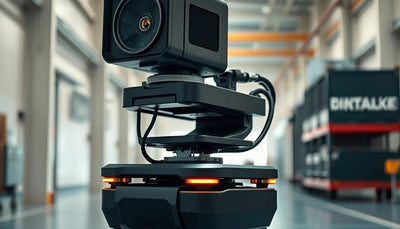
DJI Spinoff Livox Cuts Robot LiDAR Point Rate to Lower Cost
Livox, the LiDAR maker spun out of DJI, has halved the point rate on a robot sensor to reduce cost. The move signals pricing pressure across the sensing supply chain that commercial drone and robotics buyers should watch.

Quick answer
Livox, the DJI spinoff, has halved the point rate on a robot LiDAR sensor to reduce its cost, according to DroneXL.
- The development involves a robot-focused LiDAR product from Livox, not a drone-mounted sensor.
- The point rate reduction is positioned as a cost-cutting measure for robotics applications.
- DroneXL is the primary reporting source; no official Livox or DJI confirmation appears in the source data.
- The move suggests broader price competition in the commercial sensing component market.
Livox, the LiDAR technology company spun out of DJI, has reportedly halved the point rate on one of its robot-focused sensors as a deliberate move to reduce cost. The development was reported by DroneXL on September 21, 2026, and points to a sensing market where price competition is now shaping product decisions as much as raw performance.
DJI buying context
Match product news to hardware you can actually deploy.
Check inspected DJI aircraft, repair support, and trade-in timing before deciding whether to upgrade, repair, or wait.

The report centers on a robot LiDAR unit rather than a drone-mounted sensor, but the commercial logic is familiar to anyone who follows DJI's broader hardware ecosystem. Livox has built its reputation on compact, affordable LiDAR modules that have appeared across robotics, mapping, and industrial automation. A decision to reduce point rate in exchange for lower cost suggests the company is prioritizing accessibility in price-sensitive robotics segments.
What the source actually says
According to DroneXL, Livox has halved the point rate on a robot LiDAR product to cut its cost. The report frames this as a product strategy decision aimed at robotics applications, where dense point clouds are not always necessary and where component cost can determine whether a sensor gets designed into a platform at all.
The source does not include an official statement from Livox or DJI confirming the change, and it does not specify exact pricing, launch timing, or which robot platforms will adopt the revised sensor. Reboot Hub analysis should treat the point-rate reduction as a reported development rather than a confirmed specification change. Still, the strategic direction is consistent with Livox's history of trading peak performance for broader market reach.
Why component pricing matters across the drone supply chain
Livox sits inside the wider DJI supply ecosystem, and its pricing decisions rarely stay isolated. When a sensing supplier reduces cost on a robot LiDAR unit, it often signals that the underlying components, optics, and processing pipelines are maturing enough to support lower price points without collapsing margins. That maturity tends to flow into adjacent categories over time, including mapping payloads, inspection sensors, and eventually drone-mounted LiDAR options.
For commercial drone operators, the practical takeaway is that sensing costs are not static. A buyer evaluating an enterprise mapping or inspection platform today may see different component economics in twelve months. Fleet managers who plan multi-year hardware budgets should avoid locking assumptions about LiDAR payload pricing based on current quotes alone.
What this means for drone owners and the market
The immediate impact on drone owners is indirect but real. Livox's robot LiDAR move does not change the specification of any DJI drone currently in service, and it does not affect firmware, flight performance, or repair parts for existing aircraft. What it does affect is the broader cost trajectory of the sensing components that increasingly appear on enterprise drones, ground robots, and automated inspection systems.
For buyers in the pre-owned DJI market, the signal is more subtle. When component suppliers push prices down, the value of older sensor-equipped platforms can erode faster than expected. A drone that carries an expensive LiDAR payload today may face stiffer competition from lower-cost new alternatives in the near future. Operators who buy pre-owned DJI drones should factor sensing component trends into their resale and upgrade planning. For those tracking repair economics and OEM-pulled parts, the Drone Wiki provides a useful reference for understanding how DJI platform generations and component choices affect long-term ownership costs. For owners evaluating service and lifecycle risk, Drone Wiki explains the relevant repair, parts, resale, or operational path.
Fleet operators should also watch whether Livox's cost-reduction strategy migrates from robot sensors to drone payloads. If it does, the economics of LiDAR-based mapping and inspection could shift quickly, making some current enterprise drone configurations less competitive on a cost-per-acre or cost-per-asset basis. That would matter for procurement decisions, not just for new buyers but for operators deciding whether to extend the life of an existing fleet or rotate into newer sensor-equipped platforms.
The broader commercial signal for sensing buyers
Livox's reported decision is best understood as a pricing signal rather than a technical breakthrough. Halving a point rate is not a headline-grabbing performance gain; it is a deliberate trade-off aimed at a market segment where cost sensitivity outweighs point-cloud density. That kind of trade-off usually appears when a supplier believes the addressable market is large enough to justify a lower-margin, higher-volume product.
For robotics and drone buyers alike, the implication is that sensing components are entering a more competitive phase. Procurement teams should expect more vendor moves aimed at lowering entry cost, even if that means accepting reduced specification on paper. The practical question for any buyer is whether the reduced point rate still meets the operational requirement. In many robotics and inspection workflows, it will. In high-precision mapping or dense 3D reconstruction, it may not.
What should a buyer, pilot, repair customer, or fleet manager do differently after reading this? The sensible response is to avoid overpaying for sensor capability that a given workflow does not actually need, and to revisit component assumptions before committing to long-term hardware budgets. A lower-cost LiDAR option may be sufficient for many tasks, and the savings can be redirected toward platform reliability, spare parts, or professional repair support.
FAQ
Frequently asked questions
Is Livox part of DJI?
Livox is a LiDAR technology company that was spun out of DJI. It operates as a separate entity but remains connected to DJI's broader hardware and supply ecosystem.
Does this change affect DJI drones currently in service?
No. The reported point-rate reduction applies to a robot LiDAR product, not to any DJI drone model currently in service. Existing aircraft, firmware, and repair parts are not affected by this development.
Should commercial operators expect cheaper drone LiDAR soon?
Not immediately. The source reports a robot-focused cost reduction, and there is no confirmed plan to apply the same strategy to drone-mounted LiDAR payloads. However, the move does suggest broader pricing pressure across the sensing component market, which operators should monitor.
Which sources support this update?
The article distinguishes reported information from analysis and does not present an unverified source as official confirmation.
What remains subject to change?
Retail pricing, availability, product bundles and regulatory timelines can change. Readers should verify the latest terms with the named retailer, manufacturer or regulator before acting.
How should buyers or operators use this analysis?
Use the verified facts as a starting point, then compare mission fit, lifecycle support, maintenance needs and current procurement terms before making a purchase or fleet decision.
Fuentes consultadas
- DroneXL via Google News - primary source
No había documentación oficial adicional disponible al momento de la publicación.
Reboot Hub Editorial ofrece análisis de compra, reparación, reventa y operatividad para propietarios de drones. Si detecta algún error, contáctenos para solicitar una revisión de corrección conforme a nuestra política editorial.