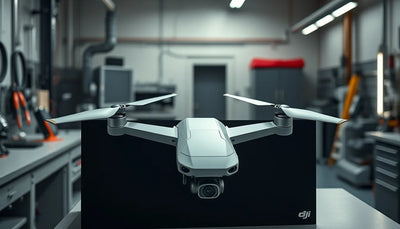
DJI Mini 2 SE Stays Relevant for Entry-Level Commercial Drone Buyers
The DJI Mini 2 SE continues to circulate as a lightweight 246 g camera drone with a stated 31-minute flight time, according to a recent industry report. For operators and buyers, that positioning keeps the model relevant in pre-owned DJI inventory and entry-level commercial planning.

Quick answer
A recent industry report highlighted the DJI Mini 2 SE as a lightweight 246 g camera drone with a stated 31-minute flight time, reinforcing its continued presence in the entry-level commercial and pre-owned DJI market.
- The DJI Mini 2 SE is cited as weighing 246 g, keeping it below common registration thresholds in several jurisdictions.
- The report notes a 31-minute flight time, a practical endurance figure for short inspection and mapping tasks.
- The model remains visible in pre-owned DJI inventory, where lightweight camera drones hold steady resale interest.
- Operators evaluating entry-level airframes should treat the report as market signal, not an official specification update.
Verified facts
DJI buying context
Match product news to hardware you can actually deploy.
Check inspected DJI aircraft, repair support, and trade-in timing before deciding whether to upgrade, repair, or wait.

What the available evidence confirms
| Attribute | Reported Detail | Commercial Implication |
|---|---|---|
| Weight | 246 g | Supports lightweight drone classification and easier transport for field crews |
| Flight time | 31 minutes | Useful for short inspection runs and routine visual data collection |
| Market position | Entry-level camera drone | Keeps pre-owned DJI Mini 2 SE units relevant for cost-conscious buyers |
A recent industry report from ad-hoc-news.de, surfaced through Google News DJI, keeps the DJI Mini 2 SE in view as a lightweight 246 g camera drone with a stated 31-minute flight time. The report does not announce a new launch, firmware change, or regulatory shift. Instead, it confirms that the Mini 2 SE continues to circulate in product coverage as an entry-level airframe with a compact footprint and practical endurance for short commercial missions.
For drone buyers and fleet operators, that matters. The sub-250 g category remains one of the most accessible entry points into commercial drone work, and the Mini 2 SE occupies a specific position within it: a camera drone that is light enough to carry without heavy logistics, yet substantial enough to serve as a backup airframe or a first unit for visual documentation tasks. Reboot Hub analysis treats this report as a market signal rather than an official specification update, because the source does not provide verified technical documentation beyond the headline figures.
Market positioning of the Mini 2 SE
The source identifies the DJI Mini 2 SE as a lightweight 246 g camera drone with 31-minute flight time. In commercial terms, that places the model in a category where weight classification and endurance are often the first two questions a buyer asks. A 246 g airframe sits below common registration thresholds in several jurisdictions, which can reduce administrative friction for operators who need a simple visual inspection tool without adding compliance overhead. The stated 31-minute flight time, while not independently verified in this report, suggests enough endurance for short roof checks, site walkthroughs, and basic visual documentation.
Reboot Hub analysis notes that the Mini 2 SE has never been positioned as a heavy-lift or high-endurance enterprise platform. Its value lies in accessibility. For a small service business or a solo operator, the model represents a lower-cost way to maintain aerial documentation capability without committing to a larger, more expensive airframe. That positioning also keeps the Mini 2 SE visible in pre-owned DJI inventory, where lightweight camera drones tend to hold steady interest from buyers who want a functional unit without paying full retail for a newer release.
What this means for drone buyers
Buyers evaluating the Mini 2 SE should read the report for what it is: confirmation that the model remains a recognized, lightweight camera drone in current product coverage. The practical takeaway is not that the Mini 2 SE has changed, but that its core profile—246 g weight and 31-minute flight time—continues to define its role in the entry-level segment. For an operator deciding between a new entry-level drone and a pre-owned unit, that stability matters. A model that remains visible in industry coverage is easier to source, easier to compare, and easier to justify as a backup or training airframe. For buyers comparing ownership options, Pristine Pre-Owned DJI Mini 2 Se provides a practical next step for model, condition, and replacement timing.
For buyers specifically considering the second-hand DJI market, the Mini 2 SE is a logical candidate for inspected pre-owned inventory. Lightweight camera drones in this class typically see less structural stress than larger commercial platforms, and their compact design simplifies storage and transport. Buyers looking at a pristine pre-owned DJI Mini 2 SE should still verify battery health, gimbal function, and airframe condition through a professional inspection, but the underlying platform profile is well understood. Operators who need a dependable visual documentation drone without enterprise-grade payload requirements may find that a pre-owned Mini 2 SE fills the role at a lower acquisition cost.
Pre-owned DJI market implications
The continued circulation of Mini 2 SE product coverage has a quiet but real effect on the pre-owned DJI market. When a model remains visible in industry reports, it reinforces buyer confidence that the airframe is not obsolete. That confidence translates into steadier resale interest and more predictable pricing for inspected pre-owned units. For fleet managers, that predictability is useful. A backup drone that holds its market position is easier to budget for, easier to replace, and easier to justify as a spare.
Reboot Hub analysis also sees a service angle. Lightweight camera drones like the Mini 2 SE are frequently used as training platforms or first units for new pilots. When those units sustain minor damage, repair decisions often come down to cost versus replacement. Because the Mini 2 SE remains a recognized entry-level model, professional DJI repair with genuine OEM spare parts can be a sensible path for keeping a functional unit in service, particularly when the airframe is otherwise in good condition. The report does not provide repair data, but the model's continued market presence supports the case for maintaining rather than discarding lightly damaged units.
For readers tracking the broader second-hand drone market, the Mini 2 SE serves as a useful reference point. It demonstrates that a sub-250 g camera drone with modest endurance can remain commercially relevant even as newer models enter the market. That dynamic is worth watching for anyone building a mixed fleet or planning phased upgrades. A pristine pre-owned DJI Mini 2 SE represents exactly the kind of unit that benefits from this sustained market visibility.
Operational considerations for fleet planning
Fleet managers and solo operators should treat the Mini 2 SE as a role player rather than a primary workhorse. The reported 31-minute flight time is adequate for short documentation tasks, but it is not a figure that supports long-duration mapping or extended inspection missions. The 246 g weight is a genuine operational advantage for transport and deployment, especially for teams that move between sites on foot or in small vehicles. Those two characteristics—light weight and moderate endurance—define the model's practical ceiling.
After reading this report, a buyer or fleet manager should do one concrete thing: assess whether the Mini 2 SE profile matches the actual mission set. If the work involves short visual checks, progress documentation, or pilot training, the model remains a reasonable candidate. If the work requires thermal imaging, long-range transmission, or heavy payloads, the Mini 2 SE is not the right tool, and no amount of market visibility changes that. The source report does not provide additional technical specifications, so operators should not infer capabilities beyond the stated weight and flight time.
The broader lesson for the pre-owned DJI market is that entry-level camera drones retain commercial relevance when their core profile remains practical. The Mini 2 SE is not a headline-grabbing platform, but it is a stable one. For buyers who value predictability, that stability is itself a form of value.
FAQ
Frequently asked questions
Is the DJI Mini 2 SE still a relevant drone in 2026?
According to the recent industry report, the Mini 2 SE continues to be cited as a lightweight 246 g camera drone with 31-minute flight time. Its relevance comes from its accessible weight class and practical endurance for short visual documentation tasks, not from advanced enterprise features.
Should I buy a pre-owned DJI Mini 2 SE?
A pre-owned Mini 2 SE can be a sensible choice for buyers who need a lightweight camera drone for short missions or as a backup airframe. Buyers should verify battery health, gimbal function, and overall condition through a professional inspection before purchase.
What kind of commercial work suits the Mini 2 SE?
The Mini 2 SE profile suits short visual checks, site documentation, and pilot training. Its 246 g weight simplifies transport and deployment, while the reported 31-minute flight time supports brief missions rather than extended mapping or inspection work.
Which sources support this update?
The article distinguishes reported information from analysis and does not present an unverified source as official confirmation.
What remains subject to change?
Retail pricing, availability, product bundles and regulatory timelines can change. Readers should verify the latest terms with the named retailer, manufacturer or regulator before acting.
How should buyers or operators use this analysis?
Use the verified facts as a starting point, then compare mission fit, lifecycle support, maintenance needs and current procurement terms before making a purchase or fleet decision.
Fuentes consultadas
- ad-hoc-news.de via Google News - primary source
No había documentación oficial adicional disponible al momento de la publicación.
Reboot Hub Editorial ofrece análisis de compra, reparación, reventa y operatividad para propietarios de drones. Si detecta algún error, contáctenos para solicitar una revisión de corrección conforme a nuestra política editorial.