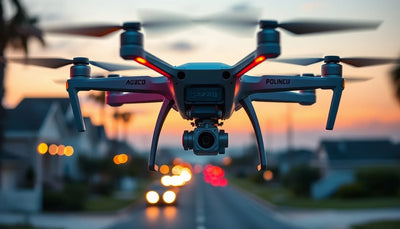
Dallas Man Indicted for Drone Flight in Protected Airport Airspace
A Dallas man faces federal charges after allegedly flying a drone into protected airspace surrounding two major airports. The case highlights growing enforcement focus on airspace violations and the compliance risks commercial operators face when flying near controlled airspace.

Quick answer
A Dallas man was indicted for flying a drone into protected airspace surrounding two major airports, according to SUAS News reporting on an announcement from the U.S. Attorney for the Northern District of Texas.
- The indictment was announced by U.S. Attorney Ryan Raybould for the Northern District of Texas
- The alleged violation involved protected airspace around two major Dallas-area airports
- The case reflects increasing federal enforcement attention on drone airspace compliance
- Primary reporting comes from SUAS News, with no additional official verification available in source data
Evidence: SUAS News
Operator checklist
Turn policy news into a safer fleet decision.
Before changing aircraft, compare repair paths, available DJI inventory, and trade-in timing against the rule change.

Federal prosecutors in Texas have indicted a Dallas man for allegedly flying a drone into protected airspace surrounding two major airports, according to reporting from SUAS News. The announcement was attributed to United States Attorney for the Northern District of Texas Ryan Raybould, who disclosed the charges in a public statement covered by the drone industry publication.
The indictment marks another data point in a pattern that commercial drone operators, fleet managers, and repair customers have been watching closely: federal authorities are treating airspace violations around major aviation infrastructure as criminal matters, not administrative footnotes. For anyone operating drones commercially or managing a fleet near controlled airspace, the enforcement posture matters as much as the technical specifications of the aircraft involved.
The enforcement signal behind the indictment
SUAS News reported that the Dallas man was indicted for flying a drone into protected airspace surrounding two major airports. The source summary identifies the announcing official as Ryan Raybould, the United States Attorney for the Northern District of Texas. The specific airports, the date of the alleged flight, and the drone model involved were not detailed in the available source data.
What the announcement does communicate is a continued federal willingness to pursue criminal charges for airspace intrusions. For commercial operators, this is not an abstract legal concern. It affects how flight operations are planned, how geofencing and authorization systems are used, and how seriously procurement teams weigh compliance features when selecting aircraft. A drone that cannot reliably enforce airspace restrictions creates operational and legal exposure that no fleet manager wants to inherit.
What this means for drone owners and the market
The practical takeaway for drone owners is straightforward: airspace compliance is now a core ownership cost, not an optional add-on. A buyer evaluating a pre-owned DJI drone or any commercial platform should treat airspace awareness tools, firmware update status, and geofencing behavior as part of the purchase decision. An aircraft with outdated firmware or a modified flight controller may carry risk that is not visible in a listing photo or a price tag.
For operators who fly near urban airports, the indictment reinforces the value of documented pre-flight authorization workflows. Fleet managers should verify that every aircraft in rotation has current firmware, that pilots understand controlled airspace boundaries, and that flight logs are retained. The pre-owned market is not immune to these pressures. Buyers who source inspected pre-owned aircraft through channels that verify firmware and flight controller integrity reduce the chance of inheriting a compliance problem. For detailed technical reference on DJI platforms and airspace-related features, operators can consult the Drone Wiki as a starting point before making a purchase or repair decision.
Repair customers should also pay attention. A drone that has been serviced with non-OEM flight controller components or improperly restored after a crash may behave unpredictably near geofenced zones. Professional repair work that preserves OEM-pulled parts and firmware integrity is not just about performance; it is increasingly about legal exposure. The Dallas case, even without full operational details, is a reminder that the aircraft itself is a compliance asset. For owners evaluating service and lifecycle risk, Drone Wiki explains the relevant repair, parts, resale, or operational path.
Regulatory context and the commercial risk landscape
The Northern District of Texas announcement fits within a broader federal framework that treats protected airport airspace as a hard boundary. The Federal Aviation Administration has long maintained restrictions around major airports, and the Department of Justice has shown increasing willingness to bring criminal cases when those restrictions are breached. SUAS News, as the primary reporting source here, framed the indictment as a notable enforcement action in the U.S. commercial drone space.
Reboot Hub analysis: For enterprise fleet operators and drone service providers, the commercial implication is that insurance carriers, enterprise clients, and procurement reviewers are likely to scrutinize compliance histories more closely. A single airspace violation can affect insurability, contract eligibility, and resale value. Operators who maintain clean logs, documented authorizations, and aircraft with intact compliance features are better positioned when enterprise contracts require proof of regulatory standing.
The second-hand drone market feels these effects indirectly. As enforcement visibility increases, buyers become more cautious about undocumented aircraft. Inspected pre-owned units with verifiable firmware and no history of unauthorized modifications hold value better than gray-market listings with unknown provenance. The market is slowly pricing compliance into resale value, and sellers who cannot document an aircraft's history may face longer listing times or lower offers.
The operator-facing question: what changes after this indictment
The single most important action for a buyer, pilot, repair customer, or fleet manager after reading this news is to audit airspace compliance readiness before the next flight. That means confirming that every aircraft in the fleet has current firmware, that geofencing and authorization tools are functioning, and that pilots have documented training on controlled airspace procedures. It also means treating any pre-owned purchase as a compliance decision, not just a hardware decision.
For repair customers, the audit extends to the service history. If an aircraft has been repaired with non-OEM flight controller parts or has undergone modifications that affect its ability to receive firmware updates, that aircraft may not be suitable for operations near controlled airspace. Professional repair providers that use genuine OEM spare parts and preserve firmware integrity offer a compliance advantage that is easy to overlook until an enforcement action makes it obvious.
The Dallas indictment is one case in one district, and the available source data does not include the full operational details that would allow a deeper legal analysis. But the direction of travel is clear. Federal prosecutors are treating protected airspace intrusions as serious matters, and the commercial drone ecosystem is absorbing that signal through pricing, procurement behavior, and repair standards.
FAQ
Frequently asked questions
What exactly was the Dallas man indicted for?
According to SUAS News, the man was indicted for flying a drone into protected airspace surrounding two major airports. The announcement came from the United States Attorney for the Northern District of Texas, Ryan Raybould. Specific details about the flight, the airports, and the drone model were not included in the available source data.
How does this affect commercial drone operators?
Commercial operators should treat this as evidence that federal authorities are pursuing criminal charges for airspace violations, not just administrative penalties. Operators should audit firmware, geofencing, and authorization workflows before flying near controlled airspace, and maintain clean flight logs for compliance and insurance purposes.
Should drone buyers consider compliance when purchasing pre-owned aircraft?
Yes. Buyers should verify firmware status, flight controller integrity, and service history before purchasing a pre-owned drone. An aircraft with outdated firmware, modified components, or undocumented repairs may carry compliance risk that affects resale value, insurability, and legal exposure near controlled airspace.
Which sources support this update?
The visible evidence links identify SUAS News; each source is used only for the claim it directly supports.
What remains subject to change?
Retail pricing, availability, product bundles and regulatory timelines can change. Readers should verify the latest terms with the named retailer, manufacturer or regulator before acting.
How should buyers or operators use this analysis?
Use the verified facts as a starting point, then compare mission fit, lifecycle support, maintenance needs and current procurement terms before making a purchase or fleet decision.
Fuentes consultadas
- SUAS News - primary source
No había documentación oficial adicional disponible al momento de la publicación.
Reboot Hub Editorial ofrece análisis de compra, reparación, reventa y operatividad para propietarios de drones. Si detecta algún error, contáctenos para solicitar una revisión de corrección conforme a nuestra política editorial.