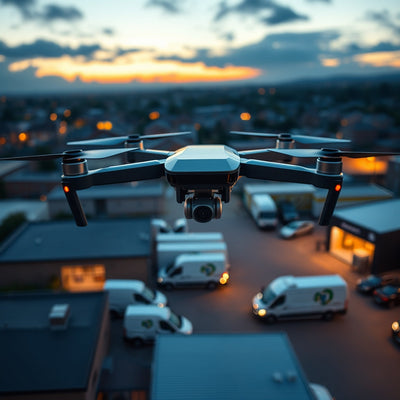
British Drone Developers Warn Outdated Laws Block Growth
British drone developers say outdated regulations are holding back commercial innovation. The industry warning points to slower testing, constrained operations, and higher costs for operators and buyers navigating a fragmented rulebook.

Quick answer
British drone developers are warning that outdated laws are hampering industry growth, according to a Financial Times report.
- The warning comes from industry voices cited by the Financial Times
- Outdated regulation is limiting commercial drone development in the UK
- Operators and buyers face uncertainty around testing and deployment
- The report highlights a gap between technology and legal frameworks
The UK's commercial drone sector is pushing back against a regulatory framework that industry voices say has not kept pace with the technology. According to a Financial Times report, British drone developers are warning that outdated laws are hampering their ability to test, deploy, and scale new unmanned systems. The warning lands at a moment when commercial drone use is expanding across logistics, inspection, agriculture, and public safety, but the legal environment in the UK remains a persistent bottleneck.
Operator checklist
Turn policy news into a safer fleet decision.
Before changing aircraft, compare repair paths, available DJI inventory, and trade-in timing against the rule change.

The Financial Times report, sourced through Google News, frames the issue as a structural problem rather than a single ruling or enforcement action. Developers are not pointing to one defective statute, but to a broader mismatch between what modern drones can do and what the current rulebook allows. That distinction matters for commercial operators, because it suggests the friction will not disappear with a quick policy fix. It is embedded in how the UK currently classifies, authorizes, and supervises unmanned aircraft operations.
Why the UK rulebook is under pressure
The core complaint reported by the Financial Times is that existing UK drone laws were written for an earlier generation of aircraft. Many current rules assume limited autonomy, short-range operations, and a human pilot maintaining visual line of sight. As drone platforms become more capable, developers say those assumptions create legal barriers to routine beyond-visual-line-of-sight flights, automated missions, and heavier payload operations that are already being tested or deployed in other markets.
For commercial operators, this translates into slower approval timelines and higher compliance costs. A fleet manager planning a utility inspection program or a logistics pilot may need to navigate case-by-case authorizations rather than relying on clear, standardized pathways. The Financial Times report does not cite a specific pending bill or agency ruling, but the industry warning itself is the news: developers are signaling that the current framework is actively limiting what they can build and sell in the UK.
Reboot Hub analysis: the regulatory drag described in the report is most visible in the gap between drone hardware capability and operational permission. A modern commercial platform may be technically capable of autonomous corridor flights, but the legal route to fly that mission in the UK can remain unclear or prohibitively slow. That gap has direct consequences for procurement decisions, because buyers hesitate to invest in capabilities they may not be able to use legally for months or years.
What this means for drone owners and the market
The Financial Times warning should prompt commercial buyers and fleet operators to treat regulatory risk as a core procurement variable, not an afterthought. If UK developers are publicly stating that outdated laws are hampering their work, then operators evaluating new platforms should ask harder questions about which capabilities are actually deployable under current rules. A drone that is legal to buy is not automatically legal to fly in the mission profile a business needs.
For owners of existing fleets, the report suggests that resale value and operational flexibility may be shaped by how quickly the UK modernizes its rulebook. Pre-owned DJI drones and other commercial platforms retain their utility only if operators can legally use them for the jobs they were purchased to perform. When regulation lags behind hardware, the practical value of a drone can be capped by paperwork rather than by airframe condition or flight hours. That is an important consideration for anyone planning a fleet refresh or evaluating the second-hand market.
Repair and maintenance planning also sits inside this regulatory picture. A drone that is grounded by compliance uncertainty is a drone that is not generating revenue, regardless of its mechanical condition. Fleet managers may find that the most cost-effective decision is to keep current platforms airworthy and mission-ready while the legal environment stabilizes. For repair customers, that means prioritizing genuine OEM spare parts and professional service that preserve the aircraft's operational integrity. A well-maintained pre-owned DJI platform can remain a productive asset through a regulatory transition, and resources like the Drone Wiki help operators understand the maintenance and ownership factors that keep commercial fleets viable. For owners evaluating service and lifecycle risk, Drone Wiki explains the relevant repair, parts, resale, or operational path.
The report does not suggest that UK drone laws will change on any specific timeline. That uncertainty is itself a market signal. Operators who assume the rulebook will modernize quickly may over-invest in capabilities they cannot yet use, while operators who assume nothing will change may miss a competitive window. The prudent position is to monitor the regulatory conversation closely and build flexibility into fleet planning.
Commercial implications beyond the UK
While the Financial Times report focuses on British developers, the underlying tension is familiar across global drone markets. Regulators in the United States, the European Union, and other jurisdictions are wrestling with similar questions around autonomy, airspace integration, and remote operations. When a major market like the UK signals that its legal framework is lagging, it reinforces a broader pattern: drone technology is advancing faster than the rules that govern it.
For international operators and buyers, the UK situation is a useful case study in regulatory risk. A company that sources drones from British developers, or that operates in the UK as part of a multi-market fleet, should factor local legal constraints into its planning. The same aircraft may face very different operational ceilings depending on where it is registered and flown. That fragmentation raises the value of platforms with strong aftermarket support, because operators may need to reconfigure or repair aircraft as rules evolve.
The pre-owned market is particularly sensitive to this kind of regulatory uncertainty. When new-platform adoption slows because of legal friction, demand can shift toward proven, currently compliant aircraft that are already flying in the field. Inspected pre-owned DJI drones, for example, may offer a lower-risk entry point for operators who want to expand capacity without betting on a regulatory outcome that has not yet arrived. The second-hand market absorbs some of the demand that new-platform uncertainty creates.
What operators should watch next
The Financial Times report is a warning, not a roadmap. It tells commercial stakeholders that British developers feel constrained, but it does not identify a specific legislative vehicle or regulatory change on the horizon. That means the most useful response is disciplined monitoring. Fleet managers, procurement leads, and repair customers should track UK Civil Aviation Authority statements, industry association commentary, and any formal consultation processes that follow this public warning.
In the meantime, the operational advice is straightforward. Buyers should verify that any drone they are considering can legally perform the missions they actually need, not just the missions the marketing materials describe. Fleet operators should keep existing aircraft in strong mechanical condition so they remain productive while the legal environment sorts itself out. And anyone holding commercial drone assets should recognize that regulatory clarity, or the lack of it, is now a meaningful factor in resale value and long-term fleet economics.
FAQ
Frequently asked questions
What did the Financial Times report say about UK drone laws?
The Financial Times reported that British drone developers are warning that outdated laws are hampering industry growth. The report frames the issue as a mismatch between modern drone capabilities and a legal framework that has not kept pace.
How does outdated regulation affect commercial drone operators?
Outdated regulation can slow approval timelines, raise compliance costs, and limit which missions operators can legally fly. Buyers may hesitate to invest in platforms whose advanced capabilities are not yet deployable under current UK rules.
Should drone owners change their fleet planning because of this warning?
Operators should treat regulatory risk as a core procurement variable and verify that any new platform can legally perform the required missions. Keeping existing aircraft well-maintained with genuine OEM parts can preserve value while the legal environment remains uncertain.
Which sources support this update?
The article distinguishes reported information from analysis and does not present an unverified source as official confirmation.
What remains subject to change?
Retail pricing, availability, product bundles and regulatory timelines can change. Readers should verify the latest terms with the named retailer, manufacturer or regulator before acting.
How should buyers or operators use this analysis?
Use the verified facts as a starting point, then compare mission fit, lifecycle support, maintenance needs and current procurement terms before making a purchase or fleet decision.
Fuentes consultadas
- Financial Times via Google News - primary source
No había documentación oficial adicional disponible al momento de la publicación.
Reboot Hub Editorial ofrece análisis de compra, reparación, reventa y operatividad para propietarios de drones. Si detecta algún error, contáctenos para solicitar una revisión de corrección conforme a nuestra política editorial.