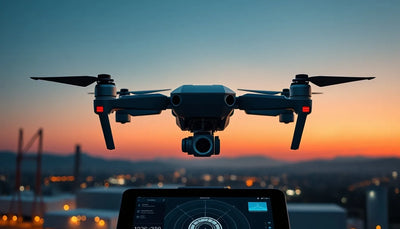
Airwise and UAS Sentry Partner on Drone Detection for Critical Sites
Airwise Solutions and UAS Sentry are combining drone detection with low-altitude airspace visibility for airports, utilities, and critical infrastructure operators. The partnership signals growing demand for Remote ID-based monitoring beyond pilot compliance, with implications for commercial operators flying near sensitive facilities.

Quick answer
Airwise Solutions and UAS Sentry announced a partnership to combine drone detection with broader low-altitude airspace visibility for airports, utilities, energy companies, and critical infrastructure operators.
- The partnership focuses on helping facility operators see drones operating near their sites
- It combines UAS Sentry drone detection with Airwise airspace platform capabilities
- DroneDJ reported the development on September 16, 2026
- The move reflects growing demand for Remote ID-based monitoring beyond pilot-side compliance
Evidence: DroneDJ · FAA UAS official guidance
Operator checklist
Turn policy news into a safer fleet decision.
Before changing aircraft, compare repair paths, available DJI inventory, and trade-in timing against the rule change.

Airports, utilities, energy companies, and other critical infrastructure operators are getting another tool to monitor drone activity near their facilities. According to reporting from DroneDJ, Airwise Solutions has added UAS Sentry as a new partner on its airspace platform, combining drone detection capabilities with a broader view of low-altitude airspace. The announcement, published on September 16, 2026, highlights how Remote ID data is increasingly being used by entities beyond the pilots who generate it.
For commercial drone operators, this development matters in ways that go beyond another vendor partnership. It signals that the infrastructure for detecting and identifying drones near sensitive sites is maturing, and that facility operators are investing in visibility tools that could shape where and how commercial flights are conducted. Understanding who is watching the airspace is becoming as operationally relevant as knowing the rules themselves.
The partnership and what it aims to solve
DroneDJ reports that the new partnership between Airwise Solutions and UAS Sentry is designed to serve a specific audience: airports, utilities, energy companies, and critical infrastructure operators. These organizations need visibility into drones operating around their facilities, not just for security purposes but also for operational awareness of low-altitude airspace. The reporting indicates that the collaboration combines UAS Sentry's drone detection focus with Airwise's broader airspace platform.
The practical implication is that facility operators may gain a more complete picture of drone activity near their sites, potentially including Remote ID data that identifies compliant aircraft. For pilots flying near such facilities, this means the likelihood of being detected and identified is increasing, even when operating legally. The trend points toward an environment where transparency in the airspace is expected, not optional.
Why Remote ID is expanding beyond pilot compliance
Remote ID has primarily been framed as a pilot-side compliance requirement, but this partnership illustrates a shift. DroneDJ's coverage suggests that the data generated by Remote ID is becoming a resource for third parties who need to understand what is flying near their assets. Airports and utilities are not merely passive observers; they are actively integrating detection and identification tools into their security and operational frameworks.
For fleet operators and commercial pilots, this changes the calculus around flight planning near sensitive infrastructure. A flight that is technically legal under airspace rules may still trigger detection and response from a facility operator who is monitoring the area. Reboot Hub analysis suggests that operators should treat detection as a near-certainty near major infrastructure sites and plan accordingly, including maintaining clear documentation of authorized operations.
What this means for drone owners and the market
Reboot Hub analysis: The growing deployment of detection systems around critical infrastructure has direct implications for drone ownership and resale value. Drones that broadcast Remote ID properly and remain in good operational condition are likely to retain stronger market positions, as buyers increasingly prioritize aircraft that can operate transparently in monitored airspace. Pre-owned DJI drones with intact Remote ID functionality and a clean operational history may become more attractive to commercial buyers who need to demonstrate compliance when flying near sensitive sites. For those evaluating Drone Wiki resources, understanding how Remote ID and detection systems interact is becoming part of responsible ownership. For owners evaluating service and lifecycle risk, Drone Wiki explains the relevant repair, parts, resale, or operational path.
Repair customers should also take note. A drone with damaged or non-functional Remote ID broadcasting components is not just a compliance risk for the pilot; it is also a liability in airspace where facility operators are actively monitoring. Ensuring that Remote ID hardware and firmware are functioning correctly after any repair is no longer a secondary concern. Fleet managers should include Remote ID verification as a standard post-repair checklist item, particularly for aircraft that will operate near airports, utilities, or energy infrastructure.
For buyers in the pre-owned market, this news reinforces the importance of verifying that any used drone's Remote ID system is intact and operational. The source-limited reporting does not specify technical requirements or compatibility details, so buyers should rely on manufacturer documentation and professional inspection rather than assumptions. What is clear is that the ecosystem around Remote ID is expanding, and aircraft that cannot participate in that ecosystem may face reduced utility in commercial contexts.
The broader regulatory and operational picture
This partnership fits into a larger pattern of airspace awareness infrastructure being built out across the United States and globally. DroneDJ's reporting frames the development as part of a broader need for low-altitude airspace visibility, not merely a security product announcement. Airports and critical infrastructure operators are becoming more sophisticated in how they monitor drone activity, and partnerships like this one suggest that the market for such capabilities is growing.
Operators should interpret this as a signal that the airspace environment is becoming more structured and observed. The days of flying near sensitive facilities without being noticed are ending, even for pilots who are following the rules. The practical response is not to avoid monitored areas entirely, but to ensure that every flight is properly authorized, documented, and conducted with an aircraft that is fully compliant and well-maintained. For commercial operators, this is another reason to keep maintenance records and Remote ID functionality current.
FAQ
Frequently asked questions
What did Airwise and UAS Sentry announce?
According to DroneDJ reporting from September 16, 2026, Airwise Solutions added UAS Sentry as a partner on its airspace platform, combining drone detection with broader low-altitude airspace visibility for airports, utilities, energy companies, and critical infrastructure operators.
How does this affect commercial drone pilots?
Commercial pilots flying near airports, utilities, or critical infrastructure should expect that their aircraft may be detected and identified by facility operators using systems like the one described in the partnership. Maintaining proper authorization, documentation, and functional Remote ID broadcasting is increasingly important.
Should drone buyers consider Remote ID functionality when purchasing?
Reboot Hub analysis: Yes. As detection infrastructure expands around sensitive sites, drones with intact and functional Remote ID systems are likely to retain better utility and resale value. Buyers of pre-owned aircraft should verify that Remote ID components are operational before purchase, especially for commercial use near monitored facilities.
Which sources support this update?
The visible evidence links identify DroneDJ and FAA UAS official guidance; each source is used only for the claim it directly supports.
What remains subject to change?
Retail pricing, availability, product bundles and regulatory timelines can change. Readers should verify the latest terms with the named retailer, manufacturer or regulator before acting.
How should buyers or operators use this analysis?
Use the verified facts as a starting point, then compare mission fit, lifecycle support, maintenance needs and current procurement terms before making a purchase or fleet decision.
Fuentes consultadas
- DroneDJ - primary source
- FAA UAS official guidance - official regulator source
Reboot Hub Editorial ofrece análisis de compra, reparación, reventa y operatividad para propietarios de drones. Si detecta algún error, contáctenos para solicitar una revisión de corrección conforme a nuestra política editorial.