AeroVironment Books $51M Army Order for Switchblade 600 Systems
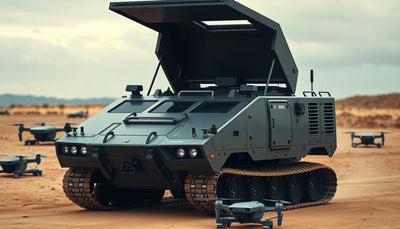
AeroVironment has received a $51 million U.S. Army delivery order for Switchblade 600 loitering munitions, including Block 2 systems and Block 1 units tied to a Foreign Military Sale. The award signals steady demand for precision strike autonomy and carries supply chain signals for defense-adjacent drone markets.

Quick answer
AeroVironment received a $51 million U.S. Army delivery order for Switchblade 600 Block 2 loitering munition systems, plus Block 1 systems supporting a Foreign Military Sale to a U.S. ally.
- The order was announced August 26, 2026, by AeroVironment.
- It includes Switchblade 600 Block 2 systems for the U.S. Army.
- It also includes Switchblade 600 Block 1 systems for a Foreign Military Sale.
- The contract is a delivery order, not a new development program.
- The award reinforces sustained defense demand for loitering munitions.
Evidence: Source material · AeroVironment unmanned systems solutions · Defense.gov official source
Fleet readiness
Keep DJI hardware available without overbuying new units.
Use defense and fleet news as a planning signal for repair support, inspected pre-owned aircraft, and replacement timing.

Verified facts
What the available evidence confirms
| Order element | Recipient or purpose | System type |
|---|---|---|
| $51 million delivery order | United States Army | Switchblade 600 Block 2 |
| Included in same order | Foreign Military Sale to a U.S. ally | Switchblade 600 Block 1 |
AeroVironment, Inc. has received a $51 million delivery order from the United States Army for additional Switchblade 600 loitering munition systems, according to a company announcement reported by Yahoo Finance on August 26, 2026. The order covers Switchblade 600 Block 2 systems for the U.S. Army and also includes Switchblade 600 Block 1 systems in support of a Foreign Military Sale to a key United States ally.
The development matters beyond the defense sector because it confirms that precision strike autonomy remains a durable procurement category. For commercial drone operators, repair customers, and fleet planners watching adjacent markets, defense awards like this one influence component demand, manufacturing capacity, and the broader conversation around autonomous systems reliability. The order is a delivery order rather than a new development program, which suggests an established production line and repeat purchasing behavior rather than experimental adoption.
What the order actually contains
The primary reporting source states that the $51 million delivery order includes Switchblade 600 Block 2 loitering munition systems for the U.S. Army. The same order also includes Switchblade 600 Block 1 systems supporting a Foreign Military Sale to a key United States ally. AeroVironment is identified as a global leader in defense technology, autonomous systems, and precision strike solutions, and the company trades on Nasdaq under the ticker AVAV.
For procurement analysts, the mix of Block 1 and Block 2 systems in a single delivery order is notable. It indicates that the Army is taking delivery of the newer Block 2 configuration while allied customers continue receiving the earlier Block 1 variant. That kind of parallel production can stretch component supply chains, particularly for specialized electronics, propulsion, and guidance hardware shared across loitering munition platforms. Reboot Hub analysis suggests this is a supply chain signal worth tracking, even though the source does not provide delivery timelines or production volume details.
Why defense loitering munition demand is relevant to commercial drone markets
Defense procurement does not operate in a vacuum. When a manufacturer like AeroVironment books repeat orders for loitering munitions, it commits factory capacity, engineering resources, and supplier relationships to that product line. Those commitments can influence lead times for components that overlap with commercial unmanned systems, including flight controllers, sensor modules, and battery management hardware. The source does not specify which suppliers are involved, but the broader pattern is familiar to anyone who has watched defense and commercial drone supply chains interact.
For commercial fleet operators, the practical takeaway is to monitor defense-heavy manufacturers and their component demand when planning procurement cycles. Tight supply in one segment can create ripple effects in adjacent categories. This is especially true for operators who depend on consistent availability of OEM parts and service capacity. The Switchblade order is not a DJI story, but it sits inside the same global ecosystem of unmanned systems manufacturing that affects parts availability, repair turnaround, and second-hand market pricing.
What this means for drone owners and the market
The most direct implication for drone owners is that sustained defense demand for loitering munitions reinforces the broader commercial value of autonomous systems reliability. Buyers who are evaluating pre-owned platforms or planning long-term fleet maintenance should pay attention to how defense contracts shape component availability. When defense orders absorb specialized electronics or battery production capacity, commercial repair customers can feel the effect through longer lead times or tighter parts inventory. Reboot Hub analysis views this as a planning signal rather than an immediate disruption.
For operators who own DJI hardware or other commercial platforms, the practical step is to keep service intervals and spare parts planning ahead of demand. Defense procurement cycles are not directly tied to DJI supply chains, but they share the same global components market. A fleet manager who waits until a part fails to source a replacement may face longer waits if adjacent demand is elevated. Readers who want a clearer reference for drone maintenance and parts planning can consult the Drone Wiki for operator-facing guidance on service and ownership decisions. For owners evaluating service and lifecycle risk, Drone Wiki explains the relevant repair, parts, resale, or operational path.
The pre-owned DJI market may also feel indirect pressure. When new component costs rise or availability tightens, operators sometimes extend the service life of existing platforms rather than replacing them. That can support demand for inspected pre-owned units and genuine OEM spare parts. The Switchblade order does not change DJI pricing overnight, but it is one more data point in a defense procurement environment that has been consistently active.
What buyers and fleet managers should watch next
AeroVironment did not disclose delivery timelines, allied customer identity, or production volume in the source material. Those details will matter for anyone trying to assess the real-world supply chain impact. Buyers and fleet managers should watch for follow-on announcements about production expansion, supplier agreements, or additional Foreign Military Sale orders. Each of those signals would clarify whether this $51 million order is routine replenishment or part of a larger procurement trend.
The source also does not provide pricing per unit, which limits direct comparison to commercial drone economics. However, the order size itself is a useful benchmark. A $51 million delivery order for loitering munitions is a meaningful but not transformative contract for a company of AeroVironment's scale. The fact that it was announced as a single delivery order suggests ongoing contractual vehicles are already in place, which is typical for established defense programs.
For commercial operators, the most useful posture is calm observation. Defense demand for autonomous systems is not going away, and its secondary effects on components, service capacity, and market confidence will continue to matter. The operators who plan maintenance, source parts early, and understand the broader supply environment will be better positioned than those who react only to immediate failures.
FAQ
Frequently asked questions
What did AeroVironment announce?
AeroVironment announced a $51 million delivery order from the U.S. Army for Switchblade 600 loitering munition systems, including Block 2 systems and Block 1 systems supporting a Foreign Military Sale.
Does this order affect commercial drone buyers?
Indirectly, yes. Defense procurement can influence component availability and manufacturing capacity in the broader unmanned systems market, which may affect parts lead times and service planning for commercial operators.
Should fleet managers change their maintenance planning because of this order?
Not immediately, but the order reinforces the value of proactive parts sourcing and service scheduling. Operators who plan ahead are less exposed to supply chain shifts driven by adjacent defense demand.
Which sources support this update?
The visible evidence links identify Source material and AeroVironment unmanned systems solutions and Defense.gov official source; each source is used only for the claim it directly supports.
What remains subject to change?
Retail pricing, availability, product bundles and regulatory timelines can change. Readers should verify the latest terms with the named retailer, manufacturer or regulator before acting.
How should buyers or operators use this analysis?
Use the verified facts as a starting point, then compare mission fit, lifecycle support, maintenance needs and current procurement terms before making a purchase or fleet decision.
Fuentes consultadas
- Source material - primary source
- AeroVironment unmanned systems solutions - official company source
- Defense.gov official source - official government source
Reboot Hub Editorial ofrece análisis de compra, reparación, reventa y operatividad para propietarios de drones. Si detecta algún error, contáctenos para solicitar una revisión de corrección conforme a nuestra política editorial.