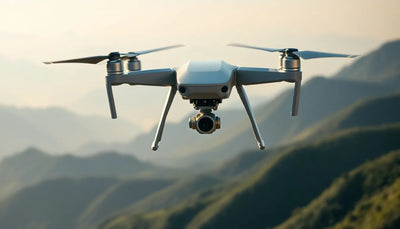
A Post-2000s Drone GM Shows China's Youth-Led Service Shift
A post-2000s general manager who can fly drones is drawing attention across China's commercial UAV sector. The profile signals how young, operationally skilled leaders are moving into service-oriented drone businesses, with implications for fleet buyers and repair-focused operators.

Quick answer
A Sina Finance report profiles a post-2000s general manager who can fly drones, connected to Chengdu Aeronautic Polytechnic and business activity in Pinghu City, Jiaxing City, and Sichuan Province.
- The profile centers on a young general manager with hands-on drone piloting skills
- Locations named include Chengdu Aeronautic Polytechnic, Pinghu City, Jiaxing City, and Sichuan Province
- The report frames the individual as an entrepreneur active in China's commercial UAV sector
- The coverage highlights youth leadership and operational capability rather than a specific product launch
Verified facts
Market context
Turn market news into a buy, repair, or trade-in decision.
Compare pre-owned availability, resale timing, and repair economics before the market moves again.

What the available evidence confirms
| Profile element | Reported detail |
|---|---|
| Age cohort | Post-2000s general manager |
| Operational skill | Can fly drones |
| Education link | Chengdu Aeronautic Polytechnic |
| Locations | Pinghu City, Jiaxing City, Sichuan Province |
| Role | Entrepreneur and general manager |
A Sina Finance report has drawn attention to a post-2000s general manager who can fly drones, a profile that connects Chengdu Aeronautic Polytechnic, Pinghu City, Jiaxing City, and Sichuan Province in a single entrepreneurial story. The coverage, which frames the individual as a young business leader with direct piloting capability, is less about a single product launch and more about who is now running commercial drone operations in China.
For drone buyers, fleet operators, and repair customers, the profile is a useful signal. When general managers hold hands-on flight skills, service businesses tend to prioritize operational reliability, maintenance discipline, and faster turnaround for the equipment they already fly. That matters in a market where commercial UAV work is shifting from pure hardware sales toward inspection, mapping, logistics support, and recurring service contracts.
What the source actually reports
The primary reporting comes from Sina Finance and describes a post-2000s general manager who can fly drones. The named institutions and regions are Chengdu Aeronautic Polytechnic, Pinghu City, Jiaxing City, and Sichuan Province. The individual is described as an entrepreneur, and the coverage positions the story within China's broader commercial UAV and youth-led business landscape.
Reboot Hub analysis notes that the report is a profile rather than a technical or regulatory filing. It does not name a specific drone model, a fleet size, a revenue figure, or a contract award. Readers should treat the story as a market-trend indicator, not as a product announcement. The useful detail is the combination of youth, formal aeronautic education, and direct flight capability inside a general manager role.
Why youth-led operational leadership matters commercially
Reboot Hub analysis: A general manager who can fly drones is not a symbolic detail. In commercial UAV work, leadership with piloting experience tends to shorten the gap between customer requirements and field execution. A manager who understands battery handling, flight planning, weather limits, and repair downtime is more likely to build service workflows that protect asset value and reduce idle equipment.
The profile also points to a generational shift. Post-2000s operators have grown up with compact, software-defined aircraft as normal tools rather than specialized military hardware. That changes how service companies think about training, spare parts, and fleet refresh cycles. Younger leaders are often more comfortable with rapid model turnover and more willing to standardize maintenance around high-volume platforms.
What this means for drone owners and the market
For commercial operators outside China, the story reinforces a pattern already visible in mature UAV markets: service revenue is becoming more important than one-time hardware margin. When young, flight-capable managers run drone businesses, the operational focus shifts toward uptime, inspection intervals, and predictable repair costs. Buyers should expect service providers to compete on response time and maintenance quality, not just on aircraft pricing. For owners evaluating service and lifecycle risk, Drone Wiki explains the relevant repair, parts, resale, or operational path.
Pre-owned DJI equipment fits directly into this shift. A service-oriented operator that standardizes on a common platform can keep inspected pre-owned aircraft in rotation longer, using genuine OEM spare parts to manage repair costs without sacrificing reliability. For fleet managers, the practical takeaway is to evaluate service partners by their maintenance discipline and parts sourcing, not only by the newest model they advertise. Reboot Hub's Drone Wiki offers a useful reference point for operators building that kind of maintenance and ownership knowledge.
The source-limited nature of the report means we should not overstate the scale of the business involved. There is no verified fleet size, no named enterprise client, and no disclosed revenue. The commercial signal is directional: China's UAV sector is producing young leaders who combine aeronautic education with hands-on flight skills, and that profile tends to accelerate service-led business models.
What buyers and fleet managers should watch next
The most useful follow-up for commercial readers is whether this kind of youth-led service profile translates into standardized maintenance, transparent repair pricing, and stronger resale support for pre-owned aircraft. Those are the operational details that determine whether a service business can scale beyond a single talented manager.
Fleet managers should also watch how Chinese service providers handle parts availability and platform standardization. When operators consolidate around a small number of high-volume models, the secondary market for those platforms becomes more liquid, and repair costs become easier to predict. That trend benefits buyers who choose widely supported aircraft and who keep maintenance records consistent across their fleet.
For individual pilots and small operators, the lesson is simpler. The market increasingly rewards people who can both manage a business and fly the equipment. That combination is becoming a hiring and partnership signal in commercial UAV work, and it is a useful filter when selecting a service provider or a repair partner.
FAQ
Frequently asked questions
What did the Sina Finance report actually show?
The report profiled a post-2000s general manager who can fly drones, with links to Chengdu Aeronautic Polytechnic and business activity in Pinghu City, Jiaxing City, and Sichuan Province. It is a market-trend profile rather than a product or regulatory announcement.
Why does a drone-flying general manager matter for the commercial UAV market?
Reboot Hub analysis: A general manager with direct piloting skills is more likely to build service workflows around uptime, maintenance discipline, and predictable repair costs. That supports service-led business models and can improve reliability for fleet customers.
How should drone buyers respond to this trend?
Buyers and fleet managers should evaluate service partners by maintenance quality, parts sourcing, and platform standardization rather than by hardware marketing alone. Operators who standardize on widely supported platforms can manage repair costs and resale value more predictably.
Which sources support this update?
The article distinguishes reported information from analysis and does not present an unverified source as official confirmation.
What remains subject to change?
Retail pricing, availability, product bundles and regulatory timelines can change. Readers should verify the latest terms with the named retailer, manufacturer or regulator before acting.
How should buyers or operators use this analysis?
Use the verified facts as a starting point, then compare mission fit, lifecycle support, maintenance needs and current procurement terms before making a purchase or fleet decision.
Fuentes consultadas
- Source material - primary source
No había documentación oficial adicional disponible al momento de la publicación.
Reboot Hub Editorial ofrece análisis de compra, reparación, reventa y operatividad para propietarios de drones. Si detecta algún error, contáctenos para solicitar una revisión de corrección conforme a nuestra política editorial.