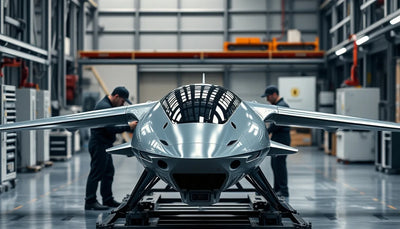
Joby Aviation Stock Down 56% in 2026 as Valuation Questioned
Joby Aviation shares have fallen 56.1% year to date, shifting investor attention to book value and what the electric air taxi company is actually worth. The decline raises broader questions about how commercial drone and advanced air mobility valuations are being reassessed.

Quick answer
Joby Aviation shares have fallen 56.1% year to date in 2026, putting fresh focus on how the company's market value compares to its book value, according to Yahoo Finance market reporting.
- Joby Aviation stock is down 56.1% year to date in 2026.
- The company has been flying electric air taxis in Texas and sending an autonomous aircraft on a cross-country tour.
- Investor attention has shifted to the relationship between market value and book value.
- The decline reflects broader pressure on advanced air mobility and commercial drone-adjacent valuations.
Evidence: Source material · Joby Aviation investor relations
Purchase timing
Use market shifts to buy, sell, repair, or wait with more context.
Compare trade-in timing, pre-owned DJI pricing, and repair economics before committing new capital.

Joby Aviation has spent much of 2026 demonstrating electric air taxi flights around Texas and sending an autonomous aircraft on a cross-country tour, yet the company's share price has moved sharply in the opposite direction. According to Yahoo Finance market reporting, Joby Aviation shares are down 56.1% year to date, a decline that has shifted investor attention toward what the company is actually worth on its balance sheet.
The stock slump raises a direct question for anyone watching the commercial drone and advanced air mobility sector: when a high-profile electric aircraft developer loses more than half its market value in a single year, what does that signal about how the broader market is pricing airborne autonomy, electric propulsion, and the long road to commercial scale? For drone operators, fleet buyers, and repair customers, the answer matters even if they never touch a Joby aircraft.
The valuation reset behind the 56% decline
Yahoo Finance market reporting frames the central issue as a comparison between Joby Aviation's current market value and its book value. The source notes that with the stock under pressure, the open question is how today's market value lines up with the company's book value. That is a significant shift in investor language. Earlier in the electric air taxi cycle, the conversation centered on total addressable market, certification timelines, and the promise of urban air mobility. Now the focus has narrowed to balance sheet fundamentals.
For commercial drone operators, this is a familiar pattern. Early-stage hardware and aviation companies often trade on narrative before they trade on earnings. When the narrative weakens, investors revert to tangible measures: cash on hand, asset values, and the gap between what a company owns and what the market says it is worth. The 56.1% year-to-date decline suggests that gap has become too wide for many investors to ignore.
Reboot Hub analysis: the valuation reset does not necessarily mean Joby Aviation's technology has failed. It means the market is no longer willing to pay a premium for unproven commercial scale. That is a useful signal for anyone budgeting long-term drone fleet investments, because it shows how quickly sentiment can shift when operational milestones do not translate into financial performance.
What the electric air taxi pressure means for commercial drone markets
Joby Aviation operates in the advanced air mobility segment, which sits adjacent to the commercial drone industry rather than inside it. But the two markets share suppliers, certification challenges, battery constraints, and investor expectations. When a prominent electric aircraft developer sees its valuation compressed, the ripple effect can reach drone manufacturers, component suppliers, and service providers that depend on the same capital environment.
The source highlights that Joby has been busy flying electric air taxis around Texas and sending an autonomous aircraft on a cross-country tour. Those are real operational activities, not just slideware. Yet the stock has fallen anyway. That disconnect is instructive. It suggests that even visible flight demonstrations are not enough to support premium valuations when the path to revenue remains long and capital-intensive.
For commercial drone buyers, the practical takeaway is caution around long-term supply assumptions. Companies that are burning cash while pursuing certification may face pressure to raise capital, delay programs, or consolidate. That can affect the availability of parts, service contracts, and follow-on product lines. Fleet managers should avoid building operational plans around a single unproven supplier, especially in the electric aviation and autonomy space.
What this means for drone owners and the market
Most drone owners and repair customers are not directly exposed to Joby Aviation stock. But the valuation story matters because it reflects how the market is treating hardware-heavy aviation businesses in 2026. When investors demand tighter alignment between market value and book value, companies across the sector face more scrutiny on spending, inventory, and long-term viability. That scrutiny eventually reaches the parts counter and the service bench. For owners evaluating service and lifecycle risk, Drone Wiki explains the relevant repair, parts, resale, or operational path.
For operators running pre-owned DJI drones or managing mixed fleets, the Joby decline is a reminder that hardware value depends on serviceability and parts availability. A company that cannot defend its valuation will eventually face questions about its ability to support products in the field. Reboot Hub analysis: the pre-owned DJI market tends to hold up better when buyers can access genuine OEM spare parts and professional repair support, because serviceability is a concrete form of book value for an aircraft owner. Operators who want to protect their fleet investment can review maintenance and parts options through the Drone Wiki.
The operator-facing answer here is straightforward: do not assume that today's high-profile electric aviation company will be tomorrow's reliable service provider. Buyers, pilots, and fleet managers should evaluate any drone or air mobility purchase partly on the strength of the company's balance sheet and its demonstrated ability to support products over time. A 56% stock decline is not just a finance headline; it is a warning about durability.
Reading the signal for procurement and resale planning
Yahoo Finance market reporting describes Joby Aviation's stock as looking fully priced following its 56% slump. That phrasing suggests the decline may have brought the valuation closer to a defensible level, but it also implies that the previous premium is gone. For procurement teams, that is a meaningful distinction. A company that was once priced for perfection is now being priced for execution.
In the pre-owned drone market, similar logic applies. Buyers pay a premium for inspected pre-owned DJI drones when they believe the hardware has remaining useful life and access to OEM-pulled parts. When confidence in a manufacturer or service ecosystem weakens, resale values adjust. The Joby story is a large-scale version of that same dynamic: market value correcting toward what the underlying assets can actually support.
Fleet managers should treat this as a reminder to stress-test any long-term procurement plan. If a supplier's valuation is falling, ask whether that supplier can still honor warranties, maintain parts inventories, and fund future product development. The answers will shape whether a fleet purchase is a durable asset or a depreciating risk.
FAQ
Frequently asked questions
Why is Joby Aviation stock down in 2026?
According to Yahoo Finance market reporting, Joby Aviation shares are down 56.1% year to date in 2026, which has shifted investor attention to how the company's market value compares to its book value.
Does the Joby Aviation decline affect commercial drone operators?
The decline does not directly change commercial drone operations, but it signals tighter investor scrutiny on hardware-heavy aviation companies, which can affect parts availability, service support, and long-term supplier stability across the sector.
What should drone buyers or fleet managers do differently after this news?
Buyers and fleet managers should evaluate any drone or air mobility purchase partly on the strength of the company's balance sheet and its demonstrated ability to support products over time, rather than assuming today's high-profile developer will remain a reliable service provider.
Which sources support this update?
The visible evidence links identify Source material and Joby Aviation investor relations; each source is used only for the claim it directly supports.
What remains subject to change?
Retail pricing, availability, product bundles and regulatory timelines can change. Readers should verify the latest terms with the named retailer, manufacturer or regulator before acting.
How should buyers or operators use this analysis?
Use the verified facts as a starting point, then compare mission fit, lifecycle support, maintenance needs and current procurement terms before making a purchase or fleet decision.
This article is market commentary for drone operators and buyers, not investment advice. Reboot Hub does not recommend securities transactions.
Konsultierte Quellen
- Source material - primary source
- Joby Aviation investor relations - company investor information
Die Redaktion von Reboot Hub liefert Käufer-, Reparatur-, Wiederverkaufs- und Betriebsanalysen für Drohnenbesitzer. Sollten Sie einen Fehler finden, kontaktieren Sie uns für eine Korrekturprüfung gemäß unseren Redaktionsrichtlinien.
Dieser Artikel ist ein Marktkommentar für Drohnenbetreiber und -käufer und stellt keine Anlageberatung dar. Reboot Hub bietet keine Finanzberatung und empfiehlt keine Wertpapiertransaktionen.