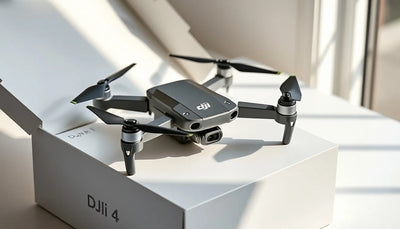
DJI Expands Agras Lineup: T55 and T100 Dual Battery for Farming
DJI has globally launched two new Agras drones, the T55 and T100 Dual Battery Spraying System, expanding precision agriculture options for small farms and large-scale operations. We analyze what this means for buyers, fleet planning, and the pre-owned market.

DJI has taken the wraps off two new entries in its agricultural drone lineup, debuting the Agras T55 and the Agras T100 Dual Battery Spraying System on the global stage. Announced by DroneDJ on July 2, 2026, the pair signals a notable expansion of DJI Agriculture’s portfolio, broadening the company’s decade-plus of research into aerial spraying, spreading, and lifting. For commercial operators who own existing Agras models, fleet managers considering an upgrade, and buyers weighing new vs. pre-owned DJI drones, the launch introduces fresh variables to the decision cycle.
The new aircraft are designed to handle a range of farm sizes—from small orchards to sprawling fields—and aim to boost efficiency while improving safety. DJI Agriculture has been a driving force in precision farming for years, and these models appear to target gaps in the existing lineup. While the source does not provide technical specifications such as payload capacity, flight time, or coverage rates, the strategic positioning is clear: DJI wants to offer more segmentation between its agricultural platforms, giving operators a clearer choice between a compact dual-battery system and a higher-capacity mainline sprayer. This analysis focuses on what the global announcement means for buying decisions, fleet planning, the pre-owned DJI market, and repair services.
What the new Agras models tell us about DJI's agricultural strategy
The Agras T55 and the Agras T100 Dual Battery Spraying System are not just incremental refreshes. According to the source, DJI specifically created the T100 as a dual-battery configuration, a departure from the single-battery setup common in earlier Agras generations. Dual-battery architecture typically offers operators hot-swappable power for extended mission cycles, reduced downtime between flights, and redundancy for safety during critical spraying operations. That matters for large-scale spreading and lifting tasks where uninterrupted workflow directly affects cost per acre.
Industrial drone procurement
Source a brand-new industrial drone for this mission.
Discuss mission fit, aircraft model, quantities, configuration, pickup, and lifecycle support with Reboot Hub.

The T55, meanwhile, appears to be positioned as a more traditional large-platform aircraft, likely targeting operators who need maximum tank volume and range for broad-acre farming. The fact that DJI is splitting the lineup into two distinct form factors rather than one do-everything platform suggests a segmentation strategy: smaller growers or orchards may gravitate toward the dual-battery option for its flexibility, while professional spraying contractors might prefer the T55 for high-volume jobs. This is similar to how DJI has segmented its consumer and enterprise camera drones, but now applied to the agricultural vertical. For fleet operators, this means more careful platform selection at purchase time, because mixing both models could create inventory complexity but also allow task-specific deployment.
From a commercial intelligence standpoint, the global debut also hints at DJI’s confidence in the agricultural drone market’s growth trajectory. The company invested in a dedicated Agras ecosystem, including spreaders, remote controllers, and software, and these new models reinforce that commitment. Buyers in the second-hand market should note that older Agras models—such as the T30 or T40—may see accelerated depreciation as these new options enter the field. Fleet managers upgrading to T55 or T100 might consider trading in their older units, which can be a smart move through a structured drone trade-in guide to maximize residual value before prices drop further.
Practical implications for precision agriculture operations
For drone operators already running Agras platforms, the arrival of the T55 and T100 creates both opportunity and a planning challenge. The source emphasizes that the new drones are designed for "everything from orchards and small farms to large-scale field operations." If you operate a mixed fleet with a T30 for small plots and a T40 for large fields, the T100 Dual Battery system could potentially replace both with a single model that offers dual-battery flexibility and decent capacity. But without confirmed specs, it’s impossible to know exactly how the payload and flight time compare to existing models. Operators should wait for detailed product pages or third-party reviews before committing capital.
One concrete takeaway is that DJI is prioritizing safety improvements in these new aircraft. The source notes that the development aims to make spraying, spreading, and lifting “more efficient while improving safety.” For repair customers and fleet managers, safety enhancements often translate to new sensor suites, advanced obstacle detection, or redundant flight controllers. If the T55 and T100 include upgraded safety hardware, older Agras models may become more expensive to insure or operate from a risk perspective. That could accelerate the decision to retire older units and invest in newer ones. In the meantime, ensuring your current fleet receives professional DJI repair services with genuine OEM spare parts remains critical to maintaining safety standards and resale value.
Another implication: the global debut means the T55 and T100 will be sold through DJI’s agricultural dealer network in multiple regions, not just a single market. That suggests regulatory approvals (such as NDAA compliance or local import bans) are either already handled or expected to be managed per region. Buyers in the US should check whether the new models adhere to any federal restrictions that may apply to DJI drones—though the source does not address this. For commercial drone buyers, due diligence on local compliance is always essential before purchasing any new platform, especially for agricultural spraying where precision and chemical safety are at stake.
What this means for drone buyers
If you are in the market for an agricultural drone—whether for a single farm or as a contractor covering thousands of acres—the Agras T55 and T100 present a new set of trade-offs. The most immediate question is whether to buy new or opt for a pre-owned DJI drone from a previous generation. The launch of these models will likely increase the supply of used Agras T20, T30, and T40 units as early adopters upgrade. That could create a favorable window for budget-conscious operators to acquire capable spraying platforms at lower prices. However, caveats include reduced dealer support for older models, potential difficulty sourcing OEM spare parts as DJI shifts focus, and the absence of new safety or efficiency improvements.
For those committed to purchasing new, the choice between the T55 and T100 Dual Battery appears to hinge on operational scale and power system preference. Small orchards and variable terrain farms might benefit more from a dual-battery system’s flexibility, while large, flat fields may suit the T55’s presumed higher payload. DJI has not published specs, so buyers should request detailed datasheets from authorized dealers or attend field demonstrations. Also consider total cost of ownership: battery packs, chargers, spare parts, and software subscriptions. A dual-battery system generally requires more batteries per aircraft, raising initial investment but potentially lowering per-battery cycle wear.
For pre-owned market readers, this is an ideal time to monitor pricing trends. The introduction of new DJI models historically pushes down prices on similar older models by 10–20% within three months. If you have been waiting to buy a used Agras T40, consider waiting until Q4 2026 to see the full effect. Alternatively, if you currently own an older Agras and plan to upgrade, act quickly to sell while the new models are still fresh and demand for pre-owned DJI drones remains high. A structured trade-in program, such as the one detailed in the drone trade-in guide, can help lock in a better value before the market adjusts.
Impact on repair and spare parts ecosystem
Every major drone launch creates ripple effects for repair services and parts supply. The Agras T55 and T100 will introduce new OEM spare parts—such as propellers, motors, spray booms, and battery connectors—that may not be interchangeable with previous generations. Fleet operators who maintain a deep stock of spares for older Agras models should evaluate whether DJI will continue producing those parts for the next two to three years. Typically, DJI supports a model line for about five years after launch, but as new platforms gain traction, older parts can become harder to source quickly. Using a repair partner that stocks a wide range of genuine OEM spare parts—and offers professional DJI repair services—becomes more important for minimizing downtime during peak spraying seasons.
For repair customers, the dual-battery architecture on the T100 may bring unique maintenance considerations. Dual power systems can complicate diagnostics, as both batteries and their management boards must be checked during repairs. Additionally, the safety improvements mentioned in the source may involve additional sensors or redundancy that increase the complexity of airframe repairs. If you are a self-maintained operator, consider enrolling in DJI’s agricultural repair training or partnering with a certified service center. The higher complexity can also affect the pre-owned market: a well-maintained T40 with good service history may hold value longer if the T55 proves more difficult to repair outside of an authorized network. For now, the safest path forward is to keep all Agras aircraft under a consistent inspection and firmware update schedule, and to use only genuine OEM components for any replacement.
Should I buy a new DJI Agras T55 or wait for prices on used models to drop?
That depends on your timeline and budget. If you need a sprayer immediately for the current growing season, buying new ensures full warranty and dealer support. If you can wait until late 2026 or early 2027, the influx of trade-in units should lower prices on pre-owned DJI drones like the Agras T40. Evaluate the total cost including batteries and accessories, and factor in any potential safety improvements that may reduce insurance premiums.
Will the Agras T100 Dual Battery work with my existing DJI remote and spreader?
The source does not confirm compatibility with existing hardware. DJI tend to keep ecosystem continuity, but the dual-battery architecture may require a new battery charger and possibly a different remote controller. Check with your dealer before assuming backward compatibility. If you already own Agras accessories, it may be worth waiting for official compatibility lists to avoid sunk costs.
How does the launch of the T55 and T100 affect the resale value of my older Agras T30?
Historically, DJI product launches cause a depreciation of two to three previous generations within a few months. The T30 is several years old, so its resale value is likely to decline further as buyers shift focus to the new models. If you plan to sell, consider doing so soon through a trade-in program or private sale before price drops accelerate. Alternatively, keep the T30 if it still meets your farm’s needs and its maintenance costs are low.