Russia Uses North Korean Labor in Drone Production, Report Says
A South China Morning Post report says Russia is drawing on North Korean workers to build drones for its war in Ukraine. The development adds another layer of scrutiny to drone supply chains and raises questions for commercial operators tracking production, parts sourcing, and resale risk.

Quick answer
A South China Morning Post report says Russia is employing North Korean workers to build drones for its war in Ukraine.
- The report points to expanded defense-industrial cooperation between Russia and North Korea.
- The development adds supply chain and compliance scrutiny to drone manufacturing.
- Commercial operators may see indirect effects on parts availability and market trust.
- Drone buyers and repair customers should watch how this shapes global drone trade flows.
A new report from the South China Morning Post says Russia is employing North Korean workers to help build drones used in its war against Ukraine. The reporting, drawn from industry and open-source observations, describes a deepening defense-industrial relationship between Moscow and Pyongyang that now extends into unmanned aerial vehicle production.
Market context
Turn market news into a buy, repair, or trade-in decision.
Compare pre-owned availability, resale timing, and repair economics before the market moves again.

The development matters beyond the battlefield. Drone manufacturing has become a global supply chain story, and any shift in where labor, components, and assembly capacity come from can ripple into commercial markets, trade compliance, and how buyers evaluate the origin of the hardware they fly.
What the report says about the production arrangement
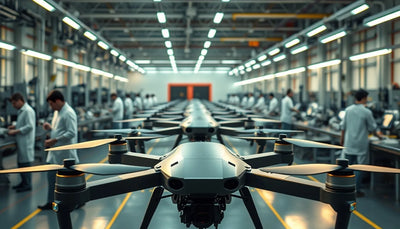
The South China Morning Post report indicates that North Korean personnel are involved in drone manufacturing work tied to Russia's war effort. The arrangement reflects broader military and industrial cooperation between the two countries, which has included ammunition transfers, artillery support, and now technical labor for unmanned systems.
For commercial operators, the key takeaway is not the battlefield detail but the supply chain signal. When state-aligned labor enters a production pipeline, it changes how finished hardware and components are documented, traced, and potentially restricted. Buyers who rely on clear provenance for fleet purchases or resale should treat this as a reminder that drone manufacturing is increasingly shaped by geopolitical alignment rather than purely commercial logic.
Why drone supply chains are under new scrutiny
Drone production has moved from a niche electronics segment into a strategically sensitive industry. Governments now track component flows, assembly locations, and labor sources far more closely than they did five years ago. The reported use of North Korean workers in Russian drone building is one more data point in that shift.
Reboot Hub analysis suggests that commercial buyers may see indirect consequences. Tighter export controls on drone components, greater documentation requirements for cross-border sales, and more cautious financing for drone inventory are all plausible second-order effects. None of this is confirmed in the source, but the direction of travel is consistent with how defense-adjacent supply chains have behaved in recent years.
What this means for drone owners and the market
For drone owners, fleet managers, and repair customers, the report is a signal to pay closer attention to where hardware comes from and how it is documented. A pre-owned DJI drone with clear purchase history and verified OEM components becomes more valuable when the broader market is dealing with murkier supply chains. Buyers who once focused only on price and flight hours may now ask harder questions about parts provenance and service history. For owners evaluating service and lifecycle risk, Drone Wiki explains the relevant repair, parts, resale, or operational path.
That shift benefits operators who maintain disciplined records and work with repair providers that use genuine OEM spare parts. As global drone trade becomes more politically sensitive, transparent sourcing is a commercial advantage. Reboot Hub's Drone Wiki is one reference point for owners who want to understand how drone hardware, repair, and market value connect in a changing supply environment.
The practical step for buyers and fleet managers is straightforward: document everything. Keep purchase records, repair invoices, and parts receipts organized. If resale or insurance questions arise, a clean paper trail is the difference between a smooth transaction and a discounted one.
What to watch next in drone trade and policy
The reported Russia-North Korea production arrangement is unlikely to change commercial drone pricing overnight, but it adds pressure to an already tense trade environment. Export control agencies, customs authorities, and industry groups are all watching drone component flows more closely. Any new restrictions on dual-use electronics or manufacturing equipment would affect both military and civilian drone markets.
For now, the most useful posture is monitoring rather than reacting. Commercial operators should track whether this report leads to new sanctions, export license changes, or component shortages in specific categories. The drone market has proven resilient to geopolitical shocks, but resilience depends on visibility. Buyers who understand their supply chain are better positioned than those who do not.
FAQ
Frequently asked questions
Does this report affect commercial drone buyers directly?
Not directly in most cases. The reported arrangement concerns Russian military drone production, not consumer or enterprise drone sales. The indirect effect comes through supply chain scrutiny, export controls, and market trust.
Should drone owners be more careful about parts sourcing now?
Yes. As global drone trade faces more regulatory attention, documentation and parts provenance matter more. Buyers and repair customers should favor clear records and genuine OEM components.
What should a fleet manager do after reading this report?
Review current inventory documentation and parts sourcing practices. Ensure purchase and repair records are complete, and monitor export control developments that could affect drone component availability or pricing.
Which sources support this update?
The article distinguishes reported information from analysis and does not present an unverified source as official confirmation.
What remains subject to change?
Retail pricing, availability, product bundles and regulatory timelines can change. Readers should verify the latest terms with the named retailer, manufacturer or regulator before acting.
How should buyers or operators use this analysis?
Use the verified facts as a starting point, then compare mission fit, lifecycle support, maintenance needs and current procurement terms before making a purchase or fleet decision.
Konsulterede kilder
- South China Morning Post via Google News - primary source
Yderligere officiel dokumentation var ikke tilgængelig på udgivelsestidspunktet.
Reboot Hub Editorial tilføjer analyse af køb, reparation, gensalg og drift for droneejere. Hvis du finder en fejl, bedes du kontakte os for en korrekturgennemgang i henhold til vores redaktionelle politik.