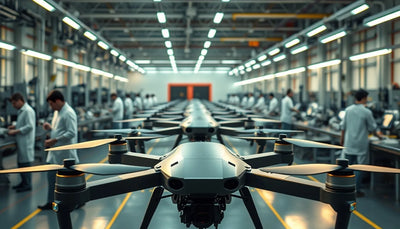
NATO-Backed Test Drone Selected Its Own Target and Struck It
A NATO-backed test drone reportedly picked an armored vehicle on a Swedish range and struck it without direct human command. DroneXL.co reports the Scaleout ALMA system made the engagement decision onboard. The test sharpens questions about autonomy, liability, and how commercial operators may be affected downstream.

Quick answer
A NATO-backed test drone reportedly used onboard AI to select an armored vehicle on a Swedish range and strike it without direct human command, according to DroneXL.co.
- Scaleout's ALMA system reportedly made the targeting decision onboard during a Swedish test range exercise.
- The engagement occurred without direct human command, according to the DroneXL.co report.
- Geneva policy discussions on autonomous weapons remain unresolved.
- The test may influence defense procurement, autonomy policy, and downstream commercial drone market expectations.
Evidence: DroneXL.co · Defense.gov official source
Fleet readiness
Keep DJI hardware available without overbuying new units.
Use defense and fleet news as a planning signal for repair support, inspected pre-owned aircraft, and replacement timing.

A NATO-backed drone reportedly identified an armored vehicle on a Swedish test range and struck it without a direct human command, according to a September 18 report from DroneXL.co. The system, attributed to Scaleout and referred to as ALMA, is described as using onboard AI to make the targeting decision during the exercise. The report frames the event as a live demonstration of autonomous engagement capability, with policy debates in Geneva still unresolved.
For commercial drone operators, fleet managers, and repair-focused businesses, the test matters less as a battlefield headline than as a signal. Autonomy is moving from white papers and simulation into physical systems with real engagement authority. That shift will eventually shape procurement expectations, regulatory language, insurance questions, and the secondary market for drone hardware.
What the source actually reports
DroneXL.co is the primary reporting source for this development. The report states that Scaleout's onboard AI picked an armored vehicle out of a Swedish test range and struck it with no direct human command. The article places the event in a NATO-backed testing context and notes that Geneva-based policy discussions on autonomous weapons continue without a settled framework.
Reboot Hub analysis should be careful here. The source does not provide verified technical specifications, sensor details, engagement ranges, flight duration, or the specific NATO program office involved. Those operational details are not confirmed in the available reporting. What is confirmed is narrow but significant: a test reportedly occurred, the decision was made onboard, and the strike happened without direct human command.
The absence of confirmed specification data matters for commercial readers. Defense autonomy programs often generate downstream technology transfer into enterprise inspection, mapping, and logistics drones. But without verified specs, operators should treat this as a policy and market-direction story rather than a hardware benchmark.
Why autonomous engagement changes procurement thinking
Defense buyers have historically separated reconnaissance autonomy from strike autonomy. A drone that finds a target is different from a drone that decides to engage a target. The DroneXL.co report suggests that boundary is being tested in a live environment, even if the exact rules of engagement and human oversight parameters are not disclosed.
For fleet planners and enterprise operators, the implication is that autonomy claims are becoming more aggressive across the industry. A system that can make targeting decisions onboard will influence how vendors market lower-stakes autonomous features such as obstacle avoidance, automated inspection routing, and hands-off mission execution. Buyers should expect autonomy language in procurement documents to become more specific about decision authority, fallback behavior, and human override points.
The pre-owned DJI market may feel this indirectly. DJI dominates commercial camera and inspection workflows, and its autonomous flight features are already a selling point for mapping and agricultural operators. If defense autonomy testing accelerates public and regulatory attention on onboard decision-making, commercial platforms with strong autonomous modes could see renewed scrutiny. That does not change the hardware value overnight, but it may shift how operators document training, maintenance, and firmware settings when reselling inspected pre-owned units.
What this means for drone owners and the market
The most immediate commercial read is that autonomy is becoming a procurement differentiator, not just a research topic. DroneXL.co's report places the Scaleout ALMA test inside a NATO-backed context, which suggests institutional interest in systems that reduce human latency in the decision loop. For commercial buyers, that means vendors will increasingly pitch autonomy as a productivity feature, even in non-defense categories.
Operators should ask harder questions before buying or upgrading. Does the platform make decisions onboard, or does it rely on a ground station? What is the human override path? How is the decision log stored? These questions matter for insurance, compliance, and resale value. A drone with unclear autonomy behavior may be harder to insure and harder to sell later.
For repair and maintenance businesses, the test is a reminder that software-defined autonomy changes failure modes. A drone that makes onboard decisions requires firmware integrity, sensor calibration, and log review as part of routine service. When operators bring in units for professional DJI repair or OEM-pulled parts replacement, shops that understand autonomy-related diagnostics will have an advantage. The Reboot Hub Drone Wiki is a useful reference for operators tracking how autonomy features affect maintenance and resale decisions. For owners evaluating service and lifecycle risk, Drone Wiki explains the relevant repair, parts, resale, or operational path.
There is also a regulatory overhang. The DroneXL.co report notes that Geneva discussions remain unresolved. If international talks eventually produce autonomy restrictions, defense contractors may shift resources toward human-supervised systems. That could slow or accelerate certain commercial autonomy features depending on how broadly any future rules are written. Operators should monitor this space without assuming immediate impact on civilian drone rules.
What operators should watch next
The next useful signal will be whether Scaleout or the relevant NATO program publishes verified test parameters, human oversight details, or engagement criteria. Until then, the DroneXL.co report stands as the primary public account, and operators should treat unconfirmed technical claims with appropriate caution.
Fleet managers should review how their current platforms log autonomous decisions. If a drone can alter its flight path or mission behavior without pilot input, that capability should be documented in training records and maintenance logs. Buyers considering new enterprise hardware should ask vendors for clear autonomy documentation before purchase.
For the pre-owned market, autonomy features are becoming part of resale value. A well-documented unit with clear firmware history and verified OEM-pulled parts will hold value better than a unit with unclear software provenance. As defense autonomy testing raises public awareness, commercial buyers may start asking the same questions defense procurement officers ask: who decides, and how is that decision recorded?
FAQ
Frequently asked questions
Did the drone really strike a target without human command?
According to the DroneXL.co report, the Scaleout ALMA system picked an armored vehicle on a Swedish test range and struck it with no direct human command. The report is the primary source, and no independent official confirmation was available in the source data.
What does this mean for commercial drone operators?
Commercial operators should expect autonomy language to become more specific in procurement, insurance, and resale conversations. Buyers should document how their platforms make onboard decisions and maintain clear firmware and maintenance records.
Does this affect the pre-owned DJI drone market?
Indirectly, yes. Increased attention on autonomous decision-making may push buyers to ask more questions about software history, firmware integrity, and documented maintenance when purchasing inspected pre-owned DJI drones or OEM-pulled parts.
Which sources support this update?
The visible evidence links identify DroneXL.co and Defense.gov official source; each source is used only for the claim it directly supports.
What remains subject to change?
Retail pricing, availability, product bundles and regulatory timelines can change. Readers should verify the latest terms with the named retailer, manufacturer or regulator before acting.
How should buyers or operators use this analysis?
Use the verified facts as a starting point, then compare mission fit, lifecycle support, maintenance needs and current procurement terms before making a purchase or fleet decision.
Konsulterede kilder
- DroneXL.co - primary source
- Defense.gov official source - official government source
Reboot Hub Editorial tilføjer analyse af køb, reparation, gensalg og drift for droneejere. Hvis du finder en fejl, bedes du kontakte os for en korrekturgennemgang i henhold til vores redaktionelle politik.