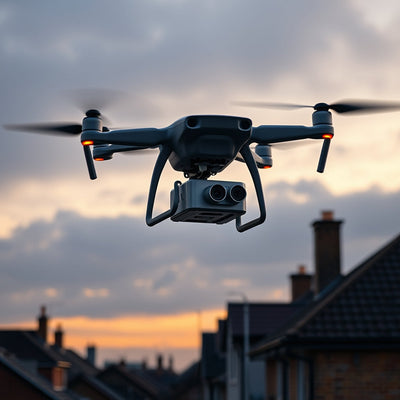
DJI Pushes 25-Second Enterprise Drone Turnaround
DJI is reportedly targeting a 25-second gap between enterprise drone flights, a shift that could reshape inspection, mapping, and public safety workflows. Faster redeployment matters for fleet planning, battery strategy, and the pre-owned DJI market.

Quick answer
DJI is reportedly aiming for a 25-second turnaround between enterprise drone flights, according to a DroneDJ report.
- The 25-second target applies to enterprise drone operations, not consumer models.
- Faster redeployment could reduce downtime for inspection, mapping, and public safety teams.
- Operators may need to rethink battery inventory and charging workflows.
- The shift could influence pre-owned DJI enterprise drone demand and spare battery pricing.
DJI is reportedly working toward a 25-second turnaround window for its enterprise drones, according to a DroneDJ report published through Google News. The detail is thin on official confirmation, but the direction is commercially significant: DJI appears to be pushing the operational tempo of its enterprise fleet beyond what many inspection, mapping, and public safety teams currently plan for.
DJI buying context
Match product news to hardware you can actually deploy.
Check inspected DJI aircraft, repair support, and trade-in timing before deciding whether to upgrade, repair, or wait.

For commercial operators, a 25-second gap between flights is not simply a convenience metric. It changes how battery inventories are sized, how charging stations are deployed in the field, and how mission planning software sequences consecutive flights. It also raises questions about thermal management, battery health, and the long-term service economics of high-utilization enterprise drones.
What the source actually reports
The central claim comes from DroneDJ, which reported that DJI wants its enterprise drones back in the air in 25 seconds. The report does not specify a particular model, firmware version, or launch date, and no official DJI statement is included in the source material. Reboot Hub analysis should therefore treat this as an industry report rather than a confirmed product specification.
Still, the direction is consistent with how DJI has positioned its enterprise line in recent years. Enterprise platforms are increasingly sold as integrated workflow tools rather than standalone aircraft. Faster redeployment would support continuous inspection loops, rapid-response public safety missions, and high-volume mapping operations where every minute of downtime reduces billable output.
The practical question for operators is not whether DJI can hit the 25-second mark in a controlled demo, but whether that pace is sustainable across a full shift without degrading battery performance or increasing thermal stress on the airframe and sensors.
Battery strategy and operational tempo
A 25-second redeployment target puts pressure on battery logistics more than any other part of the drone workflow. If an enterprise team is flying consecutive missions with minimal ground time, the limiting factor quickly becomes the number of charged, healthy batteries available at the launch point.
Operators who currently fly with three or four batteries per aircraft may need to reconsider their inventory. Fast turnaround means batteries are cycled more frequently, which accelerates wear and shortens the practical service life of each pack. That has direct implications for procurement: buying genuine OEM batteries becomes more important when packs are pushed harder, and the cost of a failed or degraded battery shows up immediately in mission downtime.
Charging infrastructure also becomes a constraint. Standard single-bay chargers may not keep pace with a 25-second flight-to-flight rhythm. Field teams may need multi-bay charging stations, vehicle-mounted power systems, or pre-staged battery caches at remote launch sites. This is an operational planning issue, not just a hardware preference.
What this means for drone owners and the market
For fleet managers and independent operators, the reported 25-second target should prompt a review of current battery rotation practices, charging capacity, and spare parts readiness. A drone that can redeploy quickly is only as useful as the support equipment around it. Teams that invest in faster turnaround without upgrading battery logistics will simply move the bottleneck from the aircraft to the ground station.
There is also a pre-owned market angle worth watching. If DJI enterprise drones become capable of faster mission cycling, older platforms that cannot match that pace may see softer resale demand. Conversely, well-maintained pre-owned enterprise drones with healthy battery inventories could become more attractive to budget-conscious operators who want the workflow benefits without paying full retail. Reboot Hub's Drone Wiki tracks how these operational shifts affect pre-owned DJI drone values, OEM-pulled parts availability, and professional repair decisions across the commercial market. For owners evaluating service and lifecycle risk, Drone Wiki explains the relevant repair, parts, resale, or operational path.
Repair service demand may also shift. Higher utilization means more flight hours per week, which accelerates wear on motors, gimbals, landing gear, and sensor payloads. Operators who adopt faster turnaround workflows should expect shorter maintenance intervals and should plan for genuine OEM spare parts rather than waiting for a failure to occur mid-contract.
What operators should watch next
The most important next step is confirmation. If DJI formalizes the 25-second target through a product launch, firmware update, or enterprise workflow announcement, operators will need to evaluate whether their current fleet can participate. Software-driven turnaround improvements may apply broadly, while hardware-level changes could be limited to newer platforms.
In the meantime, commercial operators can take one concrete action: audit their current flight-to-flight time and identify the largest source of delay. For most teams, the bottleneck is battery handling, not aircraft boot time or controller linking. Reducing that ground time through better battery staging and charging discipline may deliver meaningful productivity gains even before any DJI update arrives.
The broader signal is that enterprise drone competition is moving beyond flight time and camera specs toward operational tempo. A drone that spends less time on the ground is a drone that generates more revenue per shift. That is the metric procurement teams should be watching.
FAQ
Frequently asked questions
Is DJI officially confirming a 25-second enterprise drone turnaround?
No. The 25-second target is reported by DroneDJ, but no official DJI statement or product specification is included in the source material. Treat it as an industry report until confirmed.
Which DJI enterprise drones are affected by the 25-second target?
The source does not specify a particular model. The report refers broadly to DJI enterprise drones, so operators should wait for official clarification on which platforms and firmware versions may be involved.
What should fleet managers do differently after this report?
Fleet managers should audit their current flight-to-flight time and battery logistics. If faster redeployment becomes standard, teams with weak charging infrastructure or thin battery inventories will struggle to benefit from the improvement.
Which sources support this update?
The article distinguishes reported information from analysis and does not present an unverified source as official confirmation.
What remains subject to change?
Retail pricing, availability, product bundles and regulatory timelines can change. Readers should verify the latest terms with the named retailer, manufacturer or regulator before acting.
How should buyers or operators use this analysis?
Use the verified facts as a starting point, then compare mission fit, lifecycle support, maintenance needs and current procurement terms before making a purchase or fleet decision.
Konsulterede kilder
- DroneDJ via Google News - primary source
Yderligere officiel dokumentation var ikke tilgængelig på udgivelsestidspunktet.
Reboot Hub Editorial tilføjer analyse af køb, reparation, gensalg og drift for droneejere. Hvis du finder en fejl, bedes du kontakte os for en korrekturgennemgang i henhold til vores redaktionelle politik.