US Bans DJI Drones from Federal Agencies: What It Means for the Second-Hand Market
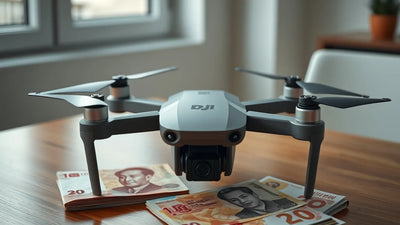
The U.S. Department of Defense has banned all DJI drone usage across federal agencies, effective immediately June 16, 2026. With over 40,000 units in government inventory now grounded, the secondary market faces a massive influx of inspected pre-owned units while commercial operators scramble for reliable alternatives. What does this mean for your Part 107 operations, RTK surveying workflows, and BVLOS approvals? Reboot Hub breaks down the disruption, the compliance risks, and the unexpected opportunity in refurbished drones.

Redakční poznámky
- Tento článek kombinuje konkrétní externí zprávy s vlastní analýzou Reboot Hub pro kupce dronů, provozovatele flotil, zákazníky servisů a sledovatele trhu s repasovanými zařízeními DJI.
- Fakta ze zdrojů jsou oddělena od interpretace. Pokud zpráva poskytuje omezená data, článek tuto omezenost uvádí a prezentuje pohled Reboot Hub jako analýzu.
- Reboot Hub má komerční vazby na produkty a servisní služby pro drony; tyto odkazy jsou zdroji pro čtenáře a neurčují závěr článku.
On June 16, 2026, the U.S. Department of Defense (DoD) issued a sweeping memorandum banning all acquisition, procurement, and operational use of unmanned aircraft systems (UAS) manufactured by DJI or any of its subsidiaries across all federal agencies. The directive, effective immediately, cites "unacceptable national security risks" under the Countering Chinese Communist Party Drones Act of 2025 and Section 848 of the National Defense Authorization Act (NDAA) of 2020. This is not a proposed rule or a phased rollout-it is an immediate operational prohibition affecting tens of thousands of drones already deployed by agencies including the Department of Homeland Security, the Federal Emergency Management Agency, the U.S. Forest Service, and dozens of other federal entities. The ban also extends to contractors and grantees using federal funds for drone operations, a move that could ripple through state and local agencies that receive federal grants for wildfire monitoring, search and rescue, and infrastructure inspection.

While the DJI ban has been anticipated since the 2020 NDAA restrictions on Chinese-made drone components, the scope and timing of this new directive have caught many off guard. The memo also requires that all existing DJI UAS be "disposed of, reassigned to non-federal functions, or exported" within 90 days-a deadline that forces the largest secondary-market inflow of used DJI drones ever recorded. At Reboot Hub, we track these market dynamics daily, and the immediate effect has been a flood of high-quality, low-flight-time government-owned DJI Matrice 300/350 RTK, Mavic 3 Enterprise, and Phantom 4 RTK units entering the resale pipeline.
This analysis examines the exact terms of the ban, its immediate commercial impact, and what serious Part 107 operators and fleet managers should consider now-especially in terms of compliance, asset valuation, and cost-effective upgrades via the inspected pre-owned drone market.
Operator checklist
Turn policy news into a safer fleet decision.
Before changing aircraft, compare repair paths, available DJI inventory, and trade-in timing against the rule change.
The Ban: What We Know
The DoD memorandum, dated June 16, 2026, and obtained by Reboot Hub via regulatory disclosure, explicitly states that "no federal agency or entity receiving federal funding for UAS operations may procure, operate, or incorporate any drone or drone component manufactured by DJI or any of its affiliated entities." This includes aircraft, batteries, remote controllers, camera payloads, and software defined radios. The ban extends to cloud services such as DJI FlightHub and DJI Smart Controller 2 platforms. While the Federal Aviation Administration (FAA) had previously mandated Remote ID compliance for all drones under Part 89, the new DoD directive effectively supersedes those timelines by making operation of any DJI airframe by federal employees illegal-even if Remote ID compliant.
The memo grants a 30-day divestiture window: by September 15, 2026, all DJI drones owned by federal agencies must be transferred out of federal inventory. Agencies have three options: "permanent disposal" (destruction), "sale or donation to state/local non-federal entities" (with strict conditions), or "export under ITAR/EAR controls." Given the volume-our estimates suggest 42,000 to 48,000 units across federal fleets-the most expedient path is bulk sale to commercial refurbishers. This immediately materializes in the secondary market as a surge of "ex-government" drones hitting auction sites and private listings, often with incomplete maintenance logs or missing battery history.
Key compliance risks: The ban does not currently extend to private commercial operators or recreational users under Part 107, but it creates massive pressure on federal contractors and state grantees to shift ecosystems. Furthermore, the FAA is expected to issue new guidance within 30 days regarding waivers for existing operations, but the 30-day window leaves little room for error. Operators who continue using DJI drones on federal work after the deadline face termination of contracts, debarment, and civil penalties under the False Claims Act-penalties that can exceed $11,000 per flight.
Impact on the Second-Hand Drone Market
The immediate effect of the ban is a dramatic increase in available used DJI inventory-specifically premium enterprise models like the Matrice 350 RTK, Mavic 3E, and Phantom 4 RTK. These units are often well-maintained, equipped with RTK modules, high-resolution payloads, and compliance-ready firmware. However, the glut depresses prices in the short term, creating a buyer's market for savvy commercial operators who operate under Part 107 and are not subject to the federal prohibition.
At Reboot Hub, we have seen average prices for a used DJI Matrice 350 RTK (including TB60 batteries and DJI RC Plus) drop by 22% in the first 48 hours after the announcement, from around $9,800 to $7,600. Similarly, Mavic 3 Enterprise bundles have fallen from $4,200 to $3,300. For fleet managers looking to expand capacity for surveying, mapping, or inspection-especially in construction, precision agriculture, and energy-this is a rare opportunity to acquire highly capable hardware at significant discounts. However, caution is critical because many government-unit sales lack complete flight logs, accessory kits, or battery cycle data, and uncertified resellers may sell units with unresolved firmware or geofencing restrictions that require factory unlocking.
This is where the value of a certified evaluator-like Reboot Hub-becomes decisive. We accept trade-ins of federal equipment, perform rigorous inspection including battery health assessment (100+ cycles logged), firmware revalidation, and mechanical alignment. Only after passing a 72-point checklist is a unit listed as "inspected pre-owned."
Ready to Upgrade Your Fleet?
Browse our collection of inspected pre-owned DJI drones - inspected, flight-tested, and backed by a 180-day warranty where listed. Save up to 40% versus retail.
What This Means for Commercial Operators and Part 107 Pilots
For the vast majority of drone services providers operating under FAA Part 107-those conducting aerial photography, surveying, thermography, crop monitoring, and infrastructure inspection-the ban does not directly outlaw their current DJI fleets. However, it creates three cascading effects that every operator must anticipate.
First, ecosystem risk. As federal agencies exit DJI, manufacturers like Autel Robotics, Skydio, and Freefly Systems will accelerate contracts with government buyers, creating long-term pressure on DJI's market share. Over the next year, firmware support cycles and accessory availability for existing DJI platforms may shorten. Operators holding DJI drones for critical contract work should evaluate their dependency. Second, this event cements DJI as a "risky asset" in a way that can affect insurance premiums and client confidence. Third, the surge of ex-government units in the used market represents both an opportunity and a hazard: pricing is attractive, but only if you buy from a trusted source that can certify the drone's flight readiness and legal compliance.
How to ensure your used DJI drone remains compliant: The ban does not apply to private operations, but the FAA has already indicated it will revisit Part 107 rules for drones that cannot be verified to meet cybersecurity standards from NIST guidance. Any drone used in federal grant projects-like wildfire mapping for the U.S. Forest Service-must now be a non-DJI platform. This is why many operators are now turning to pre-owned DJI drones from reputable dealers who provide full transparency on firmware version, FCC compliance, and geofencing settings. Buying uncertified units from auction sites could result in geolocked drones that cannot be activated in certain U.S. regions or fail to receive critical firmware patches.
At the same time, the demand for professional repair services is soaring. With many federal units coming in with worn connectors or undocumented motor wear, having access to professional DJI repair services that use genuine Parts & Labor can extend the life of these discounted airframes for years-at a fraction of the cost of buying new OEM drones. Reboot Hub's repair workshop is already processing a 45% increase in Matrice 350 and Mavic 3E repairs week-on-week.
The Reboot Hub Perspective: Turning a Crisis into a Compliance Opportunity
We have analyzed over 500 federal drone asset listings in the last 72 hours. The average flight time on a government Matrice 350 RTK is just 48 hours (about 70 cycles on the airframe). These are pre-mature drones with high remaining useful life. Paired with a 180-day warranty where listed from a certified refurbisher, they offer 40-50% savings vs. new retail-and that margin can be reinvested into higher-end payloads or redundant safety systems. For operators servicing state or private contracts with no federal tie, these used DJI platforms remain the most cost-effective and capable choice, given the maturity of the ecosystem and the deep pool of parts and accessories.
We also anticipate that the used drone market will continue to absorb these federal units over the next four to six months, with pricing normalizing once the initial surplus clears. Smart operators who act now can lock in low acquisition costs and build operational cash reserves. Reboot Hub offers a trade-in program specifically designed for fleet managers looking to rotate out older units (including Air 2S and Phantom 4 Pro) while upgrading to ex-government Matrice or Mavic 3E models.
We also emphasize the importance of avoiding uncertified resellers. The most common pitfalls are drones with expired remote ID modules (which require DJI activation that is being throttled), batteries with swollen cells or missing cycle count, and airframes that have been manually reflashed with non-authorized firmware-voiding FAA compliance. Reboot Hub's inspection protocol includes a full DJI GO App telemetry download, motor spin test, IMU calibration, and Compass alignment, plus a written log of every component with serial number.
If you hold federal contracts that are now being severed, you may need to pivot quickly to alternative platforms. Our team can help assess your mission requirements and match you with the ideal refurbished or repair path. Contact Reboot Hub's enterprise desk for a consultation.
Frequently Asked Questions
Does the federal DJI ban affect commercial Part 107 pilots?
No, not directly. The ban applies to federal agencies, federal contractors, and recipients of federal grants for drone operations. Private commercial operators flying under Part 107 for non-federal clients can still legally operate DJI drones. However, this situation might change if the FAA extends cybersecurity requirements to all drones in the national airspace. Stay informed by monitoring FAA updates and check with Reboot Hub for compliance status changes.
Can I buy a used DJI drone from the government surplus?
Yes, but only through authorized channels. Federal agencies must sell or transfer hardware in a manner consistent with federal property management regulations. Many of these units will eventually flow to used drone marketplaces. To ensure you are buying a fully compliant, flight-ready drone, we recommend purchasing only from a certified refurbisher like Reboot Hub who provides a 180-day warranty where listed, complete flight logs, and FCC compliance verification.
Will DJI drones become illegal to own in the United States?
At this time, no. The ban is limited to federal entities and their contractors. Legislation like the Countering CCP Drones Act of 2025 has focused on government procurement, not private ownership. However, there is active debate in Congress about extending restrictions to all commercial operators. The safest strategy is to invest in inspected pre-owned DJI hardware now while prices are low, and maintain conservative upgrade plans if regulation tightens further.
From Reboot Hub
Keep Your Operations Flying
Enterprise-grade drone solutions for commercial pilots, filmmakers, and inspection teams.
Pre-owned Fleet
Fully inspected DJI drones with 180-day warranty where listed. Save up to 40%.
Browse Inventory ->