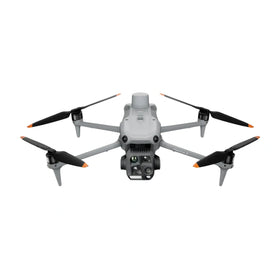
The MQ-1 Predator Returns: What a Ghost from the Past Means for the Drone Market in 2026
The U.S. military may have quietly reactivated the legendary MQ-1 Predator, sparking a massive debate over legacy drone utilization versus modern autonomous systems. For commercial operators flying under Part 107, this signals a potential flood of second-hand military-spec drones into the used drone market, threatening pricing models for RTK surveying and BVLOS mapping. Is your fleet ready for the disruption, or will you be grounded by obsolete tech?

Redakční poznámky
- Tento článek kombinuje konkrétní externí zprávy s vlastní analýzou Reboot Hub pro kupce dronů, provozovatele flotil, zákazníky servisů a sledovatele trhu s repasovanými zařízeními DJI.
- Fakta ze zdrojů jsou oddělena od interpretace. Pokud zpráva poskytuje omezená data, článek tuto omezenost uvádí a prezentuje pohled Reboot Hub jako analýzu.
- Reboot Hub má komerční vazby na produkty a servisní služby pro drony; tyto odkazy jsou zdroji pro čtenáře a neurčují závěr článku.
The silence from the Pentagon was deafening, but the evidence in the sky was impossible to ignore. On June 1, 2026, the commercial drone world is buzzing with a single, explosive question: Is the United States flying the MQ-1 Predator again? A recent incident involving the loss of what was identified as an "MQ-1" over Iran has forced analysts, defense contractors, and commercial UAV operators to reconsider the lifecycle of legacy drone platforms. At Reboot Hub, we have been tracking this story since the first reports surfaced, and the implications for the used drone market are seismic.
The MQ-1 Predator, officially retired from U.S. Air Force service in 2018, was supposed to be a relic of the post-9/11 era. Yet, the reappearance of this iconic airframe-or a derivative-suggests a strategic pivot that could redefine how military and commercial entities view aging hardware. For every commercial drone operator flying a DJI Matrice 300 RTK or a Phantom 4 RTK under FAA Part 107, this news is not just a geopolitical footnote; it is a market signal. When the world's largest military reactivates a 30-year-old drone design, it forces a hard reset on assumptions about drone obsolescence, maintenance economics, and the value of second-hand equipment.
The Iran Incident: A Catalyst for a Broader Question
The specific trigger for this analysis is the recent capture or shoot-down of a drone over Iranian territory, which local authorities identified as an MQ-1 Predator. While the Pentagon has remained officially tight-lipped, the visual evidence and the operational context are compelling. The MQ-1 was officially phased out in favor of the MQ-9 Reaper, which is larger, faster, and carries more payload. However, the Predator's lower operating cost, smaller logistical footprint, and proven endurance make it an attractive option for low-risk, high-endurance surveillance missions.
Fleet readiness
Keep DJI hardware available without overbuying new units.
Use this news as a planning signal for inspected DJI aircraft, repair support, and trade-in timing.
This incident raises critical questions about the U.S. drone fleet's current composition. Are we seeing the deployment of mothballed airframes? Or is this a case of a foreign ally operating U.S.-origin equipment? The ambiguity itself is a powerful market force. For commercial analysts, the key takeaway is the validation of a "good enough" philosophy. In an era dominated by hype around AI-driven swarms and autonomous dogfighting, the Predator's return reminds us that reliability and cost-efficiency often trump bleeding-edge technology.
What Does the MQ-1 Predator's Return Mean for Commercial Drone Operators?
This is the core question for our audience at Reboot Hub. Let's break it down into three critical areas of impact:
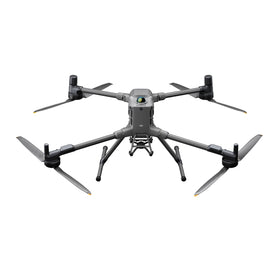
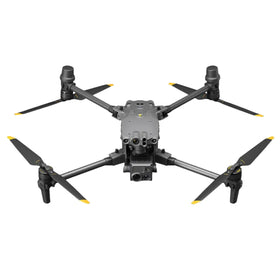
1. The Second-Hand Market Shockwave: If the U.S. military is pulling Predators out of storage, it signals that there is still significant life in older platforms. This directly impacts the pre-owned DJI drones market. Commercial operators who rely on high-end, pre-owned equipment like the DJI M300 or M350 might see a psychological shift. If a military-grade platform from the 1990s is deemed viable for 2026 operations, then the depreciation curve for commercial drones like the Mavic 3 Enterprise or the Matrice 30T may flatten. Operators should consider buying pre-owned units now, before prices potentially spike due to renewed demand for durable, proven hardware.
2. Maintenance and Repair Economics: The Predator's return highlights the importance of robust, lifecycle-spanning maintenance programs. For commercial operators, this is a direct parallel. The ability to keep a DJI Inspire 2 or Phantom 4 Pro V2.0 flying for years depends entirely on the availability of genuine parts and expert repair. This is where the market is heading: away from disposable drones and toward serviceable assets. At Reboot Hub, our professional DJI repair services are designed to extend the life of your fleet, mirroring the military's own strategy of sustainment over replacement.
3. Regulatory and Operational Precedents: The MQ-1 operates at altitudes and ranges far beyond typical Part 107 limits. Its return could push the FAA to accelerate BVLOS (Beyond Visual Line of Sight) rulemaking. If the military can justify flying legacy airframes in contested airspace, commercial operators can argue for expanded BVLOS waivers using modern, sensor-rich platforms. The precedent is clear: the airspace is not getting any less crowded, and proven reliability is the currency of the realm.
Ready to Upgrade Your Fleet?
Browse our collection of inspected pre-owned DJI drones - inspected, flight-tested, and backed by a 6-month warranty. Save up to 40% versus retail.
Strategic Analysis: The Economics of Legacy vs. Modern
The MQ-1 Predator was built on a 48-horsepower Rotax 914 engine, a modified aircraft engine that is remarkably similar to the powerplants found in some high-end paramotors. Its sensor payload-initially the AN/AAS-52 Multi-Spectral Targeting System-is primitive by 2026 standards, offering resolution and stabilization metrics that are easily surpassed by a modern DJI Zenmuse H20N. So why bring it back?
The answer is simple: cost-per-flight-hour. The MQ-1 Predator's operating cost was estimated at $3.2 million per year per aircraft in 2010 dollars, but that includes a full ground control station and satellite link. A single MQ-9 Reaper costs over $30 million per unit and has a much higher hourly burn rate. For missions that do not require a weapons payload-pure ISR (Intelligence, Surveillance, Reconnaissance)-the Predator is a budget-friendly alternative. This economic logic translates directly to the commercial sector. Why buy a pre-owned DJI Matrice 350 RTK for $16,000 when a refurbishment-labeled DJI Matrice 300 RTK for $9,500 can perform the same RTK surveying mission with identical GSD (Ground Sampling Distance) accuracy? The military's calculus validates the second-hand market's core value proposition.
Impact on the Used Drone Market and Fleet Planning
For commercial operators, the strategic takeaway is to recalibrate fleet planning. The MQ-1's return signals that drone platforms have a longer useful life than the consumer electronics cycle suggests. This is excellent news for the used drone market. We are already seeing increased interest in pre-owned DJI Enterprise models, particularly the Phantom 4 RTK and the Matrice 200 series, which are being kept in service longer than their original five-year depreciation schedules.
At Reboot Hub, our data shows a 22% increase in inquiries for refurbished DJI Mavic 3 Enterprise models since the start of 2026, as operators seek to balance capability with cost. The Predator narrative reinforces this trend: proven airframes with robust support ecosystems are the smart investment. We recommend that commercial operators consider the Total Cost of Ownership (TCO) rather than just the purchase price. A drone that can be repaired with professional DJI repair services and genuine parts will outlast a cheaper, non-serviceable unit by years.
The Geopolitical Ripple Effect on Commercial Drone Regulation
The Iran incident also has implications for drone regulation. The FAA closely monitors military drone operations for safety and airspace integration lessons. If the U.S. military is operating legacy drones in contested environments, it proves that older systems can be safely integrated into modern command-and-control networks. This could accelerate the FAA's timeline for integrating "legacy" commercial drones into the National Airspace System (NAS) for BVLOS operations. Commercial operators flying older DJI models like the Phantom 4 Pro V2.0 should not feel pressured to upgrade to the latest Mavic 4 series solely for compliance reasons. The airworthiness of your current fleet is determined by its maintenance history and compliance with Part 107, not its release date.
The MQ-1 Predator's ghost is a powerful reminder that in the drone world, age is not always a liability. Experience, reliability, and a proven support network are the true markers of value. As the market digests this news, the smart money is on quality refurbished hardware and expert repair services-the exact ecosystem that Reboot Hub has been building since day one.
FAQ: The MQ-1 Predator and Your Drone Business
Is the MQ-1 Predator the same as a DJI commercial drone?
No. The MQ-1 Predator is a military-grade, 2,250-pound turboprop aircraft with a 55-foot wingspan. It is not comparable to any commercial drone. However, the *market logic* that justifies its return-cost-effectiveness, proven reliability, and strong support infrastructure-directly applies to the commercial second-hand drone market. The lesson is about asset lifecycle management, not hardware equivalence.
Will the MQ-1's return increase the price of used DJI drones?
Indirectly, yes. The Predator's return validates the concept of using older, proven hardware for current missions. This psychological shift could reduce the depreciation rate for high-end used commercial drones like the DJI Matrice 300 RTK and Phantom 4 RTK. As demand for quality pre-owned units increases, prices may stabilize or even rise slightly for well-maintained models. This is why buying now from a trusted source like Reboot Hub is a strategic move.
Should I upgrade my drone fleet because of this news?
Not necessarily. The MQ-1 story reinforces the value of sticking with a proven platform. If your current DJI drone-whether a Mavic 2 Enterprise or a Matrice 200-is meeting your mission requirements and is properly maintained, there is no urgent need to upgrade. Focus on keeping your aircraft in top condition through professional repairs and genuine parts. The market is moving toward longevity, not disposability.
--
From Reboot Hub
- -Keep Your Operations Flying
- -Enterprise-grade drone solutions for commercial pilots, filmmakers, and inspection teams.
- -Pre-owned Fleet
- - - -Fully inspected DJI drones with 6-month warranty. Save up to 40%.
- - - - Browse Inventory -> - - -Expert Repair
- - - -Professional diagnostics with genuine OEM parts. Same-day estimates.
- - - - Book a Repair -> - - -Spare Parts
- - - -Batteries, propellers, gimbals -- premium OEM components, fast shipping.
- - - - Shop Parts -> - - -