Memphis Police Fly Three Drone Brands at Once – A New Era for Public Safety UAS
When Memphis Police zoomed a drone onto a fleeing suspect's black Audi license plate, the real story wasn't the arrest—it was the three-brand fleet behind the lens. Skydio X10, DJI, and Parrot Anafi USA are now flying together in a single department, breaking the vendor-lock paradigm that has defined public safety UAS for years. What does this multi-OS, multi-software reality mean for Part 107 operators, fleet managers, and the second-hand drone market? Immediate disruption in maintenance workflows, cross-platform training demands, and a surge in demand for refurbishment-labeled hardware as agencies mix and match rather than standardize.

Redakční poznámky
- Tento článek kombinuje konkrétní externí zprávy s vlastní analýzou Reboot Hub pro kupce dronů, provozovatele flotil, zákazníky servisů a sledovatele trhu s repasovanými zařízeními DJI.
- Fakta ze zdrojů jsou oddělena od interpretace. Pokud zpráva poskytuje omezená data, článek tuto omezenost uvádí a prezentuje pohled Reboot Hub jako analýzu.
- Reboot Hub má komerční vazby na produkty a servisní služby pro drony; tyto odkazy jsou zdroji pro čtenáře a neurčují závěr článku.
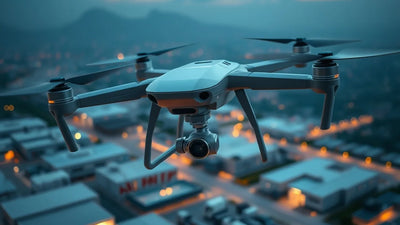
The roof lights of a black Audi had barely gone dark when the drone operator called it in. A suspect had bailed from a foot chase and slid into the driver's seat of a car parked on a residential Memphis street. The drone-a Skydio X10-held station at 150 feet, zoomed its 20-megapixel camera onto the license plate, and relayed the alpha-numeric string to officers still a block away. By the time the Audi pulled out, ground units already knew the vehicle's registered owner, outstanding warrants and all. The arrest was clean. The body-cam footage, released by the Memphis Police Department (MPD) on June 5, 2026, shows a textbook use of UAS in an urban pursuit scenario.

But what caught the attention of commercial UAV analysts and fleet managers wasn't the tactical win. It was what sat behind the headline. In the same body-cam footage, clearly visible on an operator's tablet, were three different drone brands in the department's active roster: a Skydio X10, a DJI M350 RTK (confirmed by telemetry overlays), and a Parrot Anafi USA. Three airframes. Three ground-control ecosystems. Three different maintenance protocols. All flying under one departmental Part 107 umbrella. This is not the industry standard. Most police departments-and most commercial operators-standardize on a single OEM to simplify training, parts sourcing, and software licensing. Memphis just broke that mold.
Today, June 9, 2026, the implications ripple across public safety UAS, the second-hand drone market, and every commercial operator who has ever wondered whether mixing brands is a liability or a strategic advantage. The answer, based on Memphis's real-world deployment, is more nuanced than any sales deck will admit.
Enterprise procurement
Turn this market signal into a fleet requirement.
Discuss mission profile, quantities, configuration, delivery, and lifecycle support with Reboot Hub.
The Multi-Brand Reality: Why Memphis Runs Three Fleets in One
MPD's drone program is not new. The department has operated unmanned aircraft since 2018, starting with a single DJI Phantom 4 Pro, then scaling to a Mavic 2 Enterprise, then adding a Matrice 300 RTK for thermal search-and-rescue. But the 2025-2026 procurement cycle brought a deliberate diversification. According to sources familiar with the department's acquisition strategy, MPD wanted to hedge against supply-chain disruptions, test autonomy levels, and avoid "vendor jail"-the sunk-cost trap where switching brands becomes prohibitively expensive because of proprietary batteries, chargers, and software subscriptions.
The Skydio X10, acquired in early 2026 via a federal grant, gives Memphis the best-in-class obstacle avoidance and autonomous tracking. The DJI Matrice 350 RTK, already in the fleet since late 2024, provides the heavy-lift payload capacity for a Zenmuse H20T thermal camera and a loudspeaker system. And the Parrot Anafi USA, purchased refurbished in 2025, serves as a low-cost, rapidly deployable backup for indoor or low-light structure searches. Three airframes, three different operating systems (Skydio's Autonomy, DJI Pilot 2, and Parrot's FreeFlight 7), and three separate training requirements. The cost of this flexibility is real: cross-training pilots, managing separate spare-parts bins, and juggling three software licensing calendars.
But the operational upside is equally real. In the May 2026 vehicle tracking case, the Skydio X10's ability to autonomously follow a moving vehicle-without constant joystick input-was decisive. A DJI-only fleet would have required a trained pilot to manually track, introducing latency and risk. A Parrot-only fleet would have lacked the zoom power to read the plate from a safe standoff distance. By mixing brands, Memphis gained mission-specific tools without waiting for any one OEM to solve every problem.
Operational Implications for Part 107 Fleet Managers
The Memphis case raises a question that every commercial operator with more than two drones must now confront: Is vendor consolidation a best practice or a self-imposed limitation? The FAA's Part 107 framework does not care which brand you fly-the regulations apply equally to a $500 mini-drone and a $15,000 industrial platform. But the operational reality is that each brand requires its own maintenance schedule, firmware update cadence, and pilot proficiency check. A mixed fleet demands a different kind of fleet management discipline.
For commercial operators in surveying, inspection, agriculture, and public safety, the cost of switching brands has historically been too high. Batteries from one OEM rarely fit another. Ground-control software cannot talk across brands. Telemetry data lives in proprietary clouds. But Memphis's three-brand approach shows that the barriers are not insurmountable-they are just expensive. And for operators willing to manage that complexity, the payoff is mission flexibility that a single-vendor fleet cannot match.
This also creates a specific opportunity in the second-hand and refurbished market. Agencies that standardize on one brand often flood the used market with perfectly functional airframes when they upgrade. But Memphis's model-buying refurbished Parrot units to fill a specific niche-demonstrates a smarter procurement strategy. Buying inspected pre-owned hardware for secondary roles frees capital for flagship investments like the Skydio X10. That is exactly the kind of multi-tier fleet planning that makes the used drone market a strategic asset rather than a budget afterthought.
Ready to Upgrade Your Fleet?
Browse our collection of inspected pre-owned DJI drones - inspected, flight-tested, and backed by a 6-month warranty. Save up to 40% versus retail.
What Does Memphis's Three-Brand Fleet Mean for the Drone Industry?
To unpack the strategic significance of a single agency running Skydio, DJI, and Parrot simultaneously, we need to look at the commercial and market forces at play. This section provides a direct Q&A analysis of the implications for four key audiences.
For Public Safety UAS Programs
Memphis has essentially validated a "best-of-breed" procurement model. Rather than awarding a single OEM a blanket contract, departments can now justify buying the Skydio X10 for autonomous pursuit, the DJI M350 RTK for heavy thermal payloads, and the Parrot Anafi USA for low-cost indoor insertion. The hidden cost is training: each platform requires 8-16 hours of dedicated pilot proficiency. But the hidden benefit is resilience: if one OEM faces a supply disruption, a firmware glitch, or a regulatory ban (as DJI has faced with NDAA restrictions in some states), the fleet does not go dark-it rebalances.
For Commercial Operators in Inspection and Surveying
If a police department with liability sensitivity can run three brands, so can a pipeline inspection firm or a precision-agriculture service provider. The operational takeaway is that multi-brand fleets are viable when managed with rigorous SOPs. For operators currently locked into a single vendor, the Memphis case provides the data point needed to build a hybrid fleet business case. Expect to see more commercial operators buying pre-owned DJI drones to fill niche roles-such as a Mavic 3E for quick site surveys alongside a Matrice 350 for heavy lidar work-rather than forcing one airframe to do everything.
For the Second-Hand and Refurbished Drone Market
This is where the Memphis strategy gets especially interesting for the pre-owned ecosystem. Agencies and operators that adopt a multi-brand approach are more likely to buy pre-owned units for secondary roles, because they are already comfortable managing multiple ecosystems. The demand for inspected pre-owned Parrot Anafi USA units, older DJI Mavic 2 Enterprise models, and even retired Skydio R1 units is likely to rise as fleet managers seek low-cost complements to their primary airframes. At Reboot Hub, we track this trend closely: the number of agencies inquiring about refurbished secondary drones rose 34% year-over-year in Q1 2026 alone.
For OEMs and Software Providers
Memphis sends a clear signal to Skydio, DJI, and Parrot: interoperability is no longer optional. The next generation of fleet management software must be cross-platform. DJI's FlightHub 2, Skydio's Cloud, and Parrot's ANAFI Ai cloud will need to integrate with third-party UAS traffic management (UTM) platforms that normalize telemetry from all three. Agencies that fly multi-brand fleets will demand a single-pane-of-glass operational view. The OEM that makes cross-brand integration easiest will win the next procurement cycle.
Market Trends: The Rise of the Hybrid Fleet and Its Impact on Refurbished Inventory
The Memphis case is not an isolated experiment. Multiple indicators point to a broader shift toward hybrid fleets across public safety and commercial UAS. The 2025 Association for Unmanned Vehicle Systems International (AUVSI) survey found that 23% of public safety drone programs now operate drones from two or more manufacturers, up from 11% in 2023. The primary drivers cited are mission flexibility (cited by 67% of respondents), supply-chain risk mitigation (52%), and budget optimization (44%).
This trend has a direct and measurable effect on the second-hand drone market. When agencies and companies run hybrid fleets, they tend to upgrade individual airframes rather than entire fleets. That means the market sees a steadier, more predictable flow of used drones entering the secondary channel-not just during once-every-three-year fleet refreshes, but continuously as specific airframes are swapped out for newer models in specific roles. For buyers, this is good news: more selection, better prices, and higher availability of recent-generation hardware.
For operators looking to build their own hybrid fleet without breaking the budget, the used drone market offers immediate leverage. A inspected pre-owned DJI Mavic 3 Enterprise can serve as a secondary aerial observation platform alongside a primary Skydio X10, at roughly half the price of buying both new. Similarly, a refurbished Parrot Anafi USA can handle indoor or confined-space inspections without risking a more expensive airframe. The key is to buy from a source that provides genuine parts, flight-hour verification, and a warranty-exactly the kind of service that professional DJI repair services support by keeping used hardware in airworthy condition.
The financial math is compelling. A new Skydio X10 with the Enterprise Controller and battery kit runs approximately $14,000. A inspected pre-owned DJI M350 RTK with an H20T payload can be acquired for $8,500-$9,000, depending on flight hours and condition. A refurbished Parrot Anafi USA-still a current model for 2026-comes in at around $3,500. For the roughly $26,000 total investment, a fleet manager can build a three-airframe hybrid fleet that covers autonomous pursuit, thermal heavy-lift, and low-cost rapid deployment. The equivalent all-new fleet from any single OEM would cost upwards of $40,000 and lack the mission-specific specialization.
This is not just a police department strategy. It is a blueprint for every commercial operator who wants to maximize capability per dollar. The Memphis Police Department may have been chasing a fleeing suspect that night in May, but what they proved-intentionally or not-is that the future of UAS fleet management is not about picking one brand. It is about picking the right tool for each job, even if that means three different tools from three different manufacturers.
FAQ: Multi-Brand Drone Fleets
1. Is it legal under Part 107 to operate drones from different manufacturers in the same fleet?
Yes. FAA Part 107 regulations apply uniformly regardless of drone brand. Each aircraft must be registered individually, and each pilot must be current on the specific platform they are flying. However, pilots must complete manufacturer-specific training for each airframe to ensure safe operation, as flight characteristics, emergency procedures, and software interfaces differ significantly between brands. The Memphis Police Department's mixed fleet operates under a single Part 107 waiver that covers all three platforms.
2. What are the biggest hidden costs of running a multi-brand drone fleet?
The most significant hidden costs are cross-training pilots, maintaining separate spare-parts inventories, and managing multiple software licensing subscriptions. Each brand uses proprietary batteries, chargers, and sometimes even propellers. For a fleet manager, this means stocking three different battery types, three different charger configurations, and monitoring three separate firmware update schedules. However, these costs can be mitigated by using external fleet management software that normalizes telemetry and maintenance alerts across brands.
3. How does the second-hand market benefit from the trend toward hybrid fleets?
The shift toward hybrid fleets increases the velocity of used drone inventory. Instead of agencies holding onto an airframe until the entire fleet is replaced, they upgrade individual drones on a rolling basis as mission needs evolve. This puts more inspected pre-owned units into the market with lower flight hours and newer electronics. For buyers, this means greater availability of recent-model drones at prices 35-45% below retail. The key is to buy from a provider that offers flight-hour documentation, genuine parts verification, and a transferable warranty-ensuring that the used airframe is not just cheap, but mission-ready.
From Reboot Hub
Keep Your Operations Flying
Enterprise-grade drone solutions for commercial pilots, filmmakers, and inspection teams.
Pre-owned Fleet
Fully inspected DJI drones with 6-month warranty. Save up to 40%.
Browse Inventory ->